What Karna Truly Felt When Krishna Offered Him the Throne
Deepak Rajeev | Tue, 12 May 2026
When Krishna revealed Karna’s true identity and offered him the throne of Hastinapura, it created one of Mahabharata’s most emotionally complex moments. Karna was torn between destiny, loyalty to Duryodhana, and the truth of his royal birth. Despite gaining recognition and power, he chose gratitude over ambition, making his decision one of the greatest tragedies in epic literature.

Lord Krishna Offering the Throne to Karna (Image Credit: AI)
Among all the emotionally devastating moments in the Mahabharata, few scenes carry as much psychological depth and spiritual tragedy as the private conversation between Krishna and Karna before the Kurukshetra war. It was a moment filled with destiny, truth, loyalty, heartbreak, and impossible choices. In many ways, this single conversation revealed the entire emotional burden Karna had carried throughout his life. Krishna’s offer was extraordinary. He did not merely ask Karna to change sides. He offered him legitimacy, kingship, honor, family, and recognition. For the first time in his life, Karna was told the truth that could have changed everything. He was not the son of a charioteer. He was Kunti’s firstborn. He was the eldest Pandava. By birth, the throne of Hastinapura belonged to him. Yet Karna refused. That refusal remains one of the most emotionally discussed moments in Hindu epic literature because it was not driven by greed, fear, or ignorance. It was driven by something far more complex and deeply human.
To understand what Karna truly felt in that moment, it is necessary to understand the pain that shaped his entire life.
![Lord Krishna Talking to Karna (Image Credit: AI)]()
From childhood, Karna lived with humiliation and rejection despite possessing extraordinary talent. Raised by Adhiratha and Radha, he grew up believing he belonged to a lower social status despite his natural warrior abilities. Again and again, society reminded him that talent alone was not enough to earn acceptance. One of the most painful moments occurred during the martial exhibition in Hastinapura when Karna challenged Arjuna publicly. Despite demonstrating immense skill, he was mocked because of his supposed birth status. According to the Mahabharata, Kripa questioned Karna’s lineage and declared that a warrior prince could not duel someone of unknown birth. This humiliation deeply affected Karna’s psychology.
For perhaps the first time, Duryodhana stepped forward and treated Karna not as an outcast, but as an equal. He immediately crowned Karna king of Anga, giving him status, dignity, and friendship. This act permanently shaped Karna’s emotional loyalty. That is why Krishna’s later offer created such a profound internal conflict. Krishna was offering Karna what he had always deserved by birth. But Duryodhana had already given him what society never had: acceptance.
![Lord Krishna & Karna (Image Credit: AI)]()
Before the Kurukshetra war began, Krishna privately met Karna in an attempt to prevent catastrophe. The details appear in the Udyoga Parva of the Mahabharata, one of the epic’s most psychologically rich sections. Krishna revealed to Karna that he was actually Kunti’s eldest son and therefore the eldest of the Pandavas. He explained that Karna had been abandoned at birth and raised unknowingly outside his royal lineage. According to the Mahabharata, Krishna told Karna that if he joined the Pandavas, Yudhishthira would willingly step aside and accept him as king. Karna would gain the throne that was rightfully his by birth. This was not merely a political proposal. It was the answer to Karna’s deepest emotional wound.
Everything Karna had suffered throughout his life suddenly stood exposed before him:
![Karna (Image Credit: AI)]()
Many readers wonder why Karna did not simply accept Krishna’s proposal. After all, the offer contained everything he had ever lacked. But Karna’s psychology was shaped by loyalty as much as pain. Duryodhana had stood beside him when nobody else did. When the world mocked Karna, Duryodhana elevated him. When society denied him honor, Duryodhana gave him kingship. Karna understood that abandoning Duryodhana before the war would not merely be politically convenient betrayal. To him, it would be moral failure.
The Mahabharata portrays Karna as fully aware that the Pandavas represented dharma more strongly than Duryodhana’s side. In several passages, Karna even acknowledged Krishna’s divinity and accepted that the Kauravas were likely destined to lose. Yet he still chose loyalty. This is precisely why Karna remains one of the most tragic figures in world literature. He was not destroyed by ignorance alone. He was torn apart by competing virtues.
Psychologically, Karna’s emotional state during this conversation was likely extraordinarily complex. For the first time in his life:
One of the most fascinating aspects of this scene is Krishna’s own understanding of Karna’s character. Krishna was not merely testing Karna politically. He appeared to understand Karna emotionally. He knew Karna possessed greatness, generosity, courage, and loyalty. In many interpretations of the Mahabharata, Krishna seems to admire Karna even while opposing him. That emotional complexity adds extraordinary depth to the conversation. Krishna likely understood that Karna’s greatest strength was also his greatest weakness. His loyalty to Duryodhana was morally admirable on a personal level, yet tragic in the larger context of dharma. This paradox lies at the heart of Karna’s legend.
Karna ultimately rejected Krishna’s offer, but not arrogantly. According to the Mahabharata, he acknowledged the truth Krishna revealed and even accepted that the Pandavas would probably emerge victorious. Yet he chose to remain loyal to Duryodhana out of gratitude and emotional obligation.nIn some retellings, Karna also expressed concern for Kunti’s emotional suffering and promised not to kill any Pandava except Arjuna. This promise reveals the emotional transformation already taking place within him after learning the truth.
The tragedy of the moment lies in the fact that Karna finally received the recognition he had desired all his life only when it was too late to change destiny peacefully. That emotional timing makes the scene unforgettable.
Few Mahabharata characters generate as much emotional debate as Karna because he represents contradictions people deeply relate to. He was heroic yet flawed. Generous yet prideful. Loyal yet aligned with adharma. Noble yet consumed by resentment. Powerful yet emotionally wounded. Unlike purely virtuous or purely evil characters, Karna feels psychologically real.
Modern discussions about Karna often focus on whether fate treated him unfairly or whether his own choices led to his downfall. That debate itself reflects the complexity of his character. Even today, many readers sympathize with Karna more emotionally than with victorious heroes because his life embodies struggle, rejection, emotional hunger, and tragic dignity.
Conclusion
The moment Krishna offered Karna the throne was far more than a political negotiation before war. It was the emotional climax of Karna’s entire life. In a single conversation, Karna finally learned the truth about his birth, his family, his rightful identity, and the destiny that had been denied to him since childhood. Krishna offered him honor, kingship, legitimacy, and peace. Yet Karna’s response revealed the painful complexity of the human heart.
He chose loyalty over ambition, gratitude over power, and personal honor over personal gain even while understanding the terrible cost of that decision. That is why Karna remains one of the most emotionally powerful characters in the Mahabharata. His tragedy was not simply that he lost the war. It was that he finally discovered who he truly was only after fate had already trapped him between dharma, loyalty, and destiny itself.
Explore the latest trends and tips in Health & Fitness, Spiritual, Travel, Life Hacks, Trending, Fashion & Beauty, and Relationships at Times Life!
To understand what Karna truly felt in that moment, it is necessary to understand the pain that shaped his entire life.
Karna’s Lifelong Search for Respect
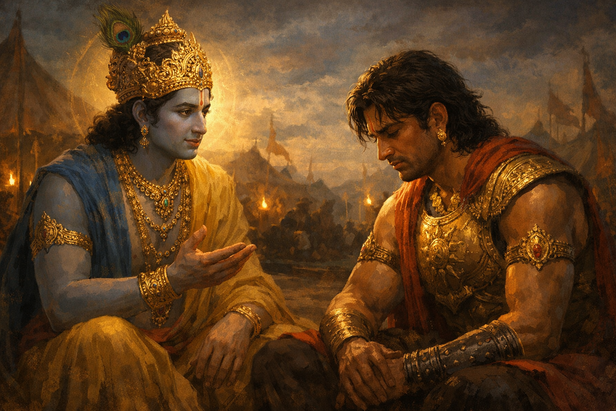
Lord Krishna Talking to Karna (Image Credit: AI)
From childhood, Karna lived with humiliation and rejection despite possessing extraordinary talent. Raised by Adhiratha and Radha, he grew up believing he belonged to a lower social status despite his natural warrior abilities. Again and again, society reminded him that talent alone was not enough to earn acceptance. One of the most painful moments occurred during the martial exhibition in Hastinapura when Karna challenged Arjuna publicly. Despite demonstrating immense skill, he was mocked because of his supposed birth status. According to the Mahabharata, Kripa questioned Karna’s lineage and declared that a warrior prince could not duel someone of unknown birth. This humiliation deeply affected Karna’s psychology.
For perhaps the first time, Duryodhana stepped forward and treated Karna not as an outcast, but as an equal. He immediately crowned Karna king of Anga, giving him status, dignity, and friendship. This act permanently shaped Karna’s emotional loyalty. That is why Krishna’s later offer created such a profound internal conflict. Krishna was offering Karna what he had always deserved by birth. But Duryodhana had already given him what society never had: acceptance.
The Moment Krishna Revealed the Truth
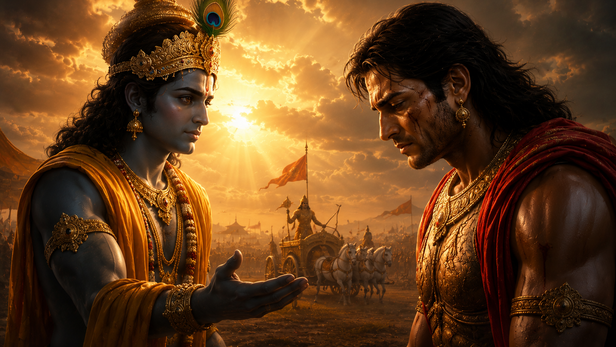
Lord Krishna & Karna (Image Credit: AI)
Before the Kurukshetra war began, Krishna privately met Karna in an attempt to prevent catastrophe. The details appear in the Udyoga Parva of the Mahabharata, one of the epic’s most psychologically rich sections. Krishna revealed to Karna that he was actually Kunti’s eldest son and therefore the eldest of the Pandavas. He explained that Karna had been abandoned at birth and raised unknowingly outside his royal lineage. According to the Mahabharata, Krishna told Karna that if he joined the Pandavas, Yudhishthira would willingly step aside and accept him as king. Karna would gain the throne that was rightfully his by birth. This was not merely a political proposal. It was the answer to Karna’s deepest emotional wound.
Everything Karna had suffered throughout his life suddenly stood exposed before him:
- the humiliation
- the rejection
- the social insults
- the identity crisis
- the loneliness
- the constant need to prove himself
Why Karna Did Not Immediately Accept Krishna’s Offer
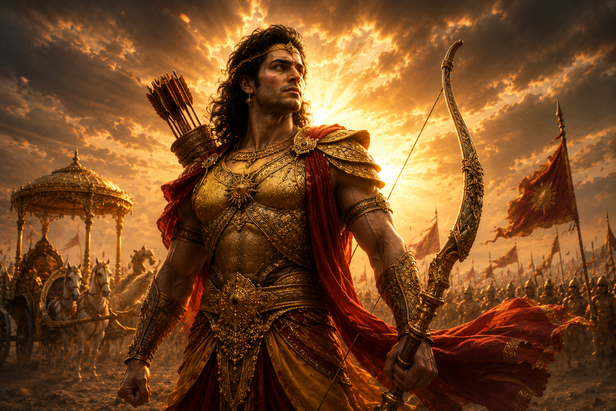
Karna (Image Credit: AI)
Many readers wonder why Karna did not simply accept Krishna’s proposal. After all, the offer contained everything he had ever lacked. But Karna’s psychology was shaped by loyalty as much as pain. Duryodhana had stood beside him when nobody else did. When the world mocked Karna, Duryodhana elevated him. When society denied him honor, Duryodhana gave him kingship. Karna understood that abandoning Duryodhana before the war would not merely be politically convenient betrayal. To him, it would be moral failure.
The Mahabharata portrays Karna as fully aware that the Pandavas represented dharma more strongly than Duryodhana’s side. In several passages, Karna even acknowledged Krishna’s divinity and accepted that the Kauravas were likely destined to lose. Yet he still chose loyalty. This is precisely why Karna remains one of the most tragic figures in world literature. He was not destroyed by ignorance alone. He was torn apart by competing virtues.
The Emotional Conflict Inside Karna
Psychologically, Karna’s emotional state during this conversation was likely extraordinarily complex. For the first time in his life:
- he learned his true identity
- he discovered he was royalty by birth
- he realized the Pandavas were his brothers
- he understood the throne belonged to him
- he faced the possibility of ending the war before it began
What Krishna May Have Understood About Karna
One of the most fascinating aspects of this scene is Krishna’s own understanding of Karna’s character. Krishna was not merely testing Karna politically. He appeared to understand Karna emotionally. He knew Karna possessed greatness, generosity, courage, and loyalty. In many interpretations of the Mahabharata, Krishna seems to admire Karna even while opposing him. That emotional complexity adds extraordinary depth to the conversation. Krishna likely understood that Karna’s greatest strength was also his greatest weakness. His loyalty to Duryodhana was morally admirable on a personal level, yet tragic in the larger context of dharma. This paradox lies at the heart of Karna’s legend.
Why Karna’s Refusal Became One of Mahabharata’s Saddest Moments
Karna ultimately rejected Krishna’s offer, but not arrogantly. According to the Mahabharata, he acknowledged the truth Krishna revealed and even accepted that the Pandavas would probably emerge victorious. Yet he chose to remain loyal to Duryodhana out of gratitude and emotional obligation.nIn some retellings, Karna also expressed concern for Kunti’s emotional suffering and promised not to kill any Pandava except Arjuna. This promise reveals the emotional transformation already taking place within him after learning the truth.
The tragedy of the moment lies in the fact that Karna finally received the recognition he had desired all his life only when it was too late to change destiny peacefully. That emotional timing makes the scene unforgettable.
Why Karna Still Fascinates Modern Audiences
Few Mahabharata characters generate as much emotional debate as Karna because he represents contradictions people deeply relate to. He was heroic yet flawed. Generous yet prideful. Loyal yet aligned with adharma. Noble yet consumed by resentment. Powerful yet emotionally wounded. Unlike purely virtuous or purely evil characters, Karna feels psychologically real.
Modern discussions about Karna often focus on whether fate treated him unfairly or whether his own choices led to his downfall. That debate itself reflects the complexity of his character. Even today, many readers sympathize with Karna more emotionally than with victorious heroes because his life embodies struggle, rejection, emotional hunger, and tragic dignity.
Conclusion
The moment Krishna offered Karna the throne was far more than a political negotiation before war. It was the emotional climax of Karna’s entire life. In a single conversation, Karna finally learned the truth about his birth, his family, his rightful identity, and the destiny that had been denied to him since childhood. Krishna offered him honor, kingship, legitimacy, and peace. Yet Karna’s response revealed the painful complexity of the human heart.
He chose loyalty over ambition, gratitude over power, and personal honor over personal gain even while understanding the terrible cost of that decision. That is why Karna remains one of the most emotionally powerful characters in the Mahabharata. His tragedy was not simply that he lost the war. It was that he finally discovered who he truly was only after fate had already trapped him between dharma, loyalty, and destiny itself.
Explore the latest trends and tips in Health & Fitness, Spiritual, Travel, Life Hacks, Trending, Fashion & Beauty, and Relationships at Times Life!