Why Are Five Pinds Offered Before Cremation? The Truth Revealed
Noopur Kumari | Jul 02, 2026, 13:00 IST
The offering of the five pinds is one of the most sacred parts of Hindu funeral rites. Each pind is traditionally offered at a different stage of the final journey, carrying symbolic meaning related to the departed soul, the elements of nature, and the family's final act of duty. While practices differ across regions and communities, the deeper message remains the same: every ritual is performed with the hope that the soul finds peace and completes its earthly journey with dignity.

Have you ever noticed that during a Hindu funeral procession, the bier is stopped at different places and offerings of rice or flour balls known as pinds are made? For many people, these rituals appear to be ancient customs followed without question. Yet behind every stop and every offering lies a deep spiritual symbolism that has been preserved through generations. According to traditional Hindu beliefs, these rituals are not merely ceremonies. They represent prayers for the peaceful transition of the departed soul and expressions of gratitude, respect, and detachment during life's final journey.
![Hindu Funeral Procession Carrying the Bier]()
In many Hindu traditions, the funeral procession pauses at specific points before reaching the cremation ground. These stops are not made randomly. They symbolize moments of prayer, remembrance, and respect for the departed. Family members offer pinds while silently praying for the soul's peaceful onward journey. Although customs vary across different regions of India, these pauses remind everyone present that death is viewed not as an ending but as a sacred transition.
![Family Offering the First Pind Near the Home]()
Traditionally, the first pind is offered near the place where the departed spent their final moments. It represents the family's first formal farewell and their prayer for peace. According to traditional beliefs, this offering expresses gratitude to the Earth that supported the person's life. It also marks the symbolic beginning of the soul's departure from the physical world toward its next spiritual destination.
The second offering is commonly made as the bier crosses the entrance of the home. This moment is emotionally significant because it represents the final departure from the house where the person lived with loved ones. Traditional beliefs describe this ritual as a prayer for protection and a peaceful passage. More importantly, it helps family members emotionally accept that their loved one has completed their earthly journey.
Many communities pause the procession midway before reaching the cremation ground. During this stop, another pind is offered while family members recite prayers or remain silent in remembrance. Traditionally, this pause symbolizes respect for the final journey and offers mourners a moment to gather their emotions. It reflects the belief that every stage of life and death deserves mindfulness, gratitude, and dignity.
The last offerings are generally made at the cremation ground before the funeral rites are completed. Different traditions assign different symbolic meanings to these pinds, but they are commonly viewed as prayers for the soul's peaceful transition and liberation. These offerings represent the family's final act of service and devotion before entrusting their loved one to the sacred fire, which symbolizes purification and transformation.
Beyond every ritual lies a universal message. The five pinds remind families to express gratitude, fulfill their final responsibilities, and pray for the peace of the departed soul. While the exact customs differ across Hindu traditions, the essence remains unchanged: honoring life with respect, accepting the reality of death, and remembering that love continues even after the final farewell.
Unlock insightful tips and inspiration on personal growth, productivity, and well-being. Stay motivated and updated with the latest at My Life XP.
1. What are the five pinds in Hindu funeral rituals?
The five pinds are symbolic offerings of rice or flour traditionally made during different stages of the funeral procession. Their meanings vary across Hindu traditions and regions.
2. Why are pinds offered during the final journey?
According to Hindu traditions, pinds are offered as prayers for the peaceful journey of the departed soul and as a final act of respect and duty by the family.
3. Do all Hindu communities follow the same five-pind ritual?
No. Funeral customs differ widely across regions, sects, and family traditions. The number, timing, and significance of pinds may vary.
4. Are the meanings of each pind mentioned in every Hindu scripture?
No. Many interpretations come from regional traditions, later ritual texts, and local customs rather than a single universally accepted scripture.
5. Why is the funeral procession stopped during the journey?
In many traditions, the pauses symbolize prayer, remembrance, and respect for the departed. The exact reasons differ depending on local customs.
Every Stop in the Final Journey Has a Purpose
Hindu Funeral Procession Carrying the Bier
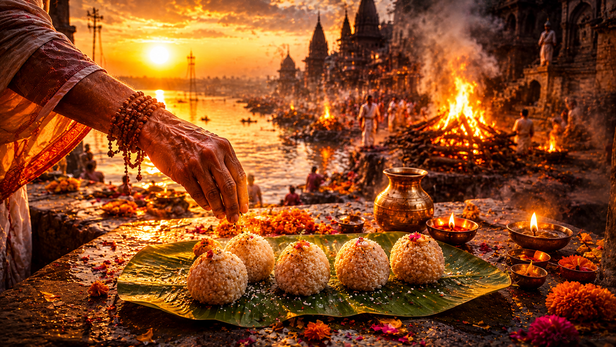
In many Hindu traditions, the funeral procession pauses at specific points before reaching the cremation ground. These stops are not made randomly. They symbolize moments of prayer, remembrance, and respect for the departed. Family members offer pinds while silently praying for the soul's peaceful onward journey. Although customs vary across different regions of India, these pauses remind everyone present that death is viewed not as an ending but as a sacred transition.
The First Offering Begins the Soul's Final Journey
Family Offering the First Pind Near the Home
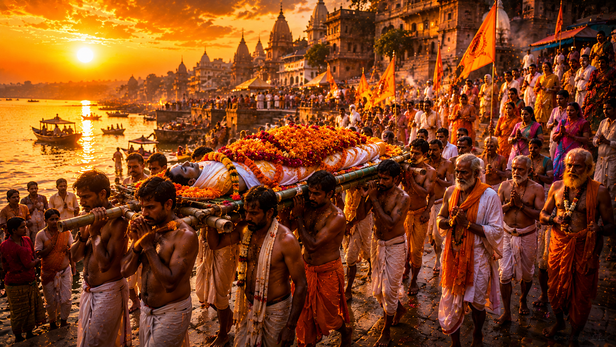
Traditionally, the first pind is offered near the place where the departed spent their final moments. It represents the family's first formal farewell and their prayer for peace. According to traditional beliefs, this offering expresses gratitude to the Earth that supported the person's life. It also marks the symbolic beginning of the soul's departure from the physical world toward its next spiritual destination.
The Doorstep Marks the Moment of Separation
The Midway Pause Honors Reflection and Rest
The Final Offerings Complete the Sacred Ritual
The Real Message Is Love, Duty, and Remembrance
Unlock insightful tips and inspiration on personal growth, productivity, and well-being. Stay motivated and updated with the latest at My Life XP.
Frequently Asked Questions (FAQs)
The five pinds are symbolic offerings of rice or flour traditionally made during different stages of the funeral procession. Their meanings vary across Hindu traditions and regions.
2. Why are pinds offered during the final journey?
According to Hindu traditions, pinds are offered as prayers for the peaceful journey of the departed soul and as a final act of respect and duty by the family.
3. Do all Hindu communities follow the same five-pind ritual?
No. Funeral customs differ widely across regions, sects, and family traditions. The number, timing, and significance of pinds may vary.
4. Are the meanings of each pind mentioned in every Hindu scripture?
No. Many interpretations come from regional traditions, later ritual texts, and local customs rather than a single universally accepted scripture.
5. Why is the funeral procession stopped during the journey?
In many traditions, the pauses symbolize prayer, remembrance, and respect for the departed. The exact reasons differ depending on local customs.