Why Do Hindus Chew Neem After a Funeral?
Noopur Kumari | Jul 14, 2026, 13:00 IST
From chewing bitter neem to avoiding home-cooked meals and remembering only the good deeds of the departed, Hindu funeral customs have profound spiritual significance. Rooted in the teachings of the Garuda Purana, these traditions symbolise purification, acceptance of life's impermanence, and prayers for the peaceful journey of the soul. Here is the meaning behind seven important funeral rituals that many people follow but few truly understand.

Hindus Chew Neem After a Funeral
Image credit : ChatGPT(AI)
Have you ever wondered why people returning from a Hindu cremation ground chew neem leaves or something bitter before entering their homes? Why is home-cooked food avoided? And why do family members speak only of the deceased's good qualities? These customs are not random traditions. According to the Garuda Purana, each ritual carries a deep spiritual meaning connected to life, death, purification, and the soul's final journey. Understanding these practices reveals timeless wisdom that has been followed for generations.
![Family members performing ritual bath after cremation]()
According to the Garuda Purana, those returning from the cremation ground should first bathe and offer Tilanjali to the departed soul. Water represents purification, while Tilanjali is offered as a mark of respect and prayer. This ritual is believed to help family members leave behind the sorrow and impurity associated with death while praying for the peaceful onward journey of the departed soul.
![Fresh neem leaves used in Hindu funeral rituals]()
After cremation, people traditionally chew neem leaves or another bitter substance. Spiritually, neem represents the bitter truth that every human being must one day face death. It reminds mourners to accept the reality of life with humility. Beyond its symbolic meaning, neem has also been traditionally valued in Ayurveda for its cleansing properties, though the funeral ritual itself is primarily spiritual in significance.
One common tradition after a funeral is to remember only the good qualities of the deceased. The Garuda Purana encourages positive remembrance instead of criticism or arguments. This practice honours the person's life, comforts grieving family members, and creates a peaceful atmosphere during the period of mourning. It reflects the belief that compassion and respect should accompany the soul's final farewell.
Traditional Hindu customs discourage lighting the household stove on the day of a family member's death. Instead, relatives, neighbours, or friends provide meals for the grieving family. This custom allows mourners to focus on prayers and funeral rituals rather than daily responsibilities. It also reflects community support during times of sorrow and reminds everyone that grief should never be faced alone.
Ancient texts describe several customs followed while returning from the cremation ground. Historical traditions in some regions mention women walking ahead and men following behind, although practices differ across communities today. Once home, family members traditionally bathe, clean themselves, and in many households offer food to a cow as an act of compassion and spiritual merit before resuming normal activities.
According to Hindu beliefs described in texts such as the Garuda Purana, the soul continues its journey after death, and family members perform prayers and rituals to support that transition. Different Hindu traditions interpret these beliefs in different ways, but the common purpose is to express love, respect, and prayers for peace. These customs encourage remembrance while helping the family process grief with faith and devotion.
Every funeral ritual carries a message that extends beyond mourning. Neem teaches acceptance of life's impermanence. Bathing symbolises purification. Community meals represent compassion. Speaking kindly honours the departed. Together, these traditions remind us that while death is inevitable, love, good deeds, and faith leave a lasting legacy. They encourage people to live with kindness today because every life is ultimately remembered through its actions.
Disclaimer This article is based on traditional beliefs and is intended for informational purposes only.
Unlock insightful tips and inspiration on personal growth, productivity, and well-being. Stay motivated and updated with the latest at My Life XP.
The First Step Is Purification
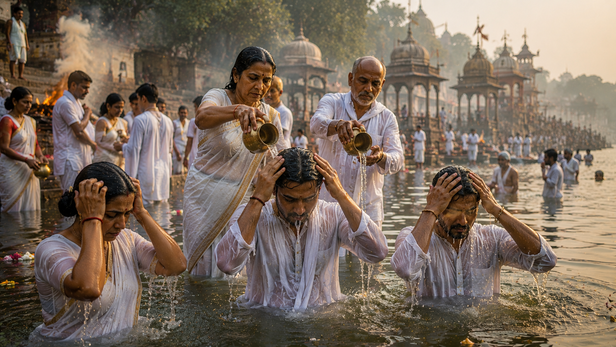
Family members performing ritual bath after cremation
Image credit : ChatGPT (AI)
According to the Garuda Purana, those returning from the cremation ground should first bathe and offer Tilanjali to the departed soul. Water represents purification, while Tilanjali is offered as a mark of respect and prayer. This ritual is believed to help family members leave behind the sorrow and impurity associated with death while praying for the peaceful onward journey of the departed soul.
Why Neem Is Chewed
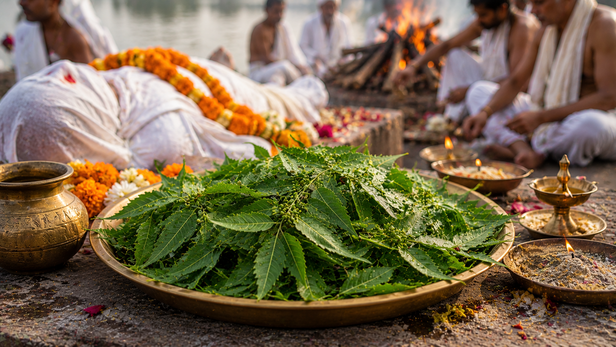
Fresh neem leaves used in Hindu funeral rituals
Image credit : ChatGPT(AI)
After cremation, people traditionally chew neem leaves or another bitter substance. Spiritually, neem represents the bitter truth that every human being must one day face death. It reminds mourners to accept the reality of life with humility. Beyond its symbolic meaning, neem has also been traditionally valued in Ayurveda for its cleansing properties, though the funeral ritual itself is primarily spiritual in significance.
Only Good Memories Are Shared
Why Home-Cooked Food Is Avoided
The Journey Home Matters
The Soul's Presence in Tradition
The Deeper Lesson Behind Every Ritual
Disclaimer This article is based on traditional beliefs and is intended for informational purposes only.
Unlock insightful tips and inspiration on personal growth, productivity, and well-being. Stay motivated and updated with the latest at My Life XP.