Why Do Many Spiritual Teachers Compare the Human Mind to Lord Shiva’s Meditation?
Noopur Kumari | Wed, 11 Mar 2026
Shiva’s meditation is legendary calm, deep, and unshakable. Spiritual teachers say it mirrors the ideal state of the human mind: centered, alert, and free from distraction. Psychologists today recognize that focused attention, emotional regulation, and mindfulness are critical for mental well-being. By studying Shiva’s stillness, we can understand how the mind naturally balances calm and awareness, even under extreme stress. Here are 5 powerful lessons from Shiva’s meditation that explain your mind and how to master it.

shiva
Image credit : ChatGPT (ai)
Have you ever wondered why spiritual teachers often refer to Lord Shiva’s meditation when explaining the human mind? It’s not just symbolism it’s psychology in action. Like Shiva in deep meditation, your mind has the potential to remain calm, focused, and aware amid chaos. Yet most people live with restless thoughts, distractions, and stress, never reaching that state of clarity. Understanding this comparison can change the way you approach meditation, mindfulness, and even decision-making in daily life.
![Shiva in Deep Meditation]()
Just like Lord Shiva, the human mind gains true strength through stillness. When thoughts settle, clarity naturally emerges, revealing insights often hidden in mental noise. Many people mistake constant activity for productivity, rushing through tasks without focus or purpose. Shiva’s example shows that pausing and observing your thoughts is a form of real mental power. Meditation teaches that silence is not emptiness—it is fertile ground for creativity, reflection, and problem-solving. By embracing stillness, the mind can reset, process emotions effectively, and make deliberate, thoughtful decisions. True focus and inner strength arise when we honor the quiet within.
![Shiva Surrounded by Chaos Yet Calm]()
Lord Shiva remains completely calm even as the entire universe seems to swirl around him in chaos. This teaches a powerful lesson for the human mind: detachment. Your mind, too, can learn to step back from external noise, stress, and unnecessary worries without shutting down or becoming indifferent. Detachment means observing with awareness, not being pulled into every distraction or emotional disturbance. Simple practices like focused breathing, mindfulness, or short meditation sessions help train the mind to remain grounded. Over time, this inner calm strengthens, distractions lose their control, and your true priorities and clarity naturally emerge.
![Shiva’s Meditation Balances Energy and Mind]()
In deep meditation, Lord Shiva observes everything around him without reacting immediately. This teaches a profound lesson for the human mind: before responding to emotions or impulses, pause and watch them objectively. By training your mind to observe first, you reduce overreactions, avoid unnecessary stress, and make wiser decisions. For instance, rather than responding to anger impulsively, a calm and aware mind evaluates the situation carefully and chooses the most constructive action. Shiva’s meditation demonstrates that mindful observation is more powerful than hasty reaction, helping cultivate emotional balance, clarity, and inner strength in daily life.
Meditating like Lord Shiva creates a powerful harmony between mental clarity and inner energy. The brain and body are deeply interconnected, and focused, calm thought helps regulate stress hormones, sharpen attention, and build emotional resilience. This balance reduces anxiety, enhances creativity, and improves long-term concentration. When your thoughts, emotions, and energy are aligned, decision-making becomes clearer, and inner peace naturally arises. Shiva’s meditation exemplifies this perfect integration, showing that true mental mastery comes not from forcing control, but from cultivating awareness, focus, and energy flow, allowing the mind to function at its highest potential.
Shiva remains calm and composed above the cosmic chaos, untouched by fear, anger, or distractions. Similarly, your mind can achieve this state by acknowledging inner conflicts without letting them dictate your actions. Meditation, mindfulness, and self-reflection help you observe thoughts and emotions, allowing you to respond thoughtfully rather than react impulsively. This practice reduces anxiety, improves focus, and strengthens emotional resilience. Just as Shiva embodies perfect balance, mastering your inner turbulence transforms mental chaos into serenity. Over time, this calm awareness cultivates clarity, inner strength, and emotional stability, enabling you to navigate life’s challenges with wisdom and composure.
Unlock insightful tips and inspiration on personal growth, productivity, and well-being. Stay motivated and updated with the latest at My Life XP.
1. Why do spiritual teachers compare the mind to Shiva’s meditation?
Shiva’s meditation symbolizes a calm, focused, and aware mind. Teachers use this comparison to illustrate how humans can achieve mental clarity and emotional balance.
2. How can meditation help achieve Shiva-like mental calm?
Practices like mindfulness, focused breathing, and reflection train the mind to observe thoughts without reacting impulsively, reducing stress and enhancing clarity.
3. What does “respond rather than react” mean?
It means acknowledging emotions or thoughts without letting them control your actions, allowing thoughtful and intentional behavior instead of impulsive reactions.
4. Can mastering inner turbulence improve emotional stability?
Yes. Recognizing and managing inner conflicts builds resilience, reduces anxiety, and strengthens emotional control.
5. Is it possible to fully achieve a Shiva-like mind?
While complete mastery is rare, consistent meditation and self-awareness can help anyone significantly increase calmness, focus, and inner balance.
Stillness Is Power
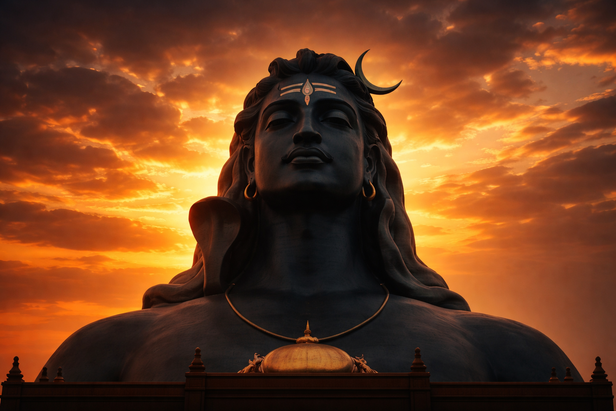
Shiva in Deep Meditation
Image credit : ChatGPT (ai)
Just like Lord Shiva, the human mind gains true strength through stillness. When thoughts settle, clarity naturally emerges, revealing insights often hidden in mental noise. Many people mistake constant activity for productivity, rushing through tasks without focus or purpose. Shiva’s example shows that pausing and observing your thoughts is a form of real mental power. Meditation teaches that silence is not emptiness—it is fertile ground for creativity, reflection, and problem-solving. By embracing stillness, the mind can reset, process emotions effectively, and make deliberate, thoughtful decisions. True focus and inner strength arise when we honor the quiet within.
Detachment From Distractions

Shiva Surrounded by Chaos Yet Calm
Image credit : ChatGPT(ai)
Lord Shiva remains completely calm even as the entire universe seems to swirl around him in chaos. This teaches a powerful lesson for the human mind: detachment. Your mind, too, can learn to step back from external noise, stress, and unnecessary worries without shutting down or becoming indifferent. Detachment means observing with awareness, not being pulled into every distraction or emotional disturbance. Simple practices like focused breathing, mindfulness, or short meditation sessions help train the mind to remain grounded. Over time, this inner calm strengthens, distractions lose their control, and your true priorities and clarity naturally emerge.
Observation Before Reaction

Shiva’s Meditation Balances Energy and Mind
Image credit : ChatGPT (ai)
In deep meditation, Lord Shiva observes everything around him without reacting immediately. This teaches a profound lesson for the human mind: before responding to emotions or impulses, pause and watch them objectively. By training your mind to observe first, you reduce overreactions, avoid unnecessary stress, and make wiser decisions. For instance, rather than responding to anger impulsively, a calm and aware mind evaluates the situation carefully and chooses the most constructive action. Shiva’s meditation demonstrates that mindful observation is more powerful than hasty reaction, helping cultivate emotional balance, clarity, and inner strength in daily life.
Integration of Mind and Energy
Mastery Over Inner Turmoil
Unlock insightful tips and inspiration on personal growth, productivity, and well-being. Stay motivated and updated with the latest at My Life XP.
Frequently Asked Questions (FAQs)
Shiva’s meditation symbolizes a calm, focused, and aware mind. Teachers use this comparison to illustrate how humans can achieve mental clarity and emotional balance.
2. How can meditation help achieve Shiva-like mental calm?
Practices like mindfulness, focused breathing, and reflection train the mind to observe thoughts without reacting impulsively, reducing stress and enhancing clarity.
3. What does “respond rather than react” mean?
It means acknowledging emotions or thoughts without letting them control your actions, allowing thoughtful and intentional behavior instead of impulsive reactions.
4. Can mastering inner turbulence improve emotional stability?
Yes. Recognizing and managing inner conflicts builds resilience, reduces anxiety, and strengthens emotional control.
5. Is it possible to fully achieve a Shiva-like mind?
While complete mastery is rare, consistent meditation and self-awareness can help anyone significantly increase calmness, focus, and inner balance.