Why Even Lord Ram Stayed Silent When Sita Was Accused
Noopur Kumari | Thu, 26 Mar 2026
Discover the shocking truth behind Lord Ram’s silence when Sita was accused of impurity. Rooted in Vedic wisdom and Puranic tales, this article reveals lessons on dharma, honour, and societal responsibility. Learn why even divine actions respected duty over personal desire and how these principles echo in modern life, where women still face societal tests of character.

Lord Ram
Image credit : ChatGPT(AI)
The story of Lord Ram and Sita has fascinated humanity for thousands of years. But a question haunts many why did Ram not publicly defend Sita when rumors and accusations arose about her purity? According to the Vedas, Puranas, and Ramayana, Ram’s silence was a reflection of dharma, societal responsibility, and the balance between personal love and kingly duty. Today, this story resonates even more, as women everywhere face social judgment and tests of honour. This article explores the hidden wisdom behind Ram’s actions, offering lessons on justice, morality, and modern relevance for women and men alike.
![Ram’s Silence]()
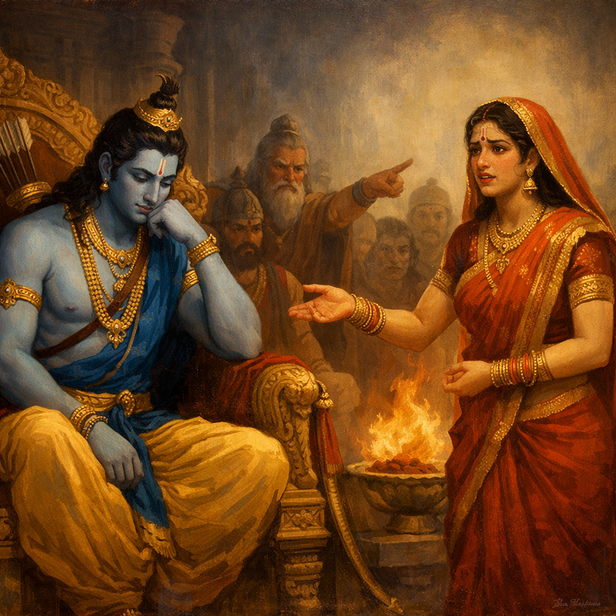
Lord Ram’s silence when Sita faced allegations of impurity wasn’t weakness it was supreme adherence to dharma. As a king, he had to uphold societal law and set an example for the kingdom. By not openly defending Sita, Ram demonstrated that personal desire must sometimes yield to duty, a principle emphasized in the Vedas. This shocking choice ensured that the ideals of truth, justice, and righteousness remained intact. Modern society misinterprets it as injustice, but Ram teaches that integrity sometimes requires silent sacrifice, especially when personal and societal responsibilities conflict.
![Agni Pariksha]()
The Agni Pariksha was not punishment it was a divine test to validate purity before the world’s eyes. The fire symbolized truth, and Sita emerged unscathed, proving her virtue. This story highlights that truth and reputation sometimes require facing trials beyond personal protection. Even a deity like Sita underwent a societal test to restore trust. Today, it teaches that integrity, patience, and courage under scrutiny are timeless virtues, especially for women who face public judgment. The lesson: honor and virtue are sometimes proven in fire, not defended by words alone.
![Ram’s Role as King]()
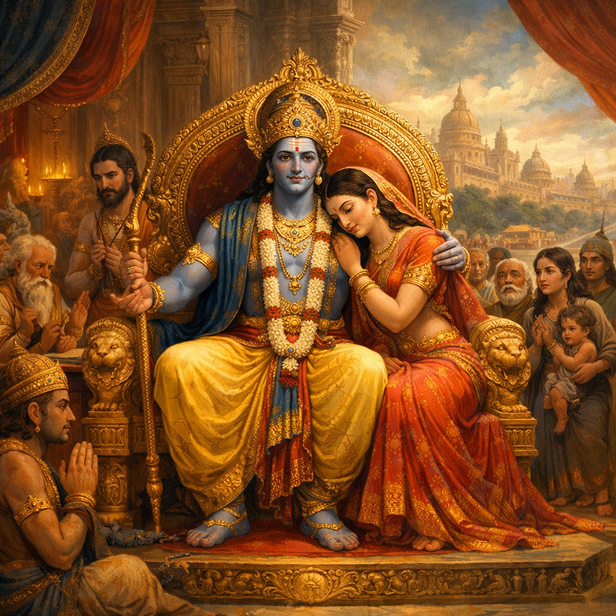
As king, Ram had to consider the well-being of Ayodhya’s citizens and the perception of justice. Public defence could have sparked conflict or distrust, destabilizing the kingdom. Vedas stress that rulers must uphold law even at personal cost. Ram’s silence was a painful, deliberate choice to balance personal love for Sita with duty to his people. Modern readers can relate this to situations where leaders and individuals must prioritize responsibility over emotion. The principle: protecting society’s moral order sometimes requires silent endurance and measured action, even when the heart rebels.
Sita’s trial teaches that women’s virtue is often judged publicly, and their strength emerges in adversity. Ancient texts show that society’s scrutiny of women’s character was inevitable, and divine examples like Sita demonstrate courage, patience, and moral fortitude. The modern relevance is shocking: women today still face social tests of integrity and honour, highlighting that these lessons are timeless. Sita’s unwavering devotion, courage, and grace remind us that true character is revealed through endurance, not external validation. Ram’s role underscores support through respect, not always public defence.
The story of Ram and Sita teaches that integrity, societal duty, and compassion often outweigh personal desires. Ram’s silence doesn’t diminish love it elevates it by respecting law, societal perception, and Sita’s courage. Modern relevance is clear: women and men today face societal judgment, and true support includes respecting processes, encouraging strength, and upholding justice rather than only defending publicly. Actionable steps: support with wisdom, value virtue over appearances, and teach patience under scrutiny. The Ramayana reminds us that true dharma blends love, justice, and compassion timeless lessons for every generation.
Unlock insightful tips and inspiration on personal growth, productivity, and well-being. Stay motivated and updated with the latest at My Life XP.
1. Why didn’t Lord Ram defend Sita when people doubted her purity?
Ram prioritized dharma (duty and righteousness) over personal desire. As king, he had to uphold societal law and moral order, even if it meant personal pain.
2. What was the purpose of Sita’s Agni Pariksha?
The Agni Pariksha was a divine test of purity. Fire symbolized truth, proving Sita’s virtue before the kingdom and restoring societal faith.
3. Was Ram’s silence a sign of weakness?
No. According to the Vedas and Ramayana, it was a sacrificial act to balance personal love with kingly responsibility.
4. How does this story relate to women today?
Women still face social scrutiny and tests of character. The story shows that true support includes patience, respect, and guidance, not just public defense.
5. Can modern society learn from Ram’s actions?
Yes. It teaches integrity, moral courage, and prioritizing justice over ego, a lesson relevant for leaders and individuals alike.
Ram’s Silence Was Dharma, Not Weakness
Ram’s Silence
Image credit : CHATGPT(AI)
Lord Ram’s silence when Sita faced allegations of impurity wasn’t weakness it was supreme adherence to dharma. As a king, he had to uphold societal law and set an example for the kingdom. By not openly defending Sita, Ram demonstrated that personal desire must sometimes yield to duty, a principle emphasized in the Vedas. This shocking choice ensured that the ideals of truth, justice, and righteousness remained intact. Modern society misinterprets it as injustice, but Ram teaches that integrity sometimes requires silent sacrifice, especially when personal and societal responsibilities conflict.
The Agni Pariksha Was a Symbol of Divine Purity

Agni Pariksha
Image credit : CHATGPT(AI)
The Agni Pariksha was not punishment it was a divine test to validate purity before the world’s eyes. The fire symbolized truth, and Sita emerged unscathed, proving her virtue. This story highlights that truth and reputation sometimes require facing trials beyond personal protection. Even a deity like Sita underwent a societal test to restore trust. Today, it teaches that integrity, patience, and courage under scrutiny are timeless virtues, especially for women who face public judgment. The lesson: honor and virtue are sometimes proven in fire, not defended by words alone.
Ram’s Role as King Came Before Personal Desire
Ram’s Role as King
Image credit : CHATGPT(AI)
As king, Ram had to consider the well-being of Ayodhya’s citizens and the perception of justice. Public defence could have sparked conflict or distrust, destabilizing the kingdom. Vedas stress that rulers must uphold law even at personal cost. Ram’s silence was a painful, deliberate choice to balance personal love for Sita with duty to his people. Modern readers can relate this to situations where leaders and individuals must prioritize responsibility over emotion. The principle: protecting society’s moral order sometimes requires silent endurance and measured action, even when the heart rebels.
The Test of Sita Reflects Eternal Feminine Trials
Lessons for Modern Society
Unlock insightful tips and inspiration on personal growth, productivity, and well-being. Stay motivated and updated with the latest at My Life XP.
Frequently Asked Questions (FAQs)
Ram prioritized dharma (duty and righteousness) over personal desire. As king, he had to uphold societal law and moral order, even if it meant personal pain.
2. What was the purpose of Sita’s Agni Pariksha?
The Agni Pariksha was a divine test of purity. Fire symbolized truth, proving Sita’s virtue before the kingdom and restoring societal faith.
3. Was Ram’s silence a sign of weakness?
No. According to the Vedas and Ramayana, it was a sacrificial act to balance personal love with kingly responsibility.
4. How does this story relate to women today?
Women still face social scrutiny and tests of character. The story shows that true support includes patience, respect, and guidance, not just public defense.
5. Can modern society learn from Ram’s actions?
Yes. It teaches integrity, moral courage, and prioritizing justice over ego, a lesson relevant for leaders and individuals alike.