Why Hanuman Appears in Both Ramayana & Mahabharata
Deepak Rajeev | Tue, 12 May 2026
Hanuman’s appearance in both the Ramayana and Mahabharata remains one of Hindu mythology’s most fascinating mysteries. From his immortal Chiranjeevi status to his connection with Rama, Krishna, Bhima, and Arjuna, Hanuman symbolizes eternal devotion, courage, and dharma across cosmic ages. His timeless presence continues to inspire millions seeking spiritual strength, humility, faith, and inner resilience.

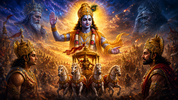
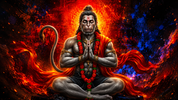
Lord Bajrangbali (Image Credit: AI)
Among all the extraordinary figures in Hindu tradition, Hanuman occupies a uniquely powerful place because he appears not in just one great epic, but in both the Ramayana and the Mahabharata. For millions of devotees, this connection has always carried deep spiritual meaning. Hanuman is not merely remembered as the fearless devotee of Lord Rama who crossed oceans and burned Lanka. He is also present centuries later during the age of the Mahabharata, where he appears again during one of the greatest wars in Hindu mythology. This mysterious continuity has fascinated spiritual scholars, devotees, and mythology readers for generations. How could Hanuman exist across both epics? Why did he appear again during the Mahabharata era? Was his presence symbolic, spiritual, or connected to a larger cosmic purpose?
The answers lie in some of the deepest philosophical ideas within Hindu tradition involving immortality, devotion, divine time, cosmic duty, and the eternal relationship between Lord Rama and Lord Krishna, who are both understood in Hindu belief as incarnations of Lord Vishnu. Hanuman’s presence across both epics is not accidental. In many ways, it symbolizes continuity between two spiritual ages and reflects why Hanuman remains one of the most worshipped and emotionally beloved deities in Hinduism even today.
![Lord Hanuman (Image Credit: AI)]()
One of the primary reasons Hanuman appears in both epics comes from the Hindu concept of the Chiranjeevis. In traditional belief, Chiranjeevis are immortal beings destined to remain alive across ages for a divine purpose. Hanuman is widely regarded as one of these eternal beings. Unlike ordinary mortals whose lives end within a single yuga, Hanuman is believed to continue existing throughout different eras of cosmic time.
This belief explains how Hanuman could serve Lord Rama during the Treta Yuga and later appear again during the Dwapara Yuga of the Mahabharata. According to devotional tradition, Hanuman was blessed with immortality because of his unparalleled devotion, purity, strength, and service to dharma. Several spiritual texts and oral traditions describe him as eternally present wherever Lord Rama’s name is remembered. For devotees, this transforms Hanuman from a historical epic character into a timeless spiritual force associated with courage, protection, humility, and devotion.
![Lord Anjaneya (Image Credit: AI)]()
To fully understand Hanuman’s appearance in the Mahabharata, it is important to understand the deeper theological connection between Rama and Krishna.
In Hindu belief, both Rama and Krishna are incarnations of Lord Vishnu born during different yugas for different cosmic purposes. Rama represents discipline, ideal kingship, sacrifice, and dharma upheld through restraint. Krishna represents wisdom, strategy, divine guidance, and the complex realities of dharma during morally difficult times. Hanuman’s devotion, however, remains eternally fixed upon Vishnu through his Rama form. Many spiritual commentators therefore interpret Hanuman’s appearance in the Mahabharata as an expression of eternal devotion continuing across incarnations. Although the form of Vishnu changed from Rama to Krishna, Hanuman’s devotion to the divine remained unchanged. This idea gives Hanuman’s presence profound emotional and spiritual significance.
One of the most celebrated Mahabharata episodes involving Hanuman occurs during Bhima’s journey through the forest. According to the Mahabharata, Bhima encounters an old monkey lying across his path. Proud of his immense physical strength, Bhima arrogantly asks the monkey to move aside. The monkey calmly replies that he is too weak and requests Bhima to move his tail himself.
Bhima attempts to lift the tail but fails completely despite his legendary strength. Only then does he realize the monkey is no ordinary being. The monkey reveals himself to be Hanuman, Bhima’s divine brother through Vayu, the wind god. Both Hanuman and Bhima are traditionally considered sons of Vayu. This encounter carries deep symbolism. Many scholars interpret the story as a lesson about humility, ego, and the limits of physical power without wisdom. Bhima, despite being one of the strongest warriors in the Mahabharata, learns that spiritual strength surpasses mere physical might. The emotional power of this scene remains one of the reasons Hanuman’s Mahabharata appearance continues to fascinate devotees today.
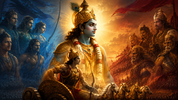
Hanuman’s most symbolically powerful role in the Mahabharata emerges during the Kurukshetra war itself. According to tradition, Hanuman appears on the flag of Arjuna’s chariot, known as the Kapi Dhwaja. This is one of the most spiritually significant visual symbols in the entire Mahabharata. The image of Hanuman on Arjuna’s banner represented several deeper meanings simultaneously. Spiritually, it symbolized divine protection and the continuity of dharma between the Ramayana and Mahabharata eras. Philosophically, it represented the presence of devotion alongside warfare, wisdom, and destiny.
Many traditions believe Hanuman’s presence on the chariot also strengthened and protected Arjuna during battle. Some devotional interpretations go even further and suggest that Hanuman’s roar during the war psychologically weakened opposing warriors and inspired the Pandavas. This connection between Hanuman, Arjuna, and Krishna created one of the most powerful symbolic unions in Hindu mythology:
Hanuman’s appearance across both epics is also deeply connected to the Hindu concept of dharma. The Ramayana and Mahabharata occur in different ages with very different moral environments. The Ramayana presents a world where dharma, though challenged, remains relatively clear and structured. The Mahabharata portrays a morally complex age where truth, justice, and duty become far more difficult to navigate. Hanuman’s presence acts almost like a bridge between these worlds.
He represents timeless virtues that remain unchanged even as humanity evolves through different spiritual ages:
Hanuman’s popularity extends far beyond mythology because his character speaks directly to universal human emotions. Unlike many divine figures associated mainly with cosmic power, Hanuman is often loved for qualities people find personally relatable:
At a deeper philosophical level, Hanuman’s appearance in both epics reflects one of Hinduism’s most profound spiritual ideas: the eternal nature of devotion. Empires rise and fall. Wars begin and end. Even divine incarnations change forms across ages. Yet pure devotion remains timeless. Hanuman symbolizes that eternal devotion. Whether serving Rama in the forests of the Ramayana or standing beside Krishna and Arjuna during the Mahabharata, Hanuman’s purpose never changes. He exists wherever dharma must be protected and wherever devotion to the divine remains alive. This may be the deepest reason why Hanuman’s presence across both epics continues to inspire awe centuries later.
Hanuman’s appearance in both the Ramayana and Mahabharata is far more than a fascinating mythology detail. It represents a powerful spiritual bridge connecting two of Hinduism’s greatest epics across different cosmic ages. Through his immortality, devotion, humility, and unwavering dedication to dharma, Hanuman becomes a timeless symbol of inner strength and divine service. His encounters with Bhima, his presence on Arjuna’s chariot, and his eternal connection to Lord Vishnu through Rama and Krishna all carry profound philosophical meaning that continues to resonate deeply with devotees today. Perhaps that is why Hanuman remains one of the most emotionally loved and spiritually enduring figures in Hindu tradition. Across changing ages, battles, and generations, Hanuman stands as a reminder that courage, faith, and devotion never truly disappear.
Unlock insightful tips and inspiration on personal growth, productivity, and well-being. Stay motivated and updated with the latest at My Life XP.
The answers lie in some of the deepest philosophical ideas within Hindu tradition involving immortality, devotion, divine time, cosmic duty, and the eternal relationship between Lord Rama and Lord Krishna, who are both understood in Hindu belief as incarnations of Lord Vishnu. Hanuman’s presence across both epics is not accidental. In many ways, it symbolizes continuity between two spiritual ages and reflects why Hanuman remains one of the most worshipped and emotionally beloved deities in Hinduism even today.
Hanuman Is Believed to Be One of the Chiranjeevis
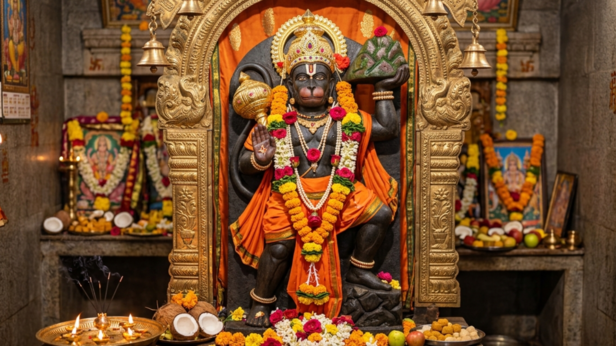
Lord Hanuman (Image Credit: AI)
One of the primary reasons Hanuman appears in both epics comes from the Hindu concept of the Chiranjeevis. In traditional belief, Chiranjeevis are immortal beings destined to remain alive across ages for a divine purpose. Hanuman is widely regarded as one of these eternal beings. Unlike ordinary mortals whose lives end within a single yuga, Hanuman is believed to continue existing throughout different eras of cosmic time.
This belief explains how Hanuman could serve Lord Rama during the Treta Yuga and later appear again during the Dwapara Yuga of the Mahabharata. According to devotional tradition, Hanuman was blessed with immortality because of his unparalleled devotion, purity, strength, and service to dharma. Several spiritual texts and oral traditions describe him as eternally present wherever Lord Rama’s name is remembered. For devotees, this transforms Hanuman from a historical epic character into a timeless spiritual force associated with courage, protection, humility, and devotion.
The Spiritual Link Between Rama and Krishna
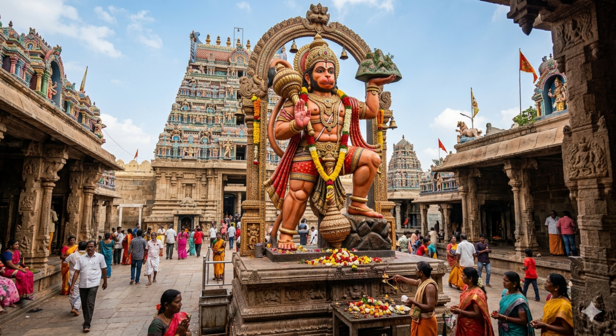
Lord Anjaneya (Image Credit: AI)
To fully understand Hanuman’s appearance in the Mahabharata, it is important to understand the deeper theological connection between Rama and Krishna.
In Hindu belief, both Rama and Krishna are incarnations of Lord Vishnu born during different yugas for different cosmic purposes. Rama represents discipline, ideal kingship, sacrifice, and dharma upheld through restraint. Krishna represents wisdom, strategy, divine guidance, and the complex realities of dharma during morally difficult times. Hanuman’s devotion, however, remains eternally fixed upon Vishnu through his Rama form. Many spiritual commentators therefore interpret Hanuman’s appearance in the Mahabharata as an expression of eternal devotion continuing across incarnations. Although the form of Vishnu changed from Rama to Krishna, Hanuman’s devotion to the divine remained unchanged. This idea gives Hanuman’s presence profound emotional and spiritual significance.
The Famous Meeting Between Hanuman and Bhima
One of the most celebrated Mahabharata episodes involving Hanuman occurs during Bhima’s journey through the forest. According to the Mahabharata, Bhima encounters an old monkey lying across his path. Proud of his immense physical strength, Bhima arrogantly asks the monkey to move aside. The monkey calmly replies that he is too weak and requests Bhima to move his tail himself.
Bhima attempts to lift the tail but fails completely despite his legendary strength. Only then does he realize the monkey is no ordinary being. The monkey reveals himself to be Hanuman, Bhima’s divine brother through Vayu, the wind god. Both Hanuman and Bhima are traditionally considered sons of Vayu. This encounter carries deep symbolism. Many scholars interpret the story as a lesson about humility, ego, and the limits of physical power without wisdom. Bhima, despite being one of the strongest warriors in the Mahabharata, learns that spiritual strength surpasses mere physical might. The emotional power of this scene remains one of the reasons Hanuman’s Mahabharata appearance continues to fascinate devotees today.
Why Hanuman Appeared on Arjuna’s Chariot
Hanuman’s most symbolically powerful role in the Mahabharata emerges during the Kurukshetra war itself. According to tradition, Hanuman appears on the flag of Arjuna’s chariot, known as the Kapi Dhwaja. This is one of the most spiritually significant visual symbols in the entire Mahabharata. The image of Hanuman on Arjuna’s banner represented several deeper meanings simultaneously. Spiritually, it symbolized divine protection and the continuity of dharma between the Ramayana and Mahabharata eras. Philosophically, it represented the presence of devotion alongside warfare, wisdom, and destiny.
Many traditions believe Hanuman’s presence on the chariot also strengthened and protected Arjuna during battle. Some devotional interpretations go even further and suggest that Hanuman’s roar during the war psychologically weakened opposing warriors and inspired the Pandavas. This connection between Hanuman, Arjuna, and Krishna created one of the most powerful symbolic unions in Hindu mythology:
- Hanuman representing devotion
- Arjuna representing human struggle and duty
- Krishna representing divine wisdom and guidance
Hanuman’s Role Symbolizes the Continuity of Dharma
Hanuman’s appearance across both epics is also deeply connected to the Hindu concept of dharma. The Ramayana and Mahabharata occur in different ages with very different moral environments. The Ramayana presents a world where dharma, though challenged, remains relatively clear and structured. The Mahabharata portrays a morally complex age where truth, justice, and duty become far more difficult to navigate. Hanuman’s presence acts almost like a bridge between these worlds.
He represents timeless virtues that remain unchanged even as humanity evolves through different spiritual ages:
- devotion
- courage
- humility
- service
- loyalty
- faith
Why Hanuman Continues to Resonate Emotionally Today
Hanuman’s popularity extends far beyond mythology because his character speaks directly to universal human emotions. Unlike many divine figures associated mainly with cosmic power, Hanuman is often loved for qualities people find personally relatable:
- unwavering loyalty
- emotional strength during hardship
- humility despite greatness
- courage against impossible odds
- complete devotion to a higher purpose
The Deeper Spiritual Meaning Behind Hanuman’s Dual Presence
At a deeper philosophical level, Hanuman’s appearance in both epics reflects one of Hinduism’s most profound spiritual ideas: the eternal nature of devotion. Empires rise and fall. Wars begin and end. Even divine incarnations change forms across ages. Yet pure devotion remains timeless. Hanuman symbolizes that eternal devotion. Whether serving Rama in the forests of the Ramayana or standing beside Krishna and Arjuna during the Mahabharata, Hanuman’s purpose never changes. He exists wherever dharma must be protected and wherever devotion to the divine remains alive. This may be the deepest reason why Hanuman’s presence across both epics continues to inspire awe centuries later.
Conclusion
Hanuman’s appearance in both the Ramayana and Mahabharata is far more than a fascinating mythology detail. It represents a powerful spiritual bridge connecting two of Hinduism’s greatest epics across different cosmic ages. Through his immortality, devotion, humility, and unwavering dedication to dharma, Hanuman becomes a timeless symbol of inner strength and divine service. His encounters with Bhima, his presence on Arjuna’s chariot, and his eternal connection to Lord Vishnu through Rama and Krishna all carry profound philosophical meaning that continues to resonate deeply with devotees today. Perhaps that is why Hanuman remains one of the most emotionally loved and spiritually enduring figures in Hindu tradition. Across changing ages, battles, and generations, Hanuman stands as a reminder that courage, faith, and devotion never truly disappear.
Unlock insightful tips and inspiration on personal growth, productivity, and well-being. Stay motivated and updated with the latest at My Life XP.