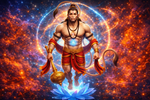
Why Hanuman Never Married: The Truth That May Surprise You
Deepak Rajeev | Wed, 08 Apr 2026

The Real Reason Hanuman Never Married
Image credit : Pexels
Among all the extraordinary figures of the Ramayana, Hanuman stands in a category entirely his own, not only because of his unmatched strength or his divine abilities, but because of the life he chose to live- a life that seems untouched by personal desire, untouched by worldly ambition and defined instead by something far more profound and enduring.
He possessed the power to lift mountains, the speed to cross oceans in a single leap, and the courage to stand alone against entire kingdoms, and yet, despite having everything that would define greatness in the human world, he chose a path that feels almost incomprehensible in today’s time- a life of complete detachment from personal relationships and worldly fulfilment. For centuries, this quiet but powerful question has continued to linger in the minds of those who reflect on his life:
![Lord Hanuman]()
Because the answer is not as simple as it appears on the surface, and the truth behind it reveals something far deeper about devotion, discipline and the nature of purpose itself.
To truly understand why Hanuman never married, one must first understand the nature of his devotion, because his relationship with Lord Rama was not one of ordinary loyalty or duty, but one that transcended all conventional definitions of love and service. Hanuman did not merely serve Rama; he lived for him in a way that dissolved the boundary between self and purpose, where every action, every decision and every moment of his existence became an offering to something greater than himself.
When he leaped across the ocean in search of Sita, it was not an act driven by heroism or the desire for recognition, but a natural extension of his devotion; when he set Lanka ablaze, it was not out of anger or vengeance, but as a necessary act in the service of righteousness; and when he carried the Sanjeevani mountain to save Lakshmana, it was not to prove his strength, but because there was no other option in his unwavering commitment to Rama’s cause. In such a life, where every aspect of existence is already dedicated to a higher purpose, the question of marriage does not arise in the way it does for others, because the space that would have been occupied by personal desire is already filled by something far more consuming.
![Lord Bajrangbali]()
One of the most widely accepted explanations for Hanuman’s celibacy lies in the concept of brahmacharya, which in the context of Hindu philosophy is far more than simply remaining unmarried, as it represents a disciplined way of living in which one’s physical, mental, and spiritual energies are consciously directed toward self-mastery and higher realisation.
Hanuman embodies this principle in its purest form, because his immense strength is not merely physical or divine in origin, but is deeply connected to his ability to remain free from distractions, attachments, and the pull of worldly desires that often fragment human focus and energy. In choosing this path, Hanuman does not reject life, but refines it, transforming his potential into something concentrated and unwavering, which is why his power feels so absolute and his presence so timeless.
His celibacy, therefore, is not a limitation, but a source of strength- a conscious choice that allows him to exist in a state of clarity and purpose that few can achieve.
![The Real Reason Hanuman Never Married]()
And yet, as with many figures in Indian mythology, there exists a lesser-known narrative that adds an intriguing layer of complexity to this understanding, challenging the simplicity of the idea that Hanuman never married at all. According to certain regional traditions, particularly those associated with South Indian texts, Hanuman, during his period of learning under Surya, the Sun God, was required to master not only spiritual and martial knowledge but also aspects of worldly life that were considered essential for complete education.
In order to fulfil this requirement, it is said that Hanuman entered into a symbolic or ritual marriage with Suvarchala, a figure often described as the daughter or manifestation connected to Surya, thereby completing the formal condition necessary for his learning. However, this union was not rooted in desire, companionship, or emotional attachment, as it functioned more as a ritual fulfilment of duty rather than a conventional relationship, and once this purpose was achieved, Hanuman remained entirely detached, continuing his life in alignment with his deeper commitment to devotion and discipline.
This version of the story does not contradict his celibacy but instead reinforces the idea that even when he engaged with the world, he did so without becoming bound by it.
What makes Hanuman’s life so powerful and enduring is not simply what he accomplished, but what he chose not to pursue, because in a narrative filled with kings, warriors, and heroes who sought kingdoms, recognition, or legacy, Hanuman stands as a figure who desired none of these things.
He did not aspire to rule, he did not seek validation, and he did not attempt to build a life defined by personal milestones that society often considers essential, and even after the war had ended and Rama’s victory was secured, he did not ask for rewards, titles, or a place of honor.
Instead, he chose to remain in service, to exist in the quiet fulfilment of devotion, which suggests that his understanding of life operated on a level that transcended ordinary human motivations.
In a world where success is often measured by accumulation- of relationships, achievements, wealth, and recognition- Hanuman’s life can feel almost alien, because it challenges the deeply ingrained belief that fulfillment must come from external sources. His story presents an alternative perspective, one in which completeness is not dependent on having more, but on needing less, and where true strength lies not in acquiring but in mastering oneself.
This is perhaps why his life continues to resonate so deeply, because it speaks to a possibility that many sense but few fully understand- that there is a form of fulfilment that exists beyond the structures we are taught to pursue.
So why did Hanuman never marry?
Not because he lacked the opportunity, and not because he was denied a conventional life, but because he chose a path that required him to transcend the very desires that define ordinary existence, a path where love was not absent but transformed into devotion, where attachment was replaced by purpose, and where personal fulfilment was found not in relationships but in service to something greater than oneself.
Hanuman’s life ultimately invites a deeper reflection, not on what he gave up, but on what he discovered, because in choosing discipline over desire and devotion over attachment, he became something that goes beyond the limitations of time and narrative. And perhaps that is why his story continues to endure with such power, because it offers a truth that is both simple and profoundly challenging: that the highest form of life may not always be the one that follows the path laid out by the world, but the one that dares to rise above it.
Unlock insightful tips and inspiration on personal growth, productivity, and well-being. Stay motivated and updated with the latest at My Life XP.
He possessed the power to lift mountains, the speed to cross oceans in a single leap, and the courage to stand alone against entire kingdoms, and yet, despite having everything that would define greatness in the human world, he chose a path that feels almost incomprehensible in today’s time- a life of complete detachment from personal relationships and worldly fulfilment. For centuries, this quiet but powerful question has continued to linger in the minds of those who reflect on his life:
Why did Hanuman never marry?
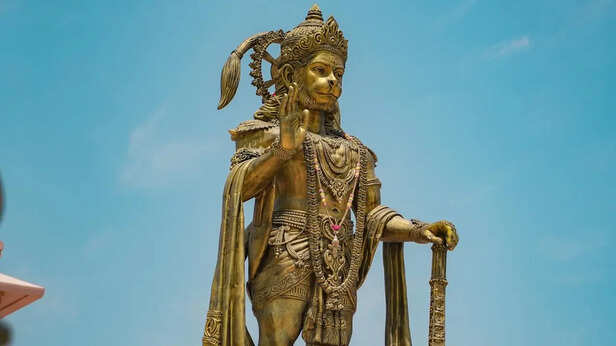
Lord Hanuman
Image credit : Pexels
Because the answer is not as simple as it appears on the surface, and the truth behind it reveals something far deeper about devotion, discipline and the nature of purpose itself.
A Life Defined by Absolute Devotion
To truly understand why Hanuman never married, one must first understand the nature of his devotion, because his relationship with Lord Rama was not one of ordinary loyalty or duty, but one that transcended all conventional definitions of love and service. Hanuman did not merely serve Rama; he lived for him in a way that dissolved the boundary between self and purpose, where every action, every decision and every moment of his existence became an offering to something greater than himself.
When he leaped across the ocean in search of Sita, it was not an act driven by heroism or the desire for recognition, but a natural extension of his devotion; when he set Lanka ablaze, it was not out of anger or vengeance, but as a necessary act in the service of righteousness; and when he carried the Sanjeevani mountain to save Lakshmana, it was not to prove his strength, but because there was no other option in his unwavering commitment to Rama’s cause. In such a life, where every aspect of existence is already dedicated to a higher purpose, the question of marriage does not arise in the way it does for others, because the space that would have been occupied by personal desire is already filled by something far more consuming.
The Discipline of Brahmacharya and Inner Power
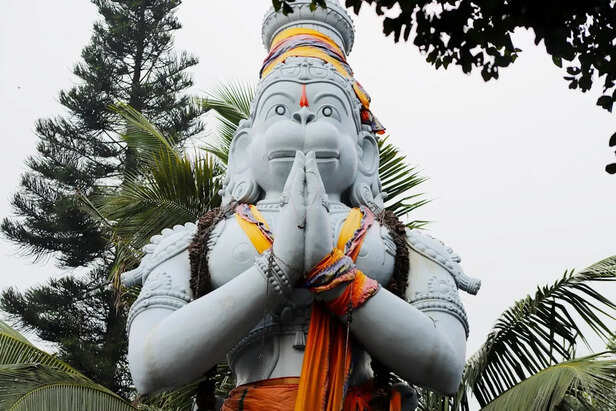
Lord Bajrangbali
Image credit : Pexels
One of the most widely accepted explanations for Hanuman’s celibacy lies in the concept of brahmacharya, which in the context of Hindu philosophy is far more than simply remaining unmarried, as it represents a disciplined way of living in which one’s physical, mental, and spiritual energies are consciously directed toward self-mastery and higher realisation.
Hanuman embodies this principle in its purest form, because his immense strength is not merely physical or divine in origin, but is deeply connected to his ability to remain free from distractions, attachments, and the pull of worldly desires that often fragment human focus and energy. In choosing this path, Hanuman does not reject life, but refines it, transforming his potential into something concentrated and unwavering, which is why his power feels so absolute and his presence so timeless.
His celibacy, therefore, is not a limitation, but a source of strength- a conscious choice that allows him to exist in a state of clarity and purpose that few can achieve.
The Lesser-Known Story That Complicates the Truth
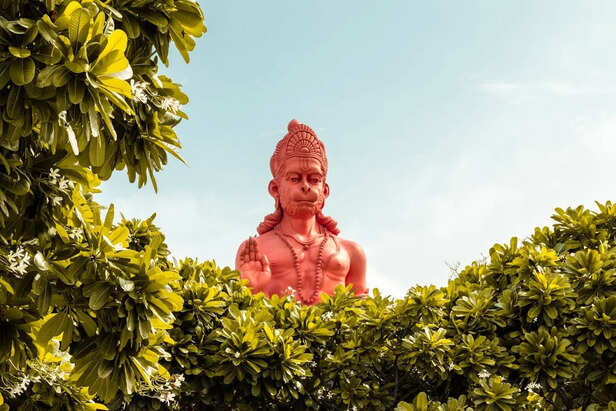
The Real Reason Hanuman Never Married
Image credit : Pexels
And yet, as with many figures in Indian mythology, there exists a lesser-known narrative that adds an intriguing layer of complexity to this understanding, challenging the simplicity of the idea that Hanuman never married at all. According to certain regional traditions, particularly those associated with South Indian texts, Hanuman, during his period of learning under Surya, the Sun God, was required to master not only spiritual and martial knowledge but also aspects of worldly life that were considered essential for complete education.
In order to fulfil this requirement, it is said that Hanuman entered into a symbolic or ritual marriage with Suvarchala, a figure often described as the daughter or manifestation connected to Surya, thereby completing the formal condition necessary for his learning. However, this union was not rooted in desire, companionship, or emotional attachment, as it functioned more as a ritual fulfilment of duty rather than a conventional relationship, and once this purpose was achieved, Hanuman remained entirely detached, continuing his life in alignment with his deeper commitment to devotion and discipline.
This version of the story does not contradict his celibacy but instead reinforces the idea that even when he engaged with the world, he did so without becoming bound by it.
A Life Beyond Desire and Possession
What makes Hanuman’s life so powerful and enduring is not simply what he accomplished, but what he chose not to pursue, because in a narrative filled with kings, warriors, and heroes who sought kingdoms, recognition, or legacy, Hanuman stands as a figure who desired none of these things.
He did not aspire to rule, he did not seek validation, and he did not attempt to build a life defined by personal milestones that society often considers essential, and even after the war had ended and Rama’s victory was secured, he did not ask for rewards, titles, or a place of honor.
Instead, he chose to remain in service, to exist in the quiet fulfilment of devotion, which suggests that his understanding of life operated on a level that transcended ordinary human motivations.
Why His Choice Feels So Unusual Today
In a world where success is often measured by accumulation- of relationships, achievements, wealth, and recognition- Hanuman’s life can feel almost alien, because it challenges the deeply ingrained belief that fulfillment must come from external sources. His story presents an alternative perspective, one in which completeness is not dependent on having more, but on needing less, and where true strength lies not in acquiring but in mastering oneself.
This is perhaps why his life continues to resonate so deeply, because it speaks to a possibility that many sense but few fully understand- that there is a form of fulfilment that exists beyond the structures we are taught to pursue.
The Untold Truth
So why did Hanuman never marry?
Not because he lacked the opportunity, and not because he was denied a conventional life, but because he chose a path that required him to transcend the very desires that define ordinary existence, a path where love was not absent but transformed into devotion, where attachment was replaced by purpose, and where personal fulfilment was found not in relationships but in service to something greater than oneself.
The Final Reflection
Hanuman’s life ultimately invites a deeper reflection, not on what he gave up, but on what he discovered, because in choosing discipline over desire and devotion over attachment, he became something that goes beyond the limitations of time and narrative. And perhaps that is why his story continues to endure with such power, because it offers a truth that is both simple and profoundly challenging: that the highest form of life may not always be the one that follows the path laid out by the world, but the one that dares to rise above it.
Unlock insightful tips and inspiration on personal growth, productivity, and well-being. Stay motivated and updated with the latest at My Life XP.