Why Hindu Gods Are Always Blue The Hidden Truth
Noopur Kumari | Fri, 13 Mar 2026
Blue in Hinduism isn’t a literal skin color it’s a symbol of infinity. While ancient texts often describe deities in earthy tones, the iconic blue conveys limitless divinity. Vishnu carries the universe effortlessly, Krishna’s love knows no bounds, and Shiva’s sacrifice transcends human understanding. The shocking truth is that blue is a reminder: divinity cannot be measured, contained, or confined. Observing a blue deity isn’t about color it’s an invitation to feel vastness, embrace eternity, and experience the boundless nature of the divine.

Blue Skin in Hinduism
Image credit : ChatGPT"(AI)
At first glance, Hindu gods appear blue. Many assume it’s their actual skin color, but the truth is far deeper. Blue isn’t literal it’s a symbol of the infinite. The sky, the oceans, and the cosmos themselves are blue, boundless, and limitless. Hinduism used this color to represent divinity that cannot be measured, contained, or limited. Vishnu’s blue shows the weight of the universe he carries. Krishna’s blue reflects limitless love. Shiva’s blue reminds us of ultimate sacrifice. These deities were never meant to look human they were meant to feel eternal.
![Expansive blue sky meeting the horizon]()
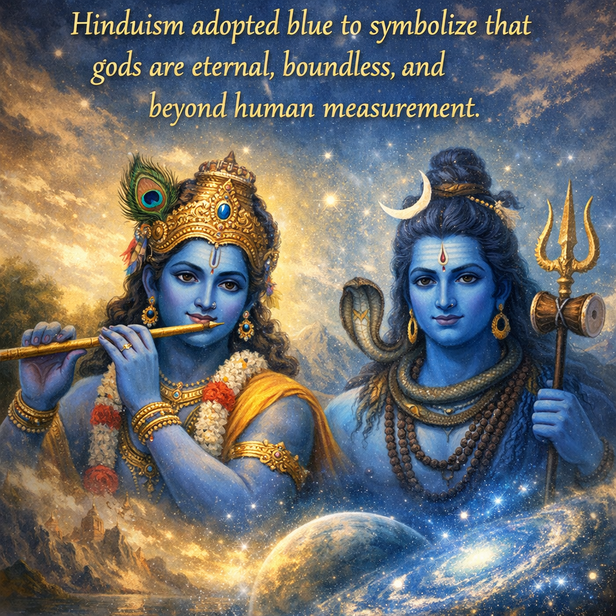
Blue is everywhere in nature sky, oceans, cosmos and it represents something without limits. Hinduism adopted blue to symbolize that gods are eternal, boundless, and beyond human measurement. Their power, love, and sacrifice cannot be contained within earthly concepts. Vishnu carries the universe, Krishna loves endlessly, and Shiva embodies sacrifice all expressed through the limitless nature of blue. It’s not about skin; it’s about feeling their vastness and divine magnitude.
![Vishnu holding the globe, floating in cosmic blue]()
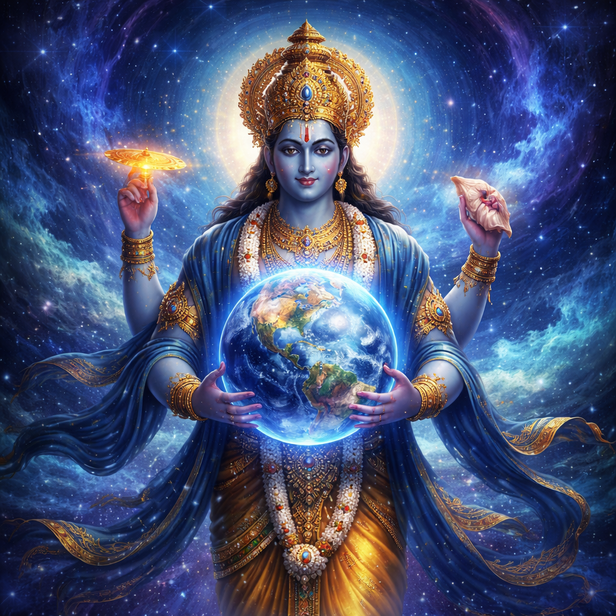
Vishnu’s blue skin is a silent reminder that he carries the entire universe without breaking. Ancient artists didn’t aim to show literal color they conveyed divine responsibility, strength, and infinity. Every depiction of Vishnu in blue is an invitation to reflect on how divine power transcends human limitations. Observing the blue reminds devotees that the divine can bear what we cannot even imagine.
![Krishna playing flute in lush blue background]()
Krishna’s blue reflects limitless love and compassion. His affection for Radha, the gopis, and the world cannot be quantified. Blue is the color of boundless emotion, not physical appearance. By showing Krishna in blue, Hindu art communicates a love that never ends, never limits, and never fades. Observing this reminds us that divine love exists beyond human boundaries and expectations.
Shiva’s blue comes from consuming the poison during Samudra Manthan, symbolizing sacrifice to protect the world. His blue skin is not literal but a metaphor for endurance, selflessness, and transformation. It reminds devotees that divine power often comes with responsibility and suffering, yet remains eternal and boundless. Observing Shiva’s blue inspires us to embrace life’s challenges with patience and awareness.
Next time you see a blue deity, don’t just notice the color. Understand the message: divinity is limitless, eternal, and beyond human comprehension. These artistic choices invite us to experience vastness, not literal skin tone. Blue is a reminder that the infinite exists all around us, in love, sacrifice, and responsibility. The divine is not bound by human dimensions it is symbolic, eternal, and infinitely powerful.
Blue in Hinduism is not a pigment it is a philosophy. Vishnu’s responsibility, Krishna’s love, and Shiva’s sacrifice are visualized through the infinite nature of blue. Ancient artists weren’t trying to make gods human they were teaching us to feel eternity and boundlessness. The next time you see a blue deity, let it remind you that divinity transcends limits, and some truths are felt, not seen.
Unlock insightful tips and inspiration on personal growth, productivity, and well-being. Stay motivated and updated with the latest at My Life XP.
1. Why are Hindu gods depicted as blue?
Blue symbolizes infinity, boundlessness, and divinity that cannot be contained. It’s not literal skin color.
2. Are gods actually described as blue in ancient texts?
No. Many texts describe earthy tones; the blue color is symbolic, chosen to convey eternal power and limitless qualities.
3. What does Vishnu’s blue skin represent?
It represents the immense weight of the universe he carries effortlessly, showing divine responsibility beyond human limits.
4. Why is Krishna blue?
Krishna’s blue reflects his limitless love and compassion, emphasizing that divine affection has no boundaries.
5. Why is Shiva depicted as blue?
Shiva’s blue comes from consuming poison during the Samudra Manthan, symbolizing sacrifice and endurance for the world.
6. Is blue used in Hindu art for spiritual teaching?
Yes. Blue reminds devotees to experience vastness, eternity, and the infinite nature of divinity, rather than focusing on literal human traits.
Blue Is the Color of Infinity
Expansive blue sky meeting the horizon
Image credit : CHATGPT(AI)
Blue is everywhere in nature sky, oceans, cosmos and it represents something without limits. Hinduism adopted blue to symbolize that gods are eternal, boundless, and beyond human measurement. Their power, love, and sacrifice cannot be contained within earthly concepts. Vishnu carries the universe, Krishna loves endlessly, and Shiva embodies sacrifice all expressed through the limitless nature of blue. It’s not about skin; it’s about feeling their vastness and divine magnitude.
Vishnu: Bearing the Universe
Vishnu holding the globe, floating in cosmic blue
Image credit : CHATGPT(AI)
Vishnu’s blue skin is a silent reminder that he carries the entire universe without breaking. Ancient artists didn’t aim to show literal color they conveyed divine responsibility, strength, and infinity. Every depiction of Vishnu in blue is an invitation to reflect on how divine power transcends human limitations. Observing the blue reminds devotees that the divine can bear what we cannot even imagine.
Krishna: Love Without Limits
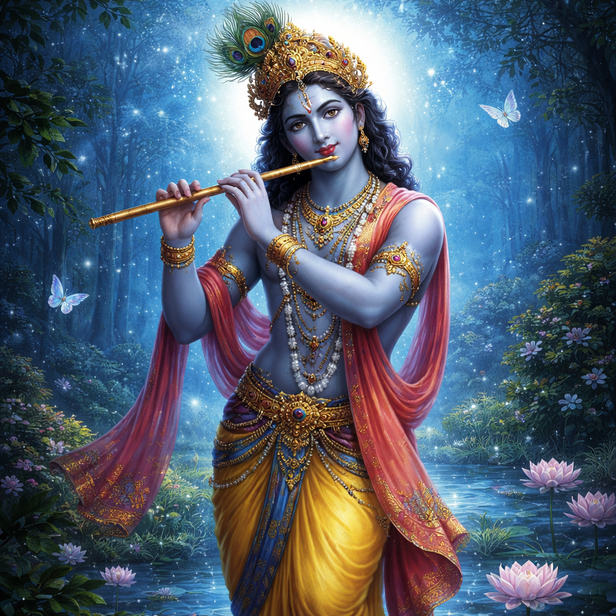
Krishna playing flute in lush blue background
Image credit : CHATGPT(AI)
Krishna’s blue reflects limitless love and compassion. His affection for Radha, the gopis, and the world cannot be quantified. Blue is the color of boundless emotion, not physical appearance. By showing Krishna in blue, Hindu art communicates a love that never ends, never limits, and never fades. Observing this reminds us that divine love exists beyond human boundaries and expectations.
Shiva: Sacrifice and Transformation
Why We Should See Beyond the Color
Devotee gazing at a blue deity in awe
Unlock insightful tips and inspiration on personal growth, productivity, and well-being. Stay motivated and updated with the latest at My Life XP.
Frequently Asked Questions (FAQs)
Blue symbolizes infinity, boundlessness, and divinity that cannot be contained. It’s not literal skin color.
2. Are gods actually described as blue in ancient texts?
No. Many texts describe earthy tones; the blue color is symbolic, chosen to convey eternal power and limitless qualities.
3. What does Vishnu’s blue skin represent?
It represents the immense weight of the universe he carries effortlessly, showing divine responsibility beyond human limits.
4. Why is Krishna blue?
Krishna’s blue reflects his limitless love and compassion, emphasizing that divine affection has no boundaries.
5. Why is Shiva depicted as blue?
Shiva’s blue comes from consuming poison during the Samudra Manthan, symbolizing sacrifice and endurance for the world.
6. Is blue used in Hindu art for spiritual teaching?
Yes. Blue reminds devotees to experience vastness, eternity, and the infinite nature of divinity, rather than focusing on literal human traits.