Why Shiva’s Own Spirits Fear Hanuman Shocking Truth
Noopur Kumari | Tue, 21 Apr 2026
The fear of spirits is not about power it is about purity. Shiva is the master of all beings, including ghosts and pishach, because he accepts everything pure or impure. But Hanuman represents absolute discipline, devotion, and divine energy. His presence is so pure that negative or unstable energies cannot survive near him. This is why spirits don’t fear Shiva but they cannot tolerate Hanuman. This article reveals the deeper spiritual law behind this paradox and explains why Hanuman’s name is believed to offer protection even today.

It sounds impossible, doesn’t it? The same spirits that serve Shiva are terrified of Hanuman. How can the servants fear a form of their own master? This question has confused people for generations. If Hanuman is believed to be a form or aspect of Shiva, then why do ghosts, pishach, and unseen forces run away just by hearing his name? There is a hidden law behind this mystery. and once you understand it the fear, the power, and the connection between Shiva and Hanuman will finally make sense.
![The Two Faces of Divine Power]()
Shiva is known as Bhootnath the lord of spirits because he accepts every form of existence, even the darkest ones. He does not reject or destroy them. He gives them space. But Hanuman represents a different energy. His nature is not to accept chaos but to transform or remove it. This is why spirits are not afraid of Shiva they belong to his domain. But Hanuman’s presence challenges their very existence. His energy is not neutral; it is purifying. And anything impure naturally fears purification.
![When Darkness Faces Pure Ligh]()
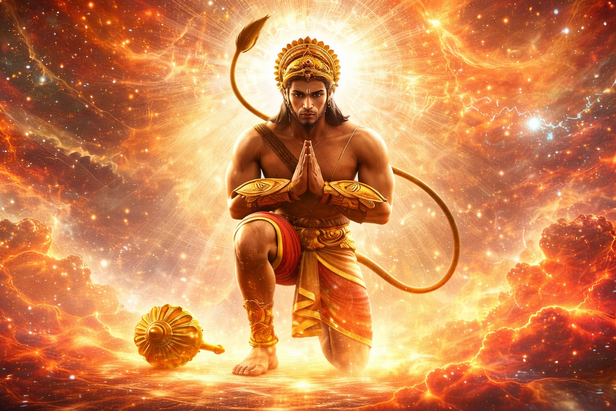
Spirits like bhut and pishach are often described as unstable energies driven by attachment, anger, or unfinished desires. They exist in imbalance. Hanuman, on the other hand, represents perfect balance and devotion. When such opposite energies meet, one cannot survive. This is the real reason behind fear. It is not that Hanuman attacks them but his presence naturally weakens them. Just like darkness cannot stay in light, these energies cannot stay near him. That is why even his name carries a powerful effect.
![When Darkness Faces Pure Light]()
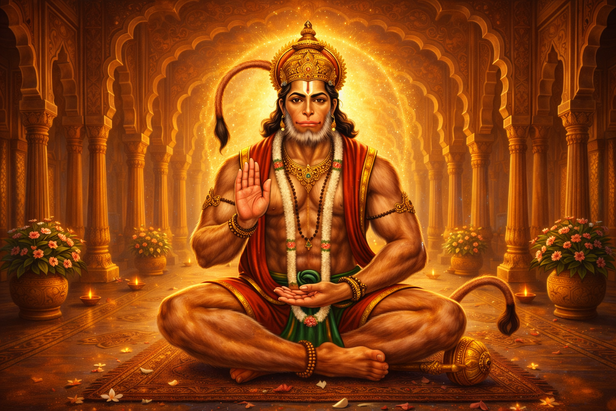
The true strength of Hanuman lies in his connection with Rama. His power is not personal it flows through devotion. When Hanuman takes the name of Rama, it creates a vibration of order, truth, and dharma. Spirits that exist in disorder cannot handle this frequency. This is why it is believed that chanting Hanuman’s or Rama’s name creates protection. It is not superstition it is symbolic of aligning with higher consciousness, where fear and negativity lose their hold.
According to traditional stories, when Hanuman was searching for Sita, he entered a realm of dark energies. A powerful Pishach king tried to stop him. But Hanuman did not argue or show anger he simply invoked Rama’s name. Within moments, the battle ended. The Pishach realized he was facing a force beyond physical strength. He surrendered and promised that any being who remembers Hanuman or Rama would never be troubled by such entities. This story highlights a deeper truth real power does not fight, it transforms.
Another confusion arises if Shiva is the lord of spirits, why is Ganesha called Ganpati? The answer lies in roles. Shiva is the ultimate source and master of all beings, including ghosts. But Ganesha is given the responsibility to lead and organize these energies. “Gan” means groups or beings, and “Pati” means leader. So Ganpati is the commander, while Shiva is the origin. This shows a structured cosmic system where every force has its place and purpose.
Unlock insightful tips and inspiration on personal growth, productivity, and well-being. Stay motivated and updated with the latest at My Life XP.
1. Why do ghosts fear Hanuman if he is a form of Shiva?
Hanuman represents pure devotion, discipline, and divine focus, while Shiva accepts all energies—including chaotic and impure ones. Ghosts and pishach are comfortable under Shiva’s domain, but they cannot tolerate Hanuman’s intense purity. It’s not fear of power—it’s the inability to exist in his presence.
2. Are bhut, pret, and pishach real according to scriptures?
In many Hindu texts, bhut, pret, and pishach are described as restless or unbalanced energies rather than physical beings. They symbolize unresolved desires, negative emotions, or disturbed states of consciousness that have not found peace.
3. Why is Hanuman’s name considered protective?
The name of Hanuman is deeply connected with strength, courage, and devotion to Rama. Chanting his name is believed to align the mind with positivity and fearlessness, which naturally reduces the effect of negativity or fear.
4. If Shiva is Bhootnath, why doesn’t he remove these spirits?
Shiva is known for balance and acceptance. He does not destroy all negative energies because they are also part of the cosmic system. Instead, he controls and governs them, giving them a place within existence.
5. What is the deeper meaning behind this story?
The story symbolizes an inner truth: when the mind is pure, focused, and devoted like Hanuman, negativity cannot affect it. Fear disappears not because the world changes—but because your inner state becomes stronger.
6. Why is Ganesha called Ganpati if Shiva is the lord of all beings?
Ganesha is called Ganpati because he is the leader of Shiva’s ganas (divine groups or energies). While Shiva is the supreme source, Ganesha is given the role of organizing and guiding these forces.
SHIVA ACCEPTS, HANUMAN PURIFIES
The Two Faces of Divine Power
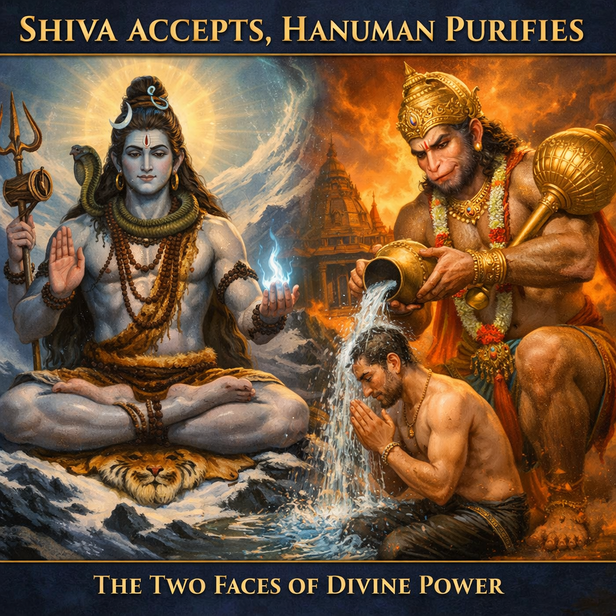
Shiva is known as Bhootnath the lord of spirits because he accepts every form of existence, even the darkest ones. He does not reject or destroy them. He gives them space. But Hanuman represents a different energy. His nature is not to accept chaos but to transform or remove it. This is why spirits are not afraid of Shiva they belong to his domain. But Hanuman’s presence challenges their very existence. His energy is not neutral; it is purifying. And anything impure naturally fears purification.
FEAR IS NOT OF POWER, BUT OF PURITY
When Darkness Faces Pure Ligh
Image credit : ChatGPT(ai)
Spirits like bhut and pishach are often described as unstable energies driven by attachment, anger, or unfinished desires. They exist in imbalance. Hanuman, on the other hand, represents perfect balance and devotion. When such opposite energies meet, one cannot survive. This is the real reason behind fear. It is not that Hanuman attacks them but his presence naturally weakens them. Just like darkness cannot stay in light, these energies cannot stay near him. That is why even his name carries a powerful effect.
THE POWER OF RAM NAAM
When Darkness Faces Pure Light
Image credit : ChatGPT(ai)
The true strength of Hanuman lies in his connection with Rama. His power is not personal it flows through devotion. When Hanuman takes the name of Rama, it creates a vibration of order, truth, and dharma. Spirits that exist in disorder cannot handle this frequency. This is why it is believed that chanting Hanuman’s or Rama’s name creates protection. It is not superstition it is symbolic of aligning with higher consciousness, where fear and negativity lose their hold.
STORY OF THE PISHACH KING
WHY GANESHA IS CALLED GANPATI
Unlock insightful tips and inspiration on personal growth, productivity, and well-being. Stay motivated and updated with the latest at My Life XP.
Frequently Asked Questions (FAQs)
Hanuman represents pure devotion, discipline, and divine focus, while Shiva accepts all energies—including chaotic and impure ones. Ghosts and pishach are comfortable under Shiva’s domain, but they cannot tolerate Hanuman’s intense purity. It’s not fear of power—it’s the inability to exist in his presence.
2. Are bhut, pret, and pishach real according to scriptures?
In many Hindu texts, bhut, pret, and pishach are described as restless or unbalanced energies rather than physical beings. They symbolize unresolved desires, negative emotions, or disturbed states of consciousness that have not found peace.
3. Why is Hanuman’s name considered protective?
The name of Hanuman is deeply connected with strength, courage, and devotion to Rama. Chanting his name is believed to align the mind with positivity and fearlessness, which naturally reduces the effect of negativity or fear.
4. If Shiva is Bhootnath, why doesn’t he remove these spirits?
Shiva is known for balance and acceptance. He does not destroy all negative energies because they are also part of the cosmic system. Instead, he controls and governs them, giving them a place within existence.
5. What is the deeper meaning behind this story?
The story symbolizes an inner truth: when the mind is pure, focused, and devoted like Hanuman, negativity cannot affect it. Fear disappears not because the world changes—but because your inner state becomes stronger.
6. Why is Ganesha called Ganpati if Shiva is the lord of all beings?
Ganesha is called Ganpati because he is the leader of Shiva’s ganas (divine groups or energies). While Shiva is the supreme source, Ganesha is given the role of organizing and guiding these forces.