Why TV Shows Hide The Real Truth About Maa Ganga
Noopur Kumari | Wed, 13 May 2026
Most people know Maa Ganga from television scenes where she marries King Shantanu and drowns her children. But very few know the deeper spiritual meaning behind those events. Ancient texts describe Ganga not as cruel, but as a divine liberator carrying out cosmic destiny. Television often simplifies or changes these stories to increase emotions and TRP. This article explores why Maa Ganga’s real identity is far more mysterious, powerful, and spiritual than what audiences usually see on screen.

“Maa Ganga
Image credit : ChatGPT (AI)
Every time mythological serials show Goddess Ganga, audiences feel emotional. Her divine beauty, mysterious silence, and heartbreaking decisions instantly create curiosity. But many viewers are now asking an uncomfortable question is television really showing the true spiritual story of Maa Ganga, or only a dramatic version made for entertainment? Because according to scriptures, Maa Ganga was never just an emotional queen or tragic woman. She was a cosmic force, a purifier of karma, and one of the most spiritually powerful energies in Hindu tradition. Yet many TV shows reduce her role into romance, jealousy, or family drama. And that is where the real controversy begins.
![Maa Ganga Descending From Heaven]()
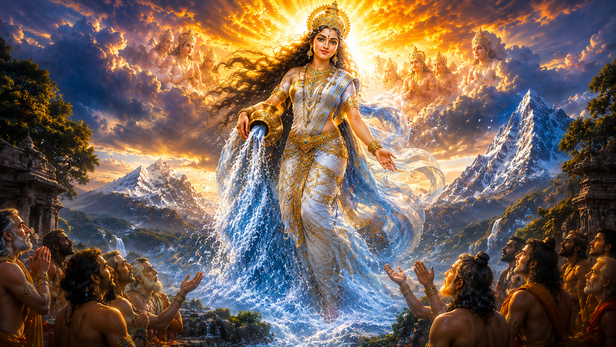
Most television serials present Maa Ganga as an emotional female character trapped inside palace drama. But scriptures describe her as a celestial force flowing directly from heaven. According to mythology, her descent to Earth was so powerful that only Lord Shiva could control her energy inside his matted hair. This was not an ordinary event. It symbolised the balance between destruction and purification. Television often focuses more on emotional scenes than spiritual symbolism because dramatic storytelling attracts larger audiences quickly. But the real story of Ganga is connected to liberation, karma, and divine cleansing something much deeper than ordinary human emotions.
![Ganga And The Eight Divine Vasus”]()
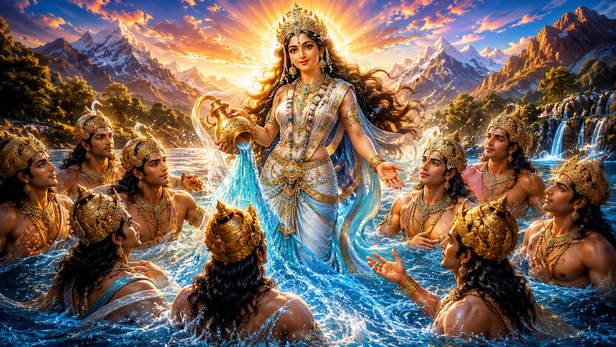
One of the most controversial scenes shown on television is Maa Ganga drowning her newborn children after marrying Shantanu. Many viewers see this as shocking cruelty. But ancient scriptures explain a completely different truth. Those children were actually the eight Vasus celestial beings cursed to be born on Earth. Ganga promised to free them quickly from human suffering. So what looked horrifying was actually an act of liberation. Television often hides this deeper explanation or shortens it for dramatic effect. As a result, audiences remember the emotional shock but miss the powerful spiritual reason hidden behind her actions.
Modern mythological serials compete for ratings, social media clips, and emotional reactions. Because of this, many stories are stretched, modified, or dramatised beyond scripture. Relationships are exaggerated, dialogues become theatrical, and divine characters are made more human for emotional connection. In Maa Ganga’s case, her spiritual depth is sometimes replaced with jealousy, sadness, or conflict-heavy storytelling. This makes audiences emotionally attached, but it can also create misunderstandings about ancient mythology. Television aims to entertain first, while scriptures aim to teach spiritual wisdom. That difference changes how viewers understand divine characters like Maa Ganga.
Many viewers believe television presents Maa Ganga as emotionally connected to Shiva in a romantic way. But scriptures mainly describe their relationship as symbolic and spiritual. Ganga represents unstoppable divine energy, while Shiva represents supreme control and balance. When Shiva held Ganga in his hair, it showed that even cosmic power needs spiritual discipline. Some TV serials create unnecessary emotional tension between Ganga and Goddess Parvati to make the story dramatic. But the deeper truth is that Ganga’s connection with Shiva was about protecting Earth and maintaining cosmic harmony, not creating divine love triangles.
The biggest difference between television and scripture is power. TV serials often make Maa Ganga look emotionally helpless, but ancient beliefs describe her as one of the most sacred forces in the universe. People believe her waters can wash away karmic burdens and help souls attain liberation. Kings, sages, and even gods respected her divine presence. Her story was never only about marriage or motherhood. It was about destiny, sacrifice, and spiritual purification. When audiences only see the dramatic version, they miss the terrifying beauty and cosmic importance that made Maa Ganga one of Hinduism’s most worshipped deities.
Television can bring mythology closer to people, but it cannot always capture its full spiritual depth. Maa Ganga was never just a sad queen, an emotional mother, or a dramatic character meant for entertainment. She represented divine power flowing between heaven, Earth, and liberation itself. And perhaps that is the real truth most viewers never hear. The more you study ancient scriptures, the more you realise that mythology was never written only to entertain people it was written to awaken them.
Unlock insightful tips and inspiration on personal growth, productivity, and well-being. Stay motivated and updated with the latest at My Life XP.
1. Why do many people say TV shows portray Maa Ganga incorrectly?
Many viewers believe television serials focus more on drama and emotions than the deeper spiritual meaning found in scriptures. Important symbolic and philosophical aspects of Goddess Ganga are often simplified for entertainment.
2. Did Maa Ganga really drown her children?
According to the Mahabharata, Maa Ganga drowned seven children because they were actually cursed celestial beings called Vasus. She was freeing them from earthly suffering as part of a divine promise.
3. Why is Maa Ganga considered so spiritually powerful?
Hindu beliefs describe Maa Ganga as a divine river capable of purifying sins and helping souls attain liberation. Her waters are considered sacred and spiritually transformative.
4. What was the real connection between Shiva and Ganga?
Scriptures mainly describe the relationship between Lord Shiva and Maa Ganga as symbolic and cosmic. Shiva controlled Ganga’s immense energy when she descended from heaven to Earth.
5. Why did Shiva hold Ganga in his hair?
Mythology says Ganga’s force was so powerful that Earth could not survive her direct descent. Shiva trapped her within his matted hair (jata) to reduce her destructive power before releasing her gently.
Maa Ganga Was Never Just A River Goddess
Maa Ganga Descending From Heaven
Image credit : Chatgpt(ai)
Most television serials present Maa Ganga as an emotional female character trapped inside palace drama. But scriptures describe her as a celestial force flowing directly from heaven. According to mythology, her descent to Earth was so powerful that only Lord Shiva could control her energy inside his matted hair. This was not an ordinary event. It symbolised the balance between destruction and purification. Television often focuses more on emotional scenes than spiritual symbolism because dramatic storytelling attracts larger audiences quickly. But the real story of Ganga is connected to liberation, karma, and divine cleansing something much deeper than ordinary human emotions.
The Truth Behind Drowning The Children
Ganga And The Eight Divine Vasus”
Image credit : ChatGPT(ai)
One of the most controversial scenes shown on television is Maa Ganga drowning her newborn children after marrying Shantanu. Many viewers see this as shocking cruelty. But ancient scriptures explain a completely different truth. Those children were actually the eight Vasus celestial beings cursed to be born on Earth. Ganga promised to free them quickly from human suffering. So what looked horrifying was actually an act of liberation. Television often hides this deeper explanation or shortens it for dramatic effect. As a result, audiences remember the emotional shock but miss the powerful spiritual reason hidden behind her actions.
Why Television Adds Extra Drama
The Hidden Connection Between Ganga And Shiva
The Real Maa Ganga Was Far More Powerful
The Cosmic Form Of Maa Ganga
Unlock insightful tips and inspiration on personal growth, productivity, and well-being. Stay motivated and updated with the latest at My Life XP.
Frequently Asked Questions (FAQs)
Many viewers believe television serials focus more on drama and emotions than the deeper spiritual meaning found in scriptures. Important symbolic and philosophical aspects of Goddess Ganga are often simplified for entertainment.
2. Did Maa Ganga really drown her children?
According to the Mahabharata, Maa Ganga drowned seven children because they were actually cursed celestial beings called Vasus. She was freeing them from earthly suffering as part of a divine promise.
3. Why is Maa Ganga considered so spiritually powerful?
Hindu beliefs describe Maa Ganga as a divine river capable of purifying sins and helping souls attain liberation. Her waters are considered sacred and spiritually transformative.
4. What was the real connection between Shiva and Ganga?
Scriptures mainly describe the relationship between Lord Shiva and Maa Ganga as symbolic and cosmic. Shiva controlled Ganga’s immense energy when she descended from heaven to Earth.
5. Why did Shiva hold Ganga in his hair?
Mythology says Ganga’s force was so powerful that Earth could not survive her direct descent. Shiva trapped her within his matted hair (jata) to reduce her destructive power before releasing her gently.