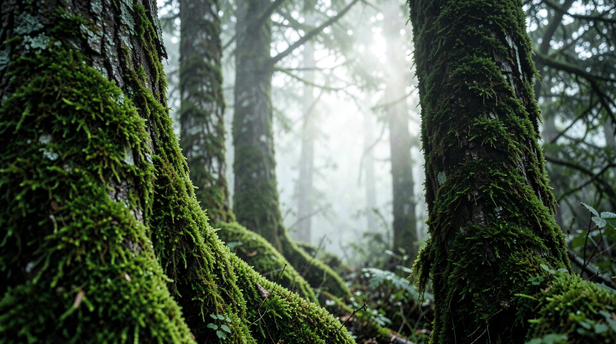
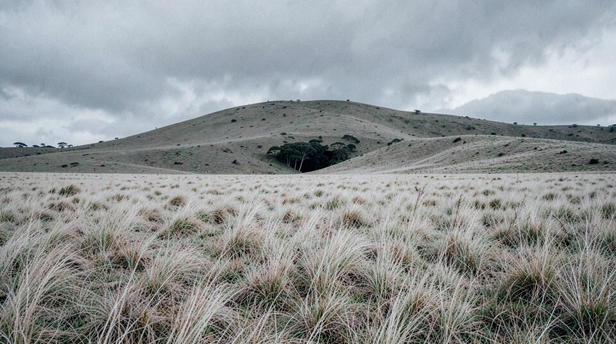
Stand at the edge of the shola above Avalanche on a morning when the fog is still sitting in the valley and you can see the boundary with your own eyes. On one side, a dense canopy of gnarled, moss-covered trees so close together that the light barely reaches the ground. On the other, open rolling grass, pale and wind-combed, running to the ridge. The line between them is not gradual. It is a wall you can put your hand across.
The Shola Is Not a Forest That Stopped Growing
![Mossy Shola Forest Mist]()
Mossy Shola Forest Mist
Image credit : MyLifeXP Bureau
Shola forests are not young forests that have not yet spread into the grassland. They are ancient, and they are exactly as large as they are going to get. The word shola comes from the Tamil chola, meaning grove, and these groves have occupied the same hollows and valley heads in the Nilgiris and the Anamalais for at least ten thousand years. They grow in the places that are sheltered from wind, sheltered from frost, and above all sheltered from fire. The grassland occupies the exposed ridges and slopes where those conditions do not hold. The two communities are not competing. They are each living precisely where the other cannot.
What the Fog Is Actually Doing
The fog above Avalanche is not decorative. It is a delivery mechanism. Shola trees are adapted to pull moisture directly from cloud and mist through their leaves and the thick moss that covers every surface, including the bark, the branches, and the ground. On a day when no rain falls, a shola can still receive several millimetres of water this way. The grassland above the treeline does not have this capacity. The grasses take what falls directly and lose the rest to wind. The fog therefore widens the gap between the two rather than softening it: the shola gets wetter in fog, the grassland stays the same.
Fire Holds the Line From the Grass Side
![Winter Grasslands of Nilgiris]()
Winter Grasslands of Nilgiris
Image credit : MyLifeXP Bureau
The grassland's role in maintaining the boundary is fire. Shola grass dries in winter and burns easily, and the fires that move across the open slopes do not penetrate the forest hollow. The shola's interior is too wet, too sheltered, and too dense for fire to carry. But the grass fires prevent the forest from advancing upslope. Any shola seedling that germinates in the open grassland is killed in the next burn. This is not a recent disruption. Pollen records from Nilgiri lake sediments show that the grass-fire cycle has been running here since long before any human settlement in the hills. The line is ancient, and fire is the mechanism that keeps it where it is.
Cold Air and the Valley Geometry
On clear nights, cold air drains downslope and pools in the same hollows where the sholas sit. This sounds like a disadvantage. It is not. The shola canopy traps enough warmth from the day to protect its interior from the worst of the frost, while the open grassland above it takes the full cold. Shola trees are not frost-hardy in the way that the grasses are. They survive the cold hollow because the hollow is not actually as cold as the exposed ridge above it. The geometry of the landscape, the way a valley head collects both moisture and slightly warmer air, is the reason the forest is where it is and not somewhere else.
What the Grassland Carries That the Forest Cannot
The shola grassland above Avalanche is not empty land waiting to become forest. It carries its own ecology, distinct from the forest and dependent on the same open, windy, fire-shaped conditions that exclude the trees. The Nilgiri tahr grazes here. The grass pipit nests in the open sward. Several species of balsam and gentian flower in the grassland and nowhere else in the range. When grassland is lost to exotic plantations, wattle and eucalyptus were introduced across these slopes through the twentieth century, it does not revert to native grass when the plantation is cleared. It takes decades, sometimes longer, for the original community to return, if it returns at all. The grassland is as irreplaceable as the forest beside it, and harder to restore.
The shola and the grassland above Avalanche look like two things that have not yet figured out what to do with each other. They have, in fact, worked it out precisely. The fog feeds one. The fire protects the other from the one. The cold air settles into the hollow that makes the forest possible. Each condition that sustains the shola is the same condition that keeps it from spreading, and each condition that sustains the grassland is the same one that keeps the forest from moving upslope. The line you can step across in a single stride is not a boundary in dispute. It is an agreement that has been running for ten thousand years.
Unlock insightful tips and inspiration on personal growth, productivity, and well-being. Stay motivated and updated with the latest at
My Life XP.