A home with plants is not automatically a home vastu would approve of. The tradition has views on which plants belong inside, which belong at the threshold, and which it would rather not see indoors at all, and the reasons it gives are less about luck than about the quality of a space: light, air, the direction a room faces, and what a plant does to each of those things over the course of a day.
What Vastu Shastra Actually Says About Plants Indoors
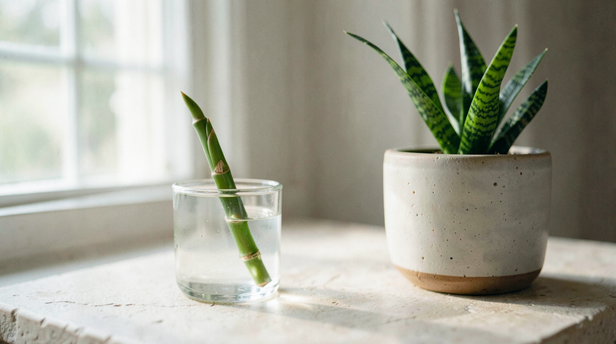
![Morning Light Bamboo Still Life]()
Morning Light Bamboo Still Life
Image credit : MyLifeXP Bureau
Vastu shastra holds that a home is a living system, and that every element in it, including its plants, either supports or disrupts the flow of energy through the space. Plants are not decorative additions to this system; they are participants in it. The tradition assigns each direction a governing element and a corresponding quality, and it places plants accordingly.
The north and east are associated with light, movement, and openness. Vastu generally favours plants in these directions because morning light reaches them and the tradition holds that a well-lit corner supports the household's energy rather than drawing it inward. The south and southwest are considered heavier, more settled directions, and vastu tends to keep large plants or dense foliage away from these corners inside the home.
The tradition also distinguishes between plants that grow upward and plants that trail or droop. Upward-growing plants are generally favoured indoors. Trailing plants, money plants are the most common example in popular vastu advice, are considered acceptable but placement matters: the tradition prefers them growing upward on a support rather than hanging down or trailing along a floor.
The Plants Vastu Places Inside Without Hesitation
Bamboo, particularly the kind kept in water in small containers, appears consistently in vastu recommendations for indoor spaces. The tradition associates it with flexibility, steady growth, and the wood element, which it links to the east. A small bamboo arrangement near an east-facing window sits comfortably within vastu's framework.
The peace lily and the snake plant appear in popular vastu guidance as plants the tradition tolerates or actively favours indoors, partly because both manage low light without wilting and partly because the snake plant's upward, structured growth aligns with what vastu looks for in an indoor plant. The tradition does not name these plants in ancient texts, they are not native to the subcontinent in the way tulsi is, but contemporary vastu practitioners place them in the favoured category.
Jasmine, where space allows, is associated in vastu with the north or northeast. The tradition links its fragrance with clarity and calm, and a jasmine plant near a window that catches morning air sits well within its logic.
The Plants Vastu Asks You to Reconsider
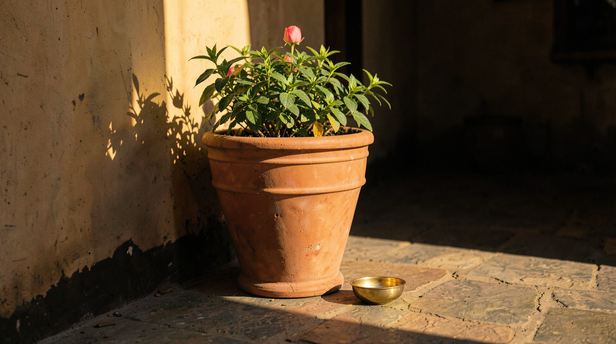
![Golden Hour Tulsi Vrindavan]()
Golden Hour Tulsi Vrindavan
Image credit : MyLifeXP Bureau
Cacti and plants with thorns are a point of consistent caution in vastu. The tradition holds that sharp, pointed forms concentrate energy in a way that creates friction in a space, and it generally recommends keeping thorned plants outside the home rather than inside it. This is not a hard ban in every school of vastu, but it is the most common position across regional traditions.
Large-leafed plants with drooping or downward-facing leaves, certain varieties of ficus, for instance, are sometimes placed in the caution category, particularly in the centre of a room or in the southwest. The tradition prefers forms that hold their shape and grow toward light.
Bonsai, despite their aesthetic appeal, sit uneasily in some vastu frameworks. The tradition associates them with stunted or constrained growth, and some practitioners advise against keeping them indoors, particularly in spaces associated with children or new beginnings. This is one of the more contested positions in popular vastu, and practitioners disagree.
Where the Tulsi Pot Belongs, and Why
Tulsi occupies a category of its own in vastu and in Hindu devotional tradition more broadly. It is not simply a favoured plant, it is considered sacred, and its placement in a home is treated as a matter of ritual significance rather than interior arrangement.
Vastu shastra places the tulsi pot in the north, northeast, or east of the home. The northeast is the direction the tradition associates with the divine, with water, and with auspiciousness, and in many regional Hindu traditions the tulsi is placed here specifically. In homes with a courtyard, the tulsi is traditionally kept in the centre or the northeast of that courtyard, in a raised planter, a tulsi vrindavan, that lifts it off the ground and marks it as something tended with intention.
The tradition holds that the tulsi should receive morning sunlight and should not be kept in the south or southwest of the home. It should not be placed in a bathroom or bedroom in most regional traditions, and it should not be kept in a dark corner. The logic vastu gives is partly directional and partly about the plant's own nature: tulsi needs air and light to thrive, and a plant that is struggling is considered inauspicious regardless of where it sits.
In popular tradition, the tulsi is watered daily and offered a small lamp in the evening. The act of tending it is as much a part of its role in the home as its placement, vastu holds that a neglected tulsi in the right corner does less for a household than a tended one in a slightly imperfect position.
The Principle Behind the Placement
What connects vastu's plant guidance is a consistent underlying logic: the tradition favours plants that grow toward light, that are actively tended, and that are placed in directions where the home already receives air and morning sun. It is cautious about forms that droop, constrain, or crowd a space. The directions it assigns are not arbitrary, they map onto where a well-oriented Indian home receives its best light across the day.
A reader who follows vastu's plant guidance will, almost incidentally, end up with plants in the brightest corners of their home, tended regularly, growing upward. Whether that is the tradition working or simply good horticulture is a question vastu does not ask. The plants in the right corners, receiving morning light, tend to do well. The tradition takes that as confirmation enough.
Facing repeated career and financial challenges? Your name energy may be influencing it. Check here. Unlock insightful tips and inspiration on personal growth, productivity, and well-being. Stay motivated and updated with the latest at
My Life XP.