You wash your face carefully, rinse thoroughly, and pat dry. By morning, your pores look congested and your skin feels like it has a film on it. The instinct is to scrub harder or switch to a stronger wash. The actual fix is simpler and has nothing to do with how hard you clean.
It has to do with what your cleanser is made of, and what the things on your face are made of.
Like Dissolves Like, the Chemistry Behind the Cleanse
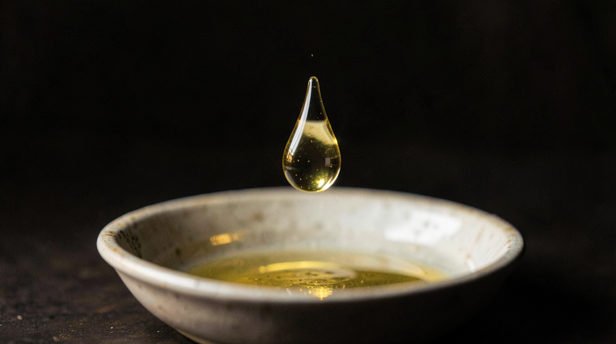
![Golden Oil Drop Descends]()
Golden Oil Drop Descends
Image credit : MyLifeXP Bureau
This is the one principle the rest of the explanation rests on. Water-based substances dissolve in water. Oil-based substances dissolve in oil. Your foaming cleanser is water-based. It is built to lift sweat, dust, and water-soluble debris, and it does that well. What it cannot do is break down something that is not water-soluble.
Sunscreen, particularly the film-forming mineral and chemical filters used in most SPF products, bonds to the skin's surface and is designed to stay there through sweat and humidity. Sebum, the skin's own oil, sits in and around the follicle. Long-wear foundation and waterproof mascara are formulated to resist exactly the kind of water-and-surfactant wash a foaming cleanser delivers. When you rinse, the water carries off what is water-soluble. The rest stays.
An oil cleanser works on the same principle, in the opposite direction. The cleansing oil binds to the oil-based material on your skin, the SPF residue, the sebum, the pigment, and when you add water to emulsify and rinse, it carries all of that away with it.
What Foaming Cleansers Actually Do to the Skin Barrier
Foaming cleansers work through surfactants, molecules with one end that attracts water and one end that attracts oil. At low concentrations, surfactants are gentle and effective. At higher concentrations, or with repeated use, they can strip the skin's natural lipid layer along with the surface debris.
The tight, slightly uncomfortable feeling some people notice after washing is a sign the barrier has been disrupted. The skin responds by producing more sebum to compensate, which can make oily skin feel oilier by midday. For dry or sensitive skin, the disruption shows up as flaking, redness, or a stinging sensation when applying anything afterwards.
An oil cleanser does not use high-concentration surfactants. It dissolves debris through solubility rather than through detergent action, so the barrier lipids are less likely to leave with the rinse water. This is why double cleansing, oil first, then a mild water-based wash, tends to leave the skin feeling cleaner without the stripped sensation.
The Pore Congestion Connection
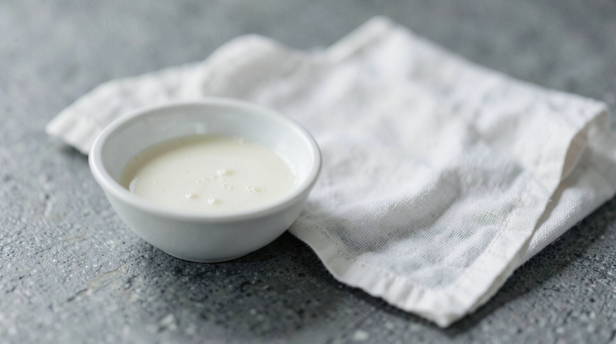
![Emulsified Cleanser Ritual]()
Emulsified Cleanser Ritual
Image credit : MyLifeXP Bureau
Sebum is produced inside the follicle and moves toward the surface continuously. When it mixes with dead skin cells and is not fully removed, it oxidises and thickens, forming the plugs that look like blackheads or give skin a rough, uneven texture under light.
A foaming wash removes the sebum sitting on the surface. It does not reliably dissolve the oxidised material sitting at the top of the follicle opening, because that material is dense, waxy, and oil-soluble. An oil cleanser, massaged into dry skin for sixty to ninety seconds before water touches the face, has time to soften and lift that material. The massage itself matters: it physically loosens debris from the follicle opening in a way that a quick lather-and-rinse cannot.
This is also why some people find their skin looks clearer after switching to double cleansing even though they were washing twice a day before. The frequency was not the variable. The chemistry was.
How to Actually Use an Oil Cleanser
The method is specific and the specifics matter. Apply the oil cleanser to completely dry skin and dry hands. Water introduced at this stage prevents the oil from binding properly to the surface debris.
Massage for at least sixty seconds. This is longer than most people spend on any cleansing step, and it is where the dissolving actually happens. Work gently across the full face including the hairline and jaw, where sunscreen and makeup tend to sit unnoticed.
Add a small amount of water to your hands and work it into the oil on your face until the texture turns milky. This emulsification step is what allows the oil, now carrying the dissolved debris, to rinse cleanly with water. Skip this step and the oil sits on the skin rather than rinsing away, which can cause its own congestion.
Follow with a mild water-based cleanser to remove any remaining emulsified residue. The second cleanser does not need to be strong. Its job is finishing, not dissolving.
Which Skin Types Benefit and Which Need a Lighter Touch
Double cleansing is most straightforwardly useful for people who wear SPF daily, use long-wear or waterproof makeup, or find their skin congested despite regular washing. These are the conditions where oil-soluble residue is most likely to be the problem.
For very dry or eczema-prone skin, the second cleansing step can be skipped on nights when no SPF or makeup was worn. The oil cleanser alone, emulsified and rinsed, is enough. Dermatologists generally advise that compromised or very reactive skin benefits from reducing cleansing steps on low-exposure days rather than doubling them.
For acne-prone skin, the concern about oil cleansers is usually that they will worsen breakouts. In practice, the type of oil matters more than the fact of oil. Lighter, non-comedogenic oils, jojoba, squalane, mineral oil, are less likely to contribute to congestion than heavier plant butters. A patch test over two to three weeks on the jawline gives a clearer answer than any ingredient list alone.
The skin that gets the least benefit from double cleansing is skin that wears no SPF and no makeup and has no congestion. For that skin, one gentle wash is enough and adding a step adds nothing.
The reason double cleansing works is not that it is more thorough in the way that scrubbing harder is more thorough. It is that it applies the right chemistry to each type of debris in the right order. The foaming wash was never going to remove the SPF, no matter how many times it was used. The oil cleanser was built for exactly that job.
Unlock insightful tips and inspiration on personal growth, productivity, and well-being. Stay motivated and updated with the latest at
My Life XP.