A moisturiser works by doing one of three things: drawing water into the skin, sealing it in, or both. Gels and creams are built around different strategies for that job, and weather determines which strategy your skin actually needs at any given time. Using the wrong one is not a neutral choice, it either leaves the barrier under-supported or actively blocks it at the wrong moment.
What a Gel Moisturiser Actually Does
A gel is mostly water, thickened with a gelling agent such as carbomer or aloe vera. Its active ingredients are nearly always humectants, hyaluronic acid, glycerin, niacinamide, which pull moisture from the air around the skin and hold it in the upper layers. Because the base is water, it evaporates quickly after application, leaving almost no residue on the surface.
That lightness is the point. A gel adds hydration without adding anything that sits on top of the skin. In conditions where the air already holds moisture, the humid months, a coastal city, a bathroom after a shower, a gel is genuinely enough. The humectants have something to draw from. The skin stays plump. Nothing congests the pore.
Where a gel fails is when the air is dry. Humectants work by pulling water from wherever they can find it. In low-humidity conditions, they pull from the deeper layers of the skin rather than from the air, which can leave the skin drier than before the gel was applied. A gel used alone through a dry winter or in an air-conditioned room for most of the day is doing the opposite of what it promises.
What a Cream Moisturiser Actually Does
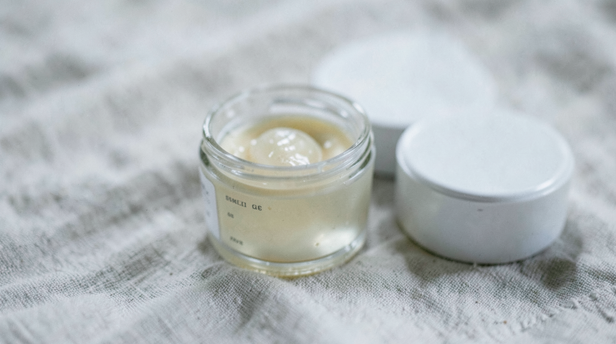
![Gel and Cream Skincare Duo]()
Gel and Cream Skincare Duo
Image credit : MyLifeXP Bureau
A cream is an emulsion: water and oil mixed together and stabilised. The oil phase, which may be shea butter, squalane, ceramides, fatty acids, or a combination, sits on the skin's surface after the water evaporates and forms a physical layer that slows water loss. This is called occlusion. The skin does not absorb that layer; it stays on top and acts as a temporary barrier supplement.
In dry weather, that occlusive layer is exactly what the skin needs. The barrier loses water faster when the air is cold and dry, and a cream slows that loss. The richer the cream, the slower the loss. This is why skin that feels perfectly comfortable in July feels tight and rough by November using the same routine.
In humid conditions, a cream creates a different problem. The barrier is already retaining water adequately. Adding an occlusive layer on top traps not just water but sebum, dead cells, and anything else sitting on the skin's surface. For skin that is acne-prone or congested, this is often the direct cause of breakouts that seem to appear from nowhere in summer. The cream did not cause new acne; it created the conditions for existing congestion to worsen.
The Humidity Line That Separates Them
![Dewdrop on Stone]()
Dewdrop on Stone
Image credit : MyLifeXP Bureau
The practical dividing line is roughly 60 percent relative humidity. Above it, a gel moisturiser with a humectant base performs well for most skin types. Below it, which describes most indoor environments in winter, high-altitude cities in any season, and air-conditioned offices year-round, a cream or at minimum a gel-cream hybrid becomes necessary to prevent the barrier from losing water faster than it gains it.
Skin type shifts this line. Oily skin has more sebum available to supplement the barrier naturally, so it can stay with a gel at lower humidity than dry skin can. Dry skin, and skin with a compromised barrier from conditions like eczema, needs an occlusive layer earlier, sometimes even in moderately humid weather. Combination skin often needs different formulations on different zones of the face, which is not overcomplicated; it is just accurate.
How to Read Your Skin's Response, Not the Season
The calendar is a rough guide, not a rule. What the skin is doing is more reliable. Tightness after cleansing that does not resolve within twenty minutes, a dull and slightly rough surface texture, fine lines that look more visible than usual, these are signs the barrier is losing water faster than the current routine replaces it. A gel is not enough. A cream, or a gel followed by a few drops of a face oil to seal it, is the right move.
Congestion that appears without a change in diet or hormones, a heavy or greasy feeling that persists through the morning, and small closed bumps along the jawline and forehead, these are signs the occlusive load is too high for the current conditions. The cream is not wrong in principle; it is wrong for this weather. A lighter gel-cream or a straight gel is the correction.
Neither of these responses means the product is bad. It means the product was designed for a different set of conditions than the ones the skin is currently in.
Layering as a Middle Position
For skin that sits in the middle, not dramatically dry, not overtly oily, layering gives more control than switching products entirely. A gel goes on first, while the skin is still slightly damp from toner or mist, so the humectants have water to work with immediately. A thin layer of a light cream or a few drops of a non-comedogenic oil goes on top to seal what the gel has drawn in.
This approach works through seasonal transitions, when the weather is shifting and the skin has not yet caught up. It also works in climates where the temperature is low but indoor heating keeps the air dry, a combination that catches many people off guard because the skin feels cold and therefore seems like it should be fine.
The order matters. Oil on top of a gel seals it. Gel on top of an oil sits on the surface and cannot penetrate to where the humectants need to work.
What a gel and a cream share is the goal, a skin surface that holds water. What they do not share is the mechanism, and the mechanism is the part that weather determines. Swapping them is not a preference call; it is a physics call, and the skin will register the difference within a few days of the wrong choice.
Unlock insightful tips and inspiration on personal growth, productivity, and well-being. Stay motivated and updated with the latest at
My Life XP.