Your skin is not a neutral surface waiting to be cleaned. It maintains a carefully held acid balance, a thin, invisible film across the surface that does real biological work every hour of the day. When a cleanser disrupts that balance, the skin spends the next several hours trying to restore it, and during that window it is more vulnerable than it was before you washed your face.
What the Acid Mantle Actually Does
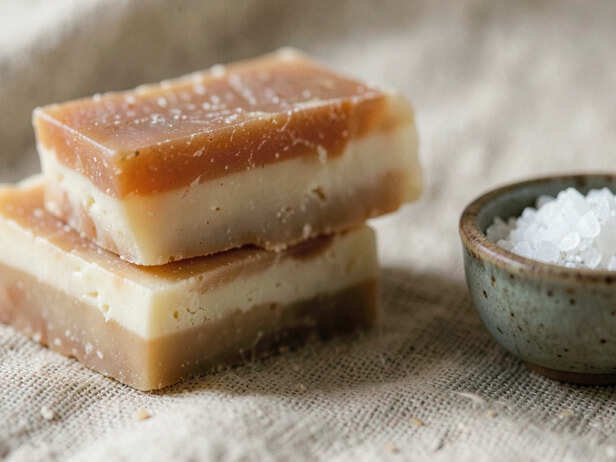
![Amber Cream Soap Layers]()
Amber Cream Soap Layers
Image credit : MyLifeXP Bureau
The outermost layer of facial skin sits at a pH somewhere between 4.5 and 5.5, faintly acidic, roughly in the range of black coffee or a ripe tomato. This is not incidental. The skin's natural bacteria, the ones that protect rather than infect, thrive in that acidic environment. The enzymes that hold skin cells together and regulate how the barrier sheds and renews itself work best in that same range. Sebum, sweat, and the byproducts of the skin's own microbiome all contribute to keeping that number stable. The result is what researchers call the acid mantle: a surface environment the skin actively produces and actively defends.
Where Soap Sits on the Scale
Traditional bar soap is made through a process called saponification, fats or oils reacted with a strong alkali, usually sodium hydroxide. The reaction produces soap, but it also produces a finished product with a pH typically between 9 and 11. Some bars sit even higher. That is not a flaw in the formulation; it is a chemical consequence of how soap is made. The alkalinity is part of what allows soap to lift oils and break down the kind of dirt that water alone cannot move. On the hands, where the skin is thicker and the stakes of a disrupted barrier are lower, this is a reasonable trade. On the face, where the skin is thinner, more reactive, and doing more nuanced barrier work, the gap between 5 and 10 on the pH scale is not a small difference. The pH scale is logarithmic: a pH of 10 is not twice as alkaline as a pH of 5. It is one hundred thousand times more alkaline.
What Happens in the Hours After Washing
![Morning Skincare Ritual]()
Morning Skincare Ritual
Image credit : MyLifeXP Bureau
When soap raises the skin's surface pH, several things happen in sequence. The acid mantle is temporarily dismantled. The enzymes that regulate the barrier's shedding cycle, which require an acidic environment to work correctly, slow down or stop. The skin's resident protective bacteria lose their competitive advantage, and the bacteria associated with breakouts and irritation find the environment briefly more hospitable. The barrier itself becomes more permeable: water leaves faster, and irritants enter more easily. Skin that feels tight, dry, or stripped after washing is not clean in any useful sense. It is a barrier in the middle of trying to recover. Most skin returns to its normal pH within one to three hours, but for skin that is already compromised, by dryness, by a condition like eczema, or by repeated stripping, that recovery window gets longer and the baseline pH can drift higher over time.
Why Some Soaps Feel Gentler Than Others
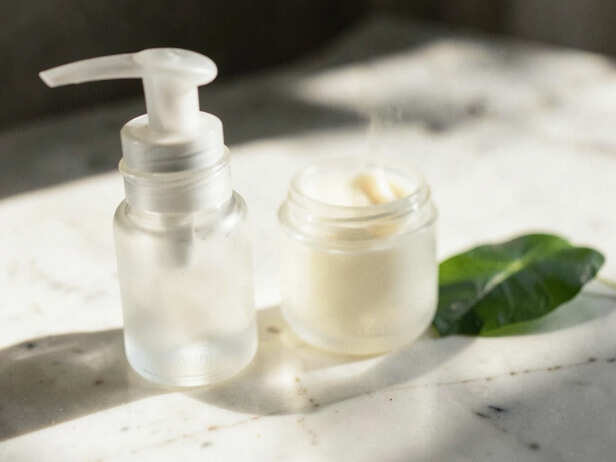
Soap marketed as gentle, mild, or suitable for sensitive skin usually achieves that through one of two routes. The first is pH adjustment: a synthetic detergent base, sometimes called a syndet bar, is formulated to sit closer to the skin's natural range, often between 5.5 and 7. These bars look and feel like soap but are chemically different from saponified soap. The second route is the addition of emollients, glycerin, or other humectants that partially offset the barrier disruption even if the pH remains high. Neither route is identical to using a cleanser designed from the start for facial skin, but both represent a meaningful improvement over a standard alkaline bar. A cleanser labelled pH-balanced for skin typically sits between 4.5 and 6.5. That range preserves the acid mantle rather than dismantling it, which means the barrier does not need to spend the next two hours recovering.
What This Means for How You Wash Your Face
The practical consequence is straightforward. A gel, foam, or cream cleanser formulated for facial use will almost always be closer to the skin's natural pH than a bar of soap, even a soap marketed as gentle. If a cleanser leaves skin feeling tight immediately after rinsing, that feeling is the barrier under stress, not the feeling of being clean. A well-matched cleanser leaves skin feeling neither tight nor greasy, just neutral, which is exactly what an intact barrier feels like. For anyone whose skin is prone to dryness, redness, or breakouts, the cleanser's pH is worth more attention than its fragrance, its colour, or the botanical ingredient on the front of the bottle. The skin's acid mantle does not care about the marketing. It responds to the number.
The acid mantle is not a concept invented by skincare brands to sell pH-balanced products. It is a measurable surface condition the skin produces and defends because it needs to. The mismatch between soap's alkalinity and the skin's acidity is a chemistry problem, not a skincare trend, and the skin registers the difference every time you wash your face.
Unlock insightful tips and inspiration on personal growth, productivity, and well-being. Stay motivated and updated with the latest at
My Life XP.