Most cleansers need water to activate. Micellar water does not, and that difference is not a marketing angle, it is a consequence of how the molecules inside it are built.
The liquid looks like plain water. Pour it into a glass and it behaves like water. But suspended inside it, at concentrations too small to see, are structures called micelles, spherical clusters of surfactant molecules that self-assemble the moment the concentration crosses a certain threshold. Understanding those clusters explains everything about why the product works the way it does.
What a Micelle Actually Is
![Gentle Cleansing Ritual]()
Gentle Cleansing Ritual
Image credit : MyLifeXP Bureau
Surfactants are molecules with a split personality. One end is hydrophilic, it is attracted to water. The other end is hydrophobic, it avoids water and is drawn instead to oils and fats. In a watery solution, these molecules arrange themselves into a sphere to resolve the tension: the water-loving ends face outward toward the liquid, and the oil-loving ends face inward, away from it. That sphere is a micelle.
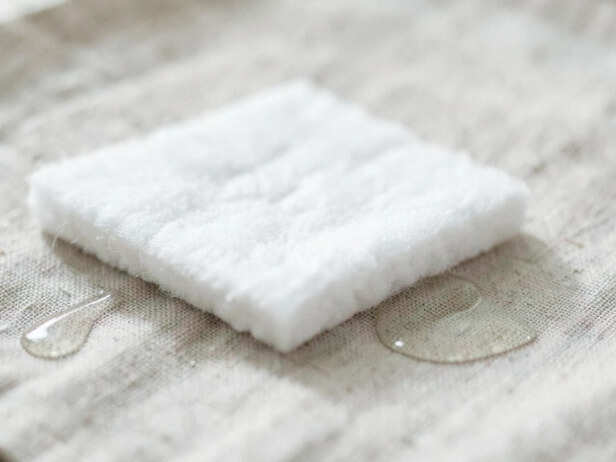
The interior of a micelle is effectively a small oil-friendly pocket sitting inside a water-friendly shell. When the cotton pad presses against your skin, the micelles make contact with the oils, waxes, and pigments that make up most makeup. The hydrophobic cores pull those substances in. The hydrophilic shells keep the whole loaded cluster suspended in the liquid rather than smearing it across the surface. The pad lifts it away.
Why There Is No Foam
Foam is what happens when surfactants are present at high concentrations, agitated, and given air to work with. A foaming face wash is designed to produce it, the lather is partly functional and partly a signal to the user that something is happening.
Micellar water uses surfactants at much lower concentrations, and it is not agitated. There is no rubbing, no water stream, no air worked into the product. The micelles do their job quietly, through contact alone. The absence of foam is not a sign that the formula is mild to the point of ineffectiveness. It is a sign that the surfactant concentration is calibrated to lift rather than to lather.
The surfactants used in most micellar formulas, poloxamers and mild non-ionic surfactants, are also chosen for their low irritation profile. They do not disrupt the skin barrier the way stronger anionic surfactants in some foaming cleansers can.
What It Can and Cannot Remove
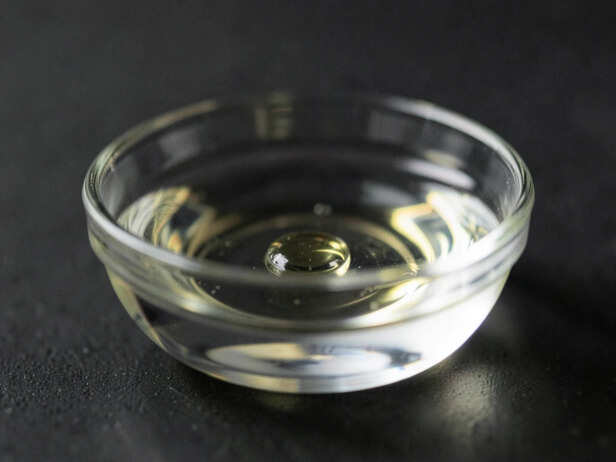
![Oil Drop in Water]()
Oil Drop in Water
Image credit : MyLifeXP Bureau
Micellar water handles most everyday makeup well: foundation, blush, eyeshadow, and light mascara. The oil-attracting cores of the micelles are effective on the wax and pigment base of these products.
Waterproof formulas are a different matter. Waterproof mascara and long-wear eyeliner are engineered to resist water and to bond tightly to the skin or lash. The micelles can make a start on them, but usually cannot lift them fully in a single pass without repeated pressure, and repeated pressure on the eye area is worth avoiding. A dedicated oil-based remover or a biphasic formula handles waterproof products more efficiently and with less friction.
Sunscreen, depending on its base, sits somewhere between the two. A chemical sunscreen dissolves reasonably well. A mineral sunscreen, zinc oxide or titanium dioxide, is a physical particle that sits on the skin rather than bonding to it, and micellar water can shift it, though a second cleanse in a routine that includes SPF is a reasonable habit regardless of which remover starts the process.
The No-Rinse Question
Micellar water is often used without rinsing, and for many skin types that is fine. The surfactant concentrations are low enough that residue left on the skin is minimal and unlikely to cause irritation for most people.
For skin that is prone to congestion or sensitivity, rinsing after is a straightforward option that costs nothing. The product is designed to work without it, but the design assumption is average skin under average conditions. If your skin tends to break out along the hairline or jaw, areas where product residue can sit, a rinse is a reasonable adjustment, not a sign that the product has failed.
Why It Feels Gentle
The gentleness of micellar water comes from two things working together. The first is the surfactant choice: mild non-ionic surfactants cause less disruption to the skin's lipid barrier than the stronger surfactants in many rinse-off cleansers. The second is the absence of rubbing. Mechanical friction, the kind that comes with working a lather across the face, contributes to barrier disruption independently of whatever chemistry is in the cleanser. A cotton pad pressed and swept gently introduces far less of it.
This is also why the product suits skin that is recovering from a reaction, post-procedure skin that a dermatologist has advised to keep cleansing minimal, or skin that simply finds foaming cleansers tight and uncomfortable. The mechanism is not magic, it is low-friction chemistry doing exactly what it was designed to do.
The micelle's structure means it lifts what it contacts and holds it away from the skin in the same motion. That is the whole mechanism. No heat, no foaming agents, no water pressure required, just a molecule that is built to bridge oil and water, doing it quietly on a cotton pad.
Unlock insightful tips and inspiration on personal growth, productivity, and well-being. Stay motivated and updated with the latest at
My Life XP.