What if remembering just 12 names of Hanuman Ji could become a daily source of courage and faith? According to a popular devotional tradition associated with the Anand Ramayana, chanting these names before sleeping, after waking up or before starting a journey is believed to protect devotees from fear. But these are not simply names to recite. Each one carries a story of Hanuman Ji's extraordinary strength, devotion to Lord Ram and fearless service. From the childhood incident that gave him the name Hanuman to the leap across the ocean, discover the stories hidden behind all 12 names.
Hanuman: The Name Behind His Childhood Story
![Radiant Panchamukhi Hanuman Blessing Scene]()
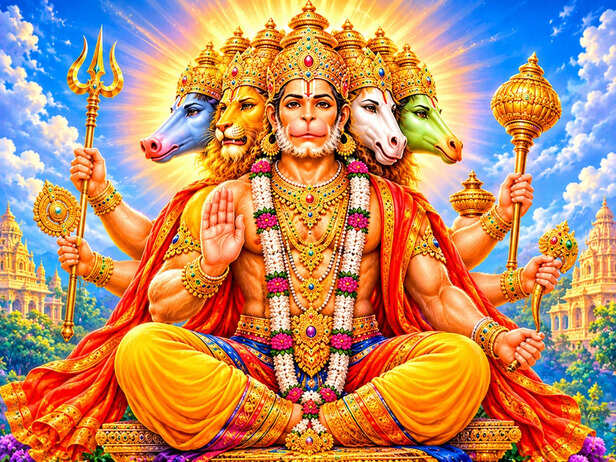
Radiant Panchamukhi Hanuman Blessing Scene
The name Hanuman is connected to a fascinating incident from his childhood. As a young child, Hanuman mistook the rising Sun for a ripe fruit and flew towards it to catch it. Seeing this, Lord Indra struck him with his vajra, which hit his jaw, known as hanu in Sanskrit. This incident is traditionally associated with the name Hanuman. The story also marks the beginning of his extraordinary journey, as the gods later blessed him with divine powers and protection.
Anjanisut: The Beloved Son of Anjani
![Ramayana account, Hanuman Ji chose Surya Dev]()
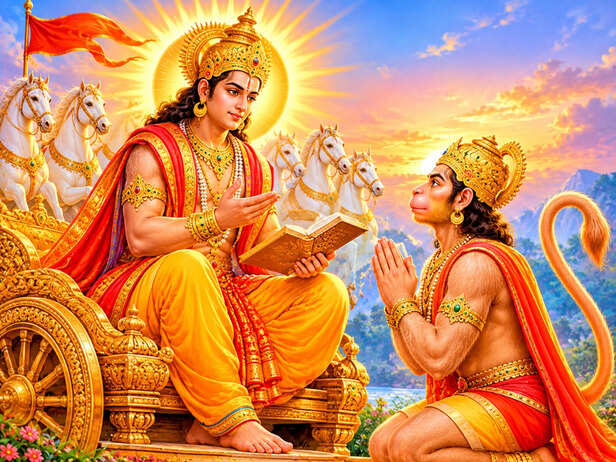
Ramayana account, Hanuman Ji chose Surya Dev
Image credit : chatgpt(ai)
Anjanisut means the son of Anjani. Hanuman Ji's mother, Mata Anjani, is remembered for her devotion and spiritual strength. According to traditional accounts, she received the blessing of becoming his mother after performing intense devotion. The name Anjanisut celebrates this sacred mother-son bond. It also reminds devotees that behind Hanuman Ji's immense strength was a mother's love and blessings. Whenever devotees remember this name, they also remember Mata Anjani, whose son became one of the greatest devotees of Lord Ram.
Vayuputra: The Son of the Wind God
Vayuputra means the son of Vayu Dev, the wind god. Hanuman Ji is associated with Vayu Dev's divine blessing, which gave him extraordinary speed, strength and energy. Just as the wind can travel freely across the world, Hanuman Ji could move with incredible speed and cross enormous distances. His journey across the ocean in search of Mata Sita is one of the best examples of this power. This name celebrates his divine origin and limitless ability to overcome physical challenges.
Mahabal: The One With Immense Strength
Mahabal means the one who possesses immense strength. After the childhood incident involving Indra's vajra, several gods blessed Hanuman Ji with extraordinary powers and protection. These blessings made him exceptionally strong and capable of facing powerful enemies. However, his strength was never meant for personal glory. He used it to protect others, serve Lord Ram and fight against injustice. The name Mahabal reminds devotees that true strength becomes meaningful when it is guided by courage, discipline and a sense of duty.
Rameshta: The Greatest Devotee of Lord Ram
Rameshta means someone who is deeply devoted to Lord Ram or especially dear to Him. Hanuman Ji's entire life is closely connected with his service to Shri Ram. Whether searching for Mata Sita, carrying Lord Ram's message to Lanka or fighting in the battle against Ravana, he performed every duty with complete dedication. His devotion was so deep that he never considered his achievements greater than his Lord's blessings. This name represents the kind of faith in which love, service and surrender become more important than personal recognition.
Phalguna Sakha: Hanuman Ji's Connection With Arjun
Phalguna Sakha means the friend of Phalguna, another name for Arjun. According to the Mahabharata, Hanuman Ji met Arjun during his pilgrimage. Later, he agreed to reside on the flag of Arjun's chariot during the Kurukshetra war. This divine presence became a symbol of protection and strength for Arjun. His presence on the chariot also connected the stories of the Ramayana and Mahabharata. The name Phalguna Sakha celebrates Hanuman Ji's association with Arjun and his role in the great war.
Pingaksha: The One With Golden-Brown Eyes
Pingaksha means the one with tawny or golden-brown eyes. It is a descriptive name that refers to Hanuman Ji's divine appearance. Traditional descriptions of Hanuman Ji often highlight his powerful form, radiant presence and expressive eyes. His appearance reflects both strength and devotion. While some of his names describe great achievements, Pingaksha focuses on his physical characteristics. It reminds devotees that Hanuman Ji is remembered not only for his extraordinary actions but also for the distinctive divine form through which people recognise and worship him.
Amit Vikrama: The One With Limitless Courage
Amit Vikrama means the one whose courage and valour have no limits. Hanuman Ji displayed this quality throughout his journey to Lanka. He faced powerful obstacles, entered Ravana's kingdom and fearlessly delivered Lord Ram's message to Mata Sita. Even when surrounded by Ravana's warriors, he refused to abandon his mission. His courage came from his devotion rather than a desire to prove his superiority. This name reminds devotees that real bravery means standing firm for what is right, even when the challenges seem impossible.
Udadhikramana: The One Who Crossed the Ocean
Udadhikramana refers to the one who crossed the ocean. When the search for Mata Sita brought the Vanara army to the seashore, everyone wondered how they could reach Lanka. Jambavan reminded Hanuman Ji of his forgotten powers and encouraged him to recognise his true strength. Hanuman Ji then took a gigantic form and leapt across the ocean. His journey was filled with challenges, but he overcame each one through courage and determination. This name celebrates one of the most memorable achievements in the Ramayana.
Sitashoka Vinashana: The One Who Ended Sita's Sorrow
Sitashoka Vinashana means the one who removed Mata Sita's sorrow. After reaching Lanka, Hanuman Ji found her sitting in Ashok Vatika, surrounded by Ravana's guards. He approached her carefully and presented Lord Ram's ring as proof that he had come from her husband. Seeing the familiar ring, Mata Sita felt reassured that Lord Ram was searching for her. Hanuman Ji's message gave her hope during one of the most difficult periods of her life. This name celebrates his compassion and his role in bringing comfort to Mata Sita.
Lakshman Pranadatre: The One Who Saved Lakshman's Life
Lakshman Pranadatre means the one who restored Lakshman's life. During the battle against Ravana, Lakshman Ji was seriously wounded by Indrajit's powerful weapon. He needed the Sanjeevani herb, which could save his life. Hanuman Ji was sent to bring it from the Himalayas. Unable to identify the exact herb, he lifted the entire mountain and carried it back to Lanka. His timely arrival helped save Lakshman Ji. This name represents his dedication, quick action and willingness to do whatever was necessary to protect Lord Ram's family.
Dashagriva Darpaha: The One Who Destroyed Ravana's Pride
Dashagriva Darpaha means the one who destroyed the pride of Dashagriva, another name for the ten-headed Ravana. After Hanuman Ji was captured in Lanka, Ravana ordered his soldiers to set his tail on fire. However, Hanuman Ji used this opportunity to set parts of Lanka ablaze with his burning tail. His fearless actions shook Ravana's confidence and showed that Lord Ram's messenger could not be intimidated. This name celebrates Hanuman Ji's fearlessness and his role in challenging the arrogance of Lanka's powerful king.
Why Do Devotees Chant These 12 Names?
According to devotional belief, remembering Hanuman Ji's 12 names before sleeping, after waking up or before travelling brings courage and a sense of protection. Each name recalls a different quality, from immense strength and fearlessness to loyalty, wisdom and selfless service. Devotees can recite them with faith and understand the stories behind them rather than treating them as just a list of words.
Unlock insightful tips and inspiration on personal growth, productivity, and well-being. Stay motivated and updated with the latest at
My Life XP.