Turmeric sits in almost every grandmother's skincare instruction, and almost every dermatologist's list of things to use carefully. Both positions are correct, and they are not in conflict. The compound responsible for turmeric's colour, its smell, and its effect on skin is curcumin, and it is worth understanding what curcumin actually does before deciding whether the yellow stain on your bathroom sink is worth it.
What Curcumin Does at the Skin's Surface
Curcumin is a polyphenol, a class of plant compounds that interact with free radicals, the unstable molecules that form when skin is exposed to UV light, pollution, or general metabolic activity. Free radicals damage the proteins that keep skin firm and the lipids that keep the barrier intact. Curcumin intercepts that process by donating an electron, which stabilises the radical before it can do its work.
This is the same mechanism that vitamin C and vitamin E use, which is why curcumin is often grouped with antioxidants. The practical difference is that curcumin is fat-soluble rather than water-soluble, which means it stays in the skin's outer layers longer than a water-based antioxidant would. It does not penetrate deeply. The living layers of the dermis, where collagen is made, are largely out of its reach when applied topically. What it reaches is the stratum corneum, the outermost, non-living layer, and the upper epidermis just below it.
Within that range, it also has a mild anti-inflammatory action. It interferes with certain signalling molecules that trigger redness and swelling. This is why turmeric has been used on minor wounds, insect bites, and irritated skin in traditional practice for a long time. The effect is real. It is also modest, and it works on surface-level inflammation rather than anything deeper.
Why It Stains, and What It Is Staining
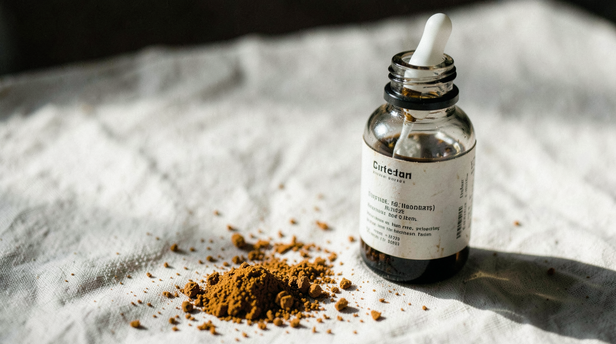
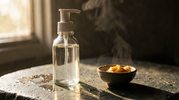
![Turmeric Dropper Still Life]()
Turmeric Dropper Still Life
Image credit : MyLifeXP Bureau
Curcumin is a chromophore, which means its molecular structure absorbs certain wavelengths of light and reflects others. What it reflects is yellow-orange. When it contacts a porous surface, skin, nails, grout, a white cotton cloth, it binds to the proteins in that surface and sits there.
Skin stains from turmeric because curcumin binds to keratin, the structural protein that makes up the outer skin layer, nails, and hair. The bond is not permanent, but it is stubborn. The stain fades as those keratinised cells shed, which happens naturally over days. On the face, where skin turns over relatively quickly, a turmeric stain from a single application usually fades within two to four days. On nails, where keratin is dense and turnover is slow, it can last weeks.
Two things make staining worse: concentration and contact time. A paste left on for twenty minutes stains more than one rinsed off after five. Raw turmeric root stains more than turmeric powder, because the pigment is more concentrated and the moisture in the root helps it penetrate further. Kasturi turmeric, a variety sold specifically for cosmetic use, contains less curcumin and stains considerably less. It is the variety most traditional face pack recipes originally called for, which is a detail that gets lost when the recipe is passed down without the ingredient specification.
Where the Irritation Comes From
Curcumin itself is not an irritant for most people. The sting, the redness, and the contact dermatitis that some people experience from turmeric face packs usually come from one of three other sources.
The first is the other compounds in raw turmeric. Turmeric root contains essential oils, ar-turmerone is the main one, that are more aggressive than curcumin and can irritate skin that is already compromised, sensitised, or simply reactive. These oils are present in raw turmeric and in most turmeric powders. They are largely absent in curcumin extracts, which is why a product formulated with a curcumin extract is less likely to sting than a kitchen turmeric paste.
The second is what turmeric is mixed with. A paste made with lemon juice is applying citric acid to the skin at an uncontrolled pH, which can disrupt the skin barrier and cause chemical irritation entirely separate from anything turmeric is doing. Raw honey, milk, and yoghurt are generally gentler bases. The irritation blamed on turmeric is often the irritation caused by what the turmeric was mixed into.
The third is frequency and concentration. Applied once a week in a thin layer and rinsed off, turmeric is unlikely to cause problems for most skin types. Applied daily, left on overnight, or used in a thick paste at high concentration, even non-reactive skin can develop sensitisation over time. Sensitisation means the immune system has registered the compound as a threat, and subsequent exposures trigger progressively stronger responses. Once sensitisation develops, even a small amount causes a reaction.
What It Cannot Do
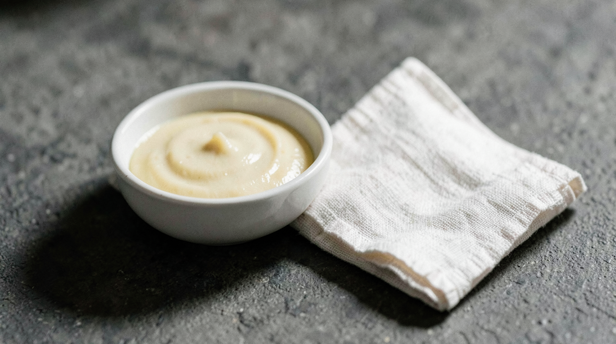
![Ceramic bowl with turmeric paste]()
Ceramic bowl with turmeric paste
Image credit : MyLifeXP Bureau
Turmeric is sometimes described as a brightening agent, and the claim is partly accurate but often overstated. Curcumin does inhibit tyrosinase, the enzyme involved in melanin production, in laboratory conditions. Whether that inhibition translates to visible brightening on human skin, applied topically, is less clear. The concentrations used in lab studies are generally higher than what reaches the skin through a home paste, and curcumin's poor water solubility limits how much actually absorbs.
The stain itself can create a temporary brightening illusion, yellow on the skin reads as warm and even-toned in certain lights, but that is pigment on the surface, not a change in how the skin produces melanin. A product formulated with a stabilised curcumin extract at a meaningful concentration, in a base designed to aid absorption, is more likely to have a measurable effect than a kitchen paste. But the evidence for topical curcumin as a brightening treatment in clinical use remains limited compared to ingredients like niacinamide or azelaic acid, which have more robust data behind them.
Turmeric also cannot treat acne as a primary intervention. Its anti-inflammatory action may reduce the redness around a spot, but it does not address the bacterial or hormonal factors that cause acne to develop. Using it in place of an evidence-based acne treatment is a substitution that the evidence does not support.
Using It Without the Problems
The practical version of this is straightforward. Use kasturi turmeric rather than kitchen turmeric if staining is a concern. Mix it with a gentle base, plain yoghurt, rose water, or a small amount of aloe gel, rather than anything acidic. Keep contact time short, five to ten minutes rather than overnight. Rinse thoroughly with lukewarm water. Do not use it on broken skin, active acne, or skin that is already irritated, because the essential oils will aggravate rather than calm.
If a sting develops during application, rinse immediately rather than waiting it out. A mild stinging that passes quickly is usually the essential oils. A burning that intensifies is a sign to wash off and not repeat the experiment.
Patch testing on the inner arm before applying anything to the face is not a formality. It is the only way to know whether a reaction is coming before it happens somewhere visible.
Turmeric is a useful ingredient within a specific and honest range. What it does well, mild antioxidant action, surface-level anti-inflammatory effect, it does reliably. What it cannot do, no amount of concentration or frequency will change. The stain fades. The sting is information. Both are worth understanding before the paste goes on.
Unlock insightful tips and inspiration on personal growth, productivity, and well-being. Stay motivated and updated with the latest at
My Life XP.