Events That Doctors & Scientists Still Cannot Fully Explain
Deepak Rajeev | Mon, 04 May 2026
This article explores real events that continue to puzzle doctors, scientists, and experts despite modern medical and scientific advances. It highlights documented cases such as rare survival incidents, neurological anomalies, near-death experiences, and unusual natural phenomena. Each example shows how current knowledge still has limits, revealing mysteries that challenge established explanations and keep research ongoing in the search for answers.

The Boundary Between Known and Unknown
Image credit : Freepik
Despite extraordinary advances in medicine, neuroscience, and physics, there remain real-world cases that continue to challenge even the most experienced professionals. These are not myths or internet legends, but documented medical and scientific anomalies recorded in journals, hospital reports, and peer-reviewed case studies, where experts openly admit that current frameworks cannot fully explain what happened.
As one scientific review on anomalous medical phenomena, published in ScienceDirect journal, wrote:
“The inability of existing paradigms to explain these observations does not negate them; rather, it elucidates a need for more research.”
This reflects a key reality: science does not deny these events, it simply cannot yet fully account for them.
![Brain ct scan x-ray film]()
One of the most astonishing medical cases ever documented occurred in France, where a 44-year-old man was found to be living a normal life despite having almost 90% of his brain missing due to fluid buildup in the skull.
Doctors discovered the anomaly during a routine scan when he reported mild leg weakness. Imaging revealed that most of his cranial cavity was filled with cerebrospinal fluid rather than brain tissue. Yet remarkably, he had a job, a family, and normal cognitive functioning. Published case discussions highlight that even after extensive neurological review, scientists still cannot fully explain how sufficient cognitive function was maintained with such minimal brain mass, making it one of the most debated neurological anomalies in modern medicine.
The “Lazarus Phenomenon” – When Patients Return After Death
![Doctors pushing emergency stretcher bed in corridor]()
In emergency medicine, there are rare but documented cases where patients declared clinically dead show spontaneous return of circulation without medical intervention. This is known as the Lazarus Phenomenon.
Medical literature describes cases where patients regained heartbeat several minutes after CPR had been stopped. A review of such events notes that while theories include trapped air pressure in the lungs or delayed drug circulation, no single explanation accounts for all recorded cases. Medical researchers continue to study these incidents because they challenge the assumed finality of clinical death, especially when revival occurs outside expected physiological timelines.
One of the most debated phenomena in neuroscience involves patients who report clear, structured awareness during cardiac arrest, even when brain activity is expected to be minimal.
A widely studied case is that of cardiac arrest survivors who later described observing medical staff from above their bodies with detailed accuracy. According to research summaries, these experiences remain scientifically unresolved because brain monitoring during arrest typically shows activity insufficient to support such vivid perception. Scientists have proposed explanations ranging from residual brain activity to memory reconstruction after recovery, but no consensus has been reached.
In one of the most unusual case reports in medical literature, a woman in Azerbaijan reportedly produced solid, crystal-like tear formations instead of normal fluid tears. Doctors confirmed the presence of hardened crystalline structures forming from her tear ducts, yet found no conventional disease pattern that fully explained the condition.
Despite extensive testing, no standard ophthalmic or metabolic disorder could conclusively account for the phenomenon. Researchers speculated about rare biochemical imbalances, but the exact mechanism remains unconfirmed, making it one of the most visually striking unexplained medical cases ever recorded.
Hospitals worldwide have reported rare cases where patients declared dead later regain consciousness without clear resuscitation success. These cases often overlap with the Lazarus Phenomenon but extend into broader clinical uncertainty. In some instances, families were informed of death only for the patient to later show signs of life in morgues or during post-declaration monitoring. While rare, these cases are taken seriously in medical ethics discussions because they highlight potential gaps in death confirmation protocols.
Beyond medicine, Earth itself produces unexplained phenomena that remain partially unresolved. For example, certain geological and atmospheric events such as unexplained seismic lights or rare energy emissions during earthquakes have been documented across multiple countries. Even with modern sensors, scientists still debate the exact mechanism behind some of these occurrences. Proposed theories include gas ionisation, electrical stress in rocks, and atmospheric discharge, but no single model explains all observed variations consistently.
What makes these cases compelling is not that science has failed, but that these phenomena exist at the extreme edges of measurable reality. Many occur too rarely, too unpredictably, or under conditions that cannot ethically or practically be recreated in controlled environments. As medical researchers emphasise in long-term diagnostic studies, unexplained cases often eventually receive explanations- but only after years or decades of accumulated evidence. A long-running investigative medical column has documented how complex diagnoses often take years before clarity is achieved, even in advanced hospitals with full diagnostic tools.
The Boundary Between Known and Unknown
These events collectively highlight an important truth: modern science is powerful, but not complete. Whether in neurology, emergency medicine, or natural science, there remain phenomena that resist full explanation not because they are supernatural, but because they sit at the very limits of current human understanding. Each unexplained case is not a contradiction of science, but a reminder that discovery is still ongoing. The unanswered questions today may become the foundational breakthroughs of tomorrow, reshaping how we understand life, consciousness, and reality itself.
Explore the latest trends and tips in Health & Fitness, Spiritual, Travel, Life Hacks, Trending, Fashion & Beauty, and Relationships at Times Life!
As one scientific review on anomalous medical phenomena, published in ScienceDirect journal, wrote:
“The inability of existing paradigms to explain these observations does not negate them; rather, it elucidates a need for more research.”
This reflects a key reality: science does not deny these events, it simply cannot yet fully account for them.
The Man Who Lived With Almost No Brain
Brain ct scan x-ray film
Image credit : Freepik
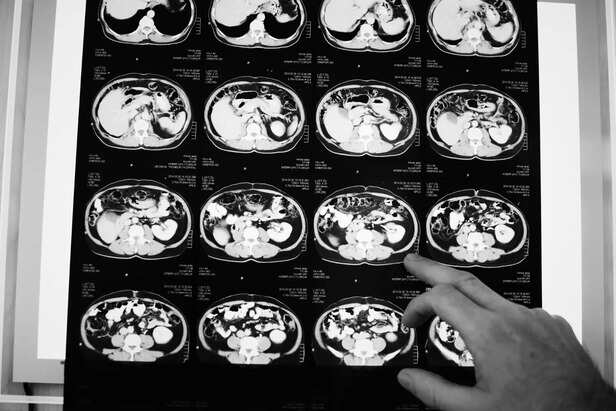
One of the most astonishing medical cases ever documented occurred in France, where a 44-year-old man was found to be living a normal life despite having almost 90% of his brain missing due to fluid buildup in the skull.
Doctors discovered the anomaly during a routine scan when he reported mild leg weakness. Imaging revealed that most of his cranial cavity was filled with cerebrospinal fluid rather than brain tissue. Yet remarkably, he had a job, a family, and normal cognitive functioning. Published case discussions highlight that even after extensive neurological review, scientists still cannot fully explain how sufficient cognitive function was maintained with such minimal brain mass, making it one of the most debated neurological anomalies in modern medicine.
The “Lazarus Phenomenon” – When Patients Return After Death
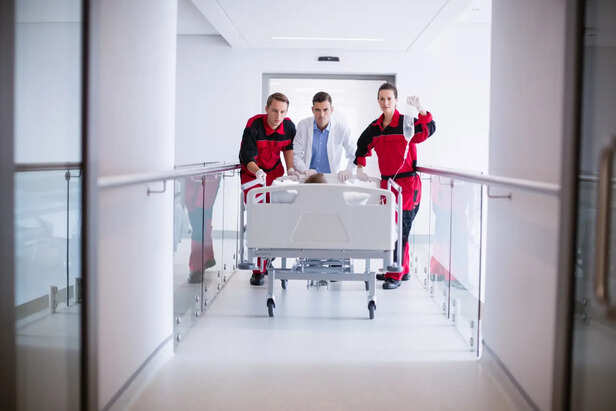
Doctors pushing emergency stretcher bed in corridor
Image credit : Freepik
In emergency medicine, there are rare but documented cases where patients declared clinically dead show spontaneous return of circulation without medical intervention. This is known as the Lazarus Phenomenon.
Medical literature describes cases where patients regained heartbeat several minutes after CPR had been stopped. A review of such events notes that while theories include trapped air pressure in the lungs or delayed drug circulation, no single explanation accounts for all recorded cases. Medical researchers continue to study these incidents because they challenge the assumed finality of clinical death, especially when revival occurs outside expected physiological timelines.
Out-of-Body and Near-Death Experiences During Cardiac Arrest
One of the most debated phenomena in neuroscience involves patients who report clear, structured awareness during cardiac arrest, even when brain activity is expected to be minimal.
A widely studied case is that of cardiac arrest survivors who later described observing medical staff from above their bodies with detailed accuracy. According to research summaries, these experiences remain scientifically unresolved because brain monitoring during arrest typically shows activity insufficient to support such vivid perception. Scientists have proposed explanations ranging from residual brain activity to memory reconstruction after recovery, but no consensus has been reached.
The Woman Who “Cried Crystal Tears”
In one of the most unusual case reports in medical literature, a woman in Azerbaijan reportedly produced solid, crystal-like tear formations instead of normal fluid tears. Doctors confirmed the presence of hardened crystalline structures forming from her tear ducts, yet found no conventional disease pattern that fully explained the condition.
Despite extensive testing, no standard ophthalmic or metabolic disorder could conclusively account for the phenomenon. Researchers speculated about rare biochemical imbalances, but the exact mechanism remains unconfirmed, making it one of the most visually striking unexplained medical cases ever recorded.
People Who Wake Up After Being Declared Dead
Hospitals worldwide have reported rare cases where patients declared dead later regain consciousness without clear resuscitation success. These cases often overlap with the Lazarus Phenomenon but extend into broader clinical uncertainty. In some instances, families were informed of death only for the patient to later show signs of life in morgues or during post-declaration monitoring. While rare, these cases are taken seriously in medical ethics discussions because they highlight potential gaps in death confirmation protocols.
Earth Phenomena That Still Defy Full Scientific Closure
Beyond medicine, Earth itself produces unexplained phenomena that remain partially unresolved. For example, certain geological and atmospheric events such as unexplained seismic lights or rare energy emissions during earthquakes have been documented across multiple countries. Even with modern sensors, scientists still debate the exact mechanism behind some of these occurrences. Proposed theories include gas ionisation, electrical stress in rocks, and atmospheric discharge, but no single model explains all observed variations consistently.
Why These Mysteries Still Exist in the Age of AI and Satellites
What makes these cases compelling is not that science has failed, but that these phenomena exist at the extreme edges of measurable reality. Many occur too rarely, too unpredictably, or under conditions that cannot ethically or practically be recreated in controlled environments. As medical researchers emphasise in long-term diagnostic studies, unexplained cases often eventually receive explanations- but only after years or decades of accumulated evidence. A long-running investigative medical column has documented how complex diagnoses often take years before clarity is achieved, even in advanced hospitals with full diagnostic tools.
The Boundary Between Known and Unknown
These events collectively highlight an important truth: modern science is powerful, but not complete. Whether in neurology, emergency medicine, or natural science, there remain phenomena that resist full explanation not because they are supernatural, but because they sit at the very limits of current human understanding. Each unexplained case is not a contradiction of science, but a reminder that discovery is still ongoing. The unanswered questions today may become the foundational breakthroughs of tomorrow, reshaping how we understand life, consciousness, and reality itself.
Explore the latest trends and tips in Health & Fitness, Spiritual, Travel, Life Hacks, Trending, Fashion & Beauty, and Relationships at Times Life!