Children may find it easy to remember that Lord Ram returned to Ayodhya, but they may not understand why he had to leave his home in the first place.According to the Ramayana, Ram went into exile for 14 years after King Dasharatha's promise to Kaikeyi led to a change in the succession plans. Ram accepted the decision and left the kingdom, accompanied by Sita and Lakshman.
Start With Why Lord Ram Left Ayodhya
![Lord Rama’s Departure from Ayodhya]()
Lord Rama’s Departure from Ayodhya
Image credit : ChatGPT
Parents can explain this part of the story in simple words. Sometimes, doing what we believe is right can mean giving up something we love. Ram left behind his royal life and familiar surroundings, even though he had done nothing wrong.
You can ask your child, "How would you feel if you had to leave your home and friends for a long time?"This question helps children connect with the story instead of simply memorising events. It also creates space to discuss change, disappointment and how people respond to difficult situations.
Explain That Keeping a Promise Can Require Courage
One of the important lessons associated with Ram's exile is the value of keeping promises. Ram honoured his father's commitment even when doing so changed the course of his life.However, parents do not need to tell children that they must agree with every decision made by an adult. Instead, explain that promises matter because they build trust, and that people should think carefully before making them.For example, if your child promises to feed a pet or help put away toys, explain how following through shows responsibility.
You can also remind them that if circumstances make it impossible to keep a promise, they should communicate honestly rather than hide the truth.This makes the story relevant to a child's everyday experiences, from school responsibilities to friendships.
Show Them Why Courage Is More Than Fighting
When children hear about the Ramayana, they may focus on battles, powerful characters and the victory over Ravana. But courage in the story is not limited to fighting.Ram's journey involved living away from the comforts of his palace, facing uncertainty and continuing through hardship. Sita and Lakshman also faced the challenges of exile in their own ways.
Parents can explain that courage can mean trying again after failure, admitting a mistake, asking for help or standing up for someone who is being treated unfairly.For a young child, these examples may be easier to understand than a discussion about war or victory. They also show that bravery is something children can practise in small ways every day.
Help Your Child Understand the Importance of Family
Ram did not make his journey alone. Sita and Lakshman accompanied him into exile, and their experiences form an important part of the larger story.Their journey offers an opportunity to talk about support, care and the responsibilities people have towards one another. Families may disagree, face difficult moments or have different needs, but listening and helping each other can make challenges easier to face.
Ask your child what they would do if a sibling or friend felt lonely or frightened. Encourage them to think about small acts of kindness, such as sharing, listening or offering comfort.At the same time, explain that caring for someone does not mean agreeing with everything they say. Healthy relationships also need honesty, respect and understanding.
Why Was Ram's Return to Ayodhya So Special?
After 14 years of exile and the events of the Ramayana, Ram returned to Ayodhya with Sita and Lakshman. According to the popular tradition associated with Diwali, the people welcomed them by lighting rows of oil lamps.
For children, the diyas can become a way to understand the emotions behind the celebration. Imagine waiting a long time for someone you love to return home. The lights represent the happiness and hope of that reunion.Parents can explain that Diwali is not only about decorating the house or receiving gifts. It is also about welcoming loved ones, celebrating hope and remembering the values that help people face difficult times.You could even invite your child to light a diya with adult supervision and ask them what the light reminds them of. Their answer may open up a meaningful conversation about kindness, courage or family.
Turn the Story Into a Lesson Children Can Remember
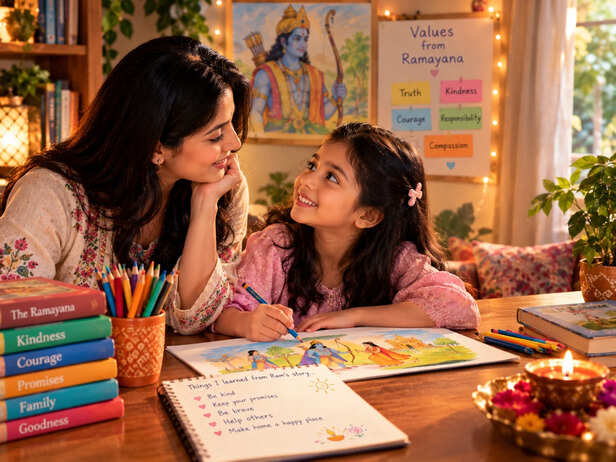
![Mother-Child Ramayana Learning Moment]()
Mother-Child Ramayana Learning Moment
Image credit : ChatGPT
You do not need to explain the entire Ramayana in one sitting. A few thoughtful questions can help children connect the story with their own lives.
Try asking:
- What do you think made Ram's journey difficult?
- How can we keep our promises to friends and family?
- What does courage look like when nobody is watching?
- How can we help someone who is having a difficult day?
- What does welcoming someone home mean to you?
Let children share their own answers instead of expecting them to repeat a particular lesson. Their responses can help you understand what they have taken from the story.You can also encourage them to draw a scene from Ram's return, write a short message about kindness or help prepare the home for Diwali. These activities make the story memorable without turning it into a formal lesson.
Make Diwali More Meaningful Than a Celebration of Lights
Children may remember the sweets, new clothes, decorations and fireworks associated with Diwali. Those experiences are part of the excitement, but the story of Ram's return offers families a chance to discuss values that matter long after the festival ends.Before telling your child about the lamps that welcomed Ram to Ayodhya, help them understand the journey that came before them. Talk about promises, courage, difficult choices, family support and hope.
The goal is not to make children memorise every detail of the Ramayana. It is to help them discover why the story has been shared across generations and what it might mean in their own lives.When children understand the journey behind the celebration, the diya they light can become more than a decoration. It can be a reminder to act with kindness, face challenges bravely and bring warmth into the lives of others.
Unlock insightful tips and inspiration on personal growth, productivity, and well-being. Stay motivated and updated with the latest at My Life XP