Why Yashoda’s Love Feels So Real To Every Mother
Noopur Kumari | May 27, 2026, 16:00 IST
Yashoda’s bond with Krishna continues to emotionally connect with Indian mothers because it reflects unconditional love, sacrifice, patience, and emotional attachment beyond biological ties. She loved Krishna not as a divine figure, but as a child she protected, scolded, fed, and worried about every single day. Her story mirrors the emotional reality of motherhood itself endless care without expecting recognition. This article explores why Yashoda remains one of the most relatable maternal figures in Indian culture and why her emotional connection with Krishna still resonates deeply with mothers across generations even in modern times.

There are many powerful women in Hindu mythology, but very few touch the human heart as deeply as Yashoda. She was not a queen known for war or greatness. She was simply a mother. Yet for centuries, Indian mothers have cried, smiled, and emotionally connected with her story in a way that feels intensely personal. Why does Yashoda’s love still feel so real even today? Perhaps because every mother sees a part of herself in the woman who raised Lord Krishna not as a god, but as her mischievous little child. Behind every playful Krishna story lies a deeper emotion that countless mothers silently understand.
![Yashoda Holding Little Krishna With Love]()
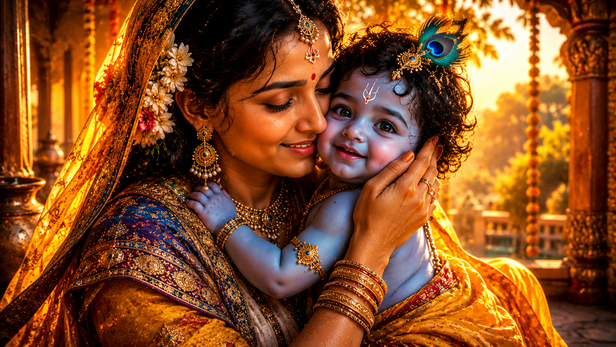
What makes Yashoda unforgettable is the simplicity of her love. She never saw Krishna as a divine being carrying cosmic powers. To her, he was the little boy stealing butter, running through the house, and creating endless trouble in Gokul. That emotional blindness is what mothers deeply connect with. A mother rarely sees status, success, or greatness first. She sees the child she once carried, protected, and comforted. Yashoda’s love was not based on perfection or achievement. It was based on emotional attachment so pure that even Krishna’s divinity could not change how she looked at him only as her beloved son.
![Traditional Indian Mother Caring For Her Child]()
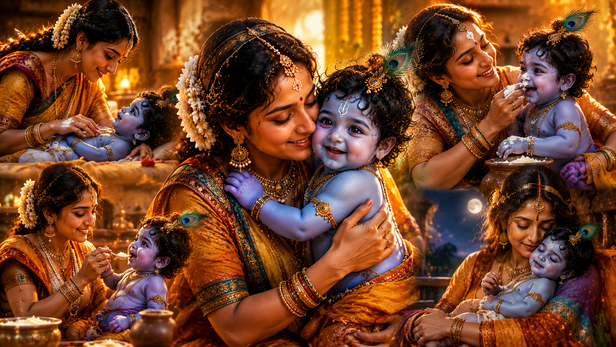
Indian mothers often see their own lives reflected in Yashoda’s daily struggles with Krishna. Running after a mischievous child, feeding him despite endless tantrums, worrying constantly, and still loving him unconditionally these moments feel deeply familiar. That is why stories of Krishna stealing butter or getting tied with a rope by Yashoda never feel distant or mythological. They feel human and emotional. Even today, many mothers jokingly compare naughty children with Krishna. The emotional warmth in these stories keeps Yashoda alive not as a goddess alone, but as a symbol of everyday motherhood filled with patience, exhaustion, affection, and endless care.
One of the most powerful emotional truths in Yashoda’s story is that Krishna was not her biological son. Yet her love never felt incomplete even for a moment. This deeply touches people because it proves motherhood is created through care, sacrifice, and emotional connection rather than blood alone. Yashoda woke up for Krishna, protected him, worried for him, and shaped his childhood with pure devotion. Her story quietly reminds society that real parenting comes from emotional presence and unconditional love. That message feels especially meaningful today when relationships are increasingly defined by emotional understanding rather than only biological ties.
Most mothers rarely speak about their sacrifices openly. They silently worry, protect, and place their children’s happiness above their own comfort. Yashoda represents this emotional truth perfectly. Whether Krishna wandered into danger or created chaos, her first reaction was always concern, protection, and emotional attachment. Indian mothers connect with those emotions because they live them daily. The fear of losing a child, the endless care, and the habit of forgiving every mistake instantly are emotions deeply woven into motherhood itself. Yashoda’s story survives because it captures those universal feelings that remain unchanged across generations and changing lifestyles.
In a world changing rapidly through technology and modern lifestyles, Yashoda’s story still feels emotionally relevant because motherhood itself has not changed. Mothers still stay awake worrying for their children. They still forgive mistakes faster than anyone else. They still hide their pain behind smiles for their family’s happiness. Yashoda symbolizes that timeless emotional strength. Her bond with Krishna is remembered not because he was God, but because their relationship felt deeply human. That is why even today, hearing stories of Yashoda and Krishna often leaves mothers emotional. Somewhere inside, they recognize their own love reflected in hers.
Unlock insightful tips and inspiration on personal growth, productivity, and well-being. Stay motivated and updated with the latest at My Life XP.
1. Why do Indian mothers feel emotionally connected to Yashoda?
Indian mothers connect with Yashoda because her love for Krishna reflects the emotions of real motherhood care, sacrifice, patience, protection, and unconditional affection.
2. Who was Yashoda in Hindu mythology?
Yashoda was the foster mother of Lord Krishna who raised him lovingly in Gokul along with Nanda Baba.
3. Why is Yashoda and Krishna’s bond considered special?
Their relationship is remembered because Yashoda loved Krishna as her child, not as a divine god. Their bond feels deeply human and emotionally relatable.
4. Was Krishna Yashoda’s biological son?
No. Krishna was born to Devaki and Vasudeva, but he was raised by Yashoda and Nanda in Gokul for his protection.
5. What does Yashoda symbolize in Indian culture?
Yashoda symbolizes unconditional motherhood, emotional sacrifice, nurturing care, patience, and selfless love.
6. Why are Krishna’s childhood stories with Yashoda so popular?
Stories like butter stealing, playful mischief, and Yashoda scolding Krishna feel warm, emotional, and relatable to family life even today.
Yashoda Loved Krishna Like Every Mother Loves Her Child
Yashoda Holding Little Krishna With Love
What makes Yashoda unforgettable is the simplicity of her love. She never saw Krishna as a divine being carrying cosmic powers. To her, he was the little boy stealing butter, running through the house, and creating endless trouble in Gokul. That emotional blindness is what mothers deeply connect with. A mother rarely sees status, success, or greatness first. She sees the child she once carried, protected, and comforted. Yashoda’s love was not based on perfection or achievement. It was based on emotional attachment so pure that even Krishna’s divinity could not change how she looked at him only as her beloved son.
The Story Feels Real Inside Every Indian Home
Traditional Indian Mother Caring For Her Child
Indian mothers often see their own lives reflected in Yashoda’s daily struggles with Krishna. Running after a mischievous child, feeding him despite endless tantrums, worrying constantly, and still loving him unconditionally these moments feel deeply familiar. That is why stories of Krishna stealing butter or getting tied with a rope by Yashoda never feel distant or mythological. They feel human and emotional. Even today, many mothers jokingly compare naughty children with Krishna. The emotional warmth in these stories keeps Yashoda alive not as a goddess alone, but as a symbol of everyday motherhood filled with patience, exhaustion, affection, and endless care.
Yashoda Proves Motherhood Is Beyond Blood
One of the most powerful emotional truths in Yashoda’s story is that Krishna was not her biological son. Yet her love never felt incomplete even for a moment. This deeply touches people because it proves motherhood is created through care, sacrifice, and emotional connection rather than blood alone. Yashoda woke up for Krishna, protected him, worried for him, and shaped his childhood with pure devotion. Her story quietly reminds society that real parenting comes from emotional presence and unconditional love. That message feels especially meaningful today when relationships are increasingly defined by emotional understanding rather than only biological ties.
Mothers Connect With Her Silent Sacrifices
Why Yashoda’s Love Still Feels Timeless Today
Unlock insightful tips and inspiration on personal growth, productivity, and well-being. Stay motivated and updated with the latest at My Life XP.
Frequently Asked Questions (FAQs)
Indian mothers connect with Yashoda because her love for Krishna reflects the emotions of real motherhood care, sacrifice, patience, protection, and unconditional affection.
2. Who was Yashoda in Hindu mythology?
Yashoda was the foster mother of Lord Krishna who raised him lovingly in Gokul along with Nanda Baba.
3. Why is Yashoda and Krishna’s bond considered special?
Their relationship is remembered because Yashoda loved Krishna as her child, not as a divine god. Their bond feels deeply human and emotionally relatable.
4. Was Krishna Yashoda’s biological son?
No. Krishna was born to Devaki and Vasudeva, but he was raised by Yashoda and Nanda in Gokul for his protection.
5. What does Yashoda symbolize in Indian culture?
Yashoda symbolizes unconditional motherhood, emotional sacrifice, nurturing care, patience, and selfless love.
6. Why are Krishna’s childhood stories with Yashoda so popular?
Stories like butter stealing, playful mischief, and Yashoda scolding Krishna feel warm, emotional, and relatable to family life even today.