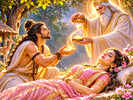
Most devotees know Lord Hanuman as one of the greatest devotees of Lord Rama and a powerful form associated with Lord Shiva. But how many people can name the eleven Rudras of Mahadev? Hindu religious traditions describe Rudra as a fierce and powerful manifestation of Shiva, and different texts and traditions preserve variations in the names of the eleven Rudras. Among the names commonly associated with them are Kapali, Pingala, Bhima and Virupaksha. Each name carries a distinct meaning connected with Shiva's divine nature.
Kapali: The Form That Destroys Ego
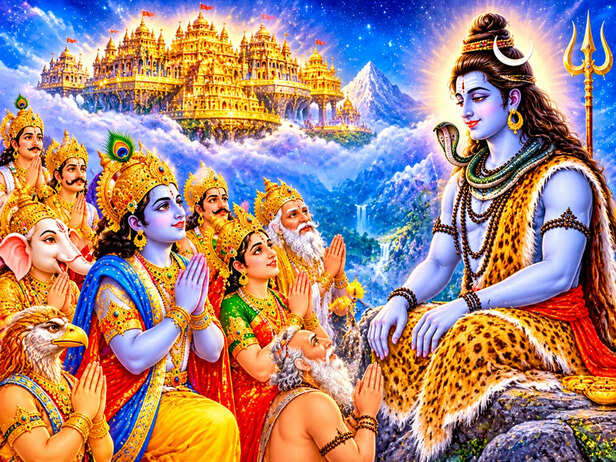
![Lord Shiva's Victory Over Tripurasura]()
Lord Shiva's Victory Over Tripurasura
Image credit : CHATGPT(AI)
Kapali is traditionally associated with Lord Shiva's fierce form and the symbolism of the skull. The name represents detachment from worldly pride and the destruction of ego. In devotional interpretations, this form reminds people that arrogance, attachment and excessive pride can become obstacles to spiritual growth. Kapali represents the power to overcome these limitations and move towards self-realisation. It is a reminder that true spiritual progress begins when a person learns to let go of their ego.
Pingala and Bhima: The Power of Energy
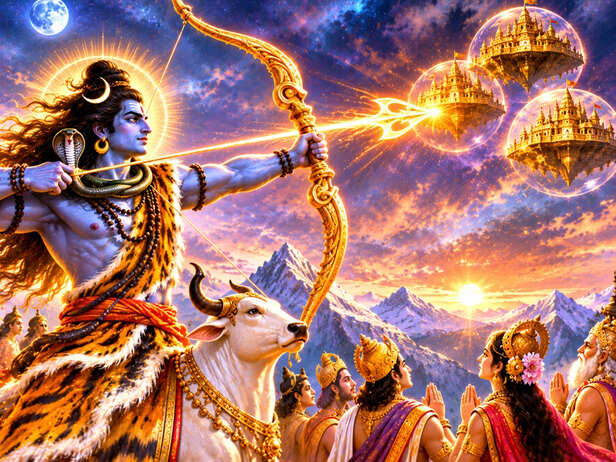
![Lord Shiva Destroys Tripura With One Arrow]()
Lord Shiva Destroys Tripura With One Arrow
Image credit : CHATGPT(AI)
Pingala is associated with fiery radiance and intense energy, while Bhima means formidable or tremendously powerful. These names represent two striking aspects of Rudra: immense cosmic energy and overwhelming strength. Pingala is often described through the imagery of blazing light, while Bhima represents Shiva's fierce ability to confront destructive forces. Together, these forms reflect the power that protects creation and destroys forces that threaten its balance.
Virupaksha and Vilohita: The Power That Sees and Transforms
Virupaksha means the one with unusual or distinctive eyes and is closely associated with Shiva's divine vision. His third eye symbolises awareness beyond ordinary perception and the destruction of ignorance. Vilohita, meaning the intensely red or reddish one, is associated with fiery energy and transformation. These names represent different dimensions of Rudra's power: the ability to see beyond appearances and the force that brings change by destroying darkness.
Shasta: The One Who Guides and Governs
Shasta is associated with authority, discipline and the power to guide. The name is traditionally understood in connection with a teacher, ruler or one who directs others. In interpretations of the Rudra forms, Shasta represents the principle of order and discipline. This form reminds devotees that power is not only about destruction but also about maintaining balance. Discipline and responsibility are equally important aspects of divine strength.
Ajapada and Ahirbudhnya: The Mysterious Rudras
Ajapada and Ahirbudhnya are among the lesser-known names in the eleven Rudras. Their meanings are interpreted differently across traditions. Ahirbudhnya is commonly understood through the image of a cosmic serpent associated with the depths. Ajapada is another ancient name whose precise interpretation varies. Both names point towards the mysterious and cosmic dimensions of Rudra, showing that Shiva's identity extends beyond the familiar images of the destroyer and ascetic.
Shambhu and Chanda: Two Different Expressions of Shiva
Shambhu means the source of happiness, well-being and auspiciousness. This name represents the compassionate and peaceful nature of Lord Shiva, who is lovingly worshipped by devotees. Chanda, on the other hand, represents a fierce and intense form. It is associated with the power to destroy harmful forces and overcome negativity. These two names show the contrasting aspects of Mahadev: he can be deeply compassionate towards his devotees while remaining fierce against destructive forces.
Bhava: The Source of Existence
The eleventh name in this commonly circulated list is Bhava, which is associated with existence, becoming and the source of life. It represents Shiva as the foundation of creation and the presence that sustains existence. While Shiva is widely known as the destroyer in the Hindu trinity, his identity is not limited to destruction. Bhava reminds devotees of his connection with life, creation and the continuous cycle of transformation.
Is Hanuman Ji Connected to the Eleven Rudras?
In many Hindu devotional traditions, Lord Hanuman is regarded as an incarnation or manifestation of Lord Shiva's Rudra aspect. He is therefore often called an Ekadasha Rudra, or an eleventh Rudra. His connection with Shiva is also reflected in his extraordinary strength, courage and devotion. However, different scriptures and traditions preserve different accounts of the eleven Rudras, so the names and their descriptions are not identical everywhere. Hanuman Ji's association with Rudra should be understood within this wider tradition.
The Deeper Meaning of Shiva's Eleven Rudras
The eleven Rudras represent different dimensions of Lord Shiva's divine nature. Some are associated with fierce power and destruction, while others represent compassion, discipline, energy and existence. Their names remind devotees that Mahadev cannot be understood through just one form or quality.
And perhaps that is what makes the eleven Rudras so fascinating: the same divine source can represent both immense power and infinite compassion.
Unlock insightful tips and inspiration on personal growth, productivity, and well-being. Stay motivated and updated with the latest at
My Life XP.