5 Differences Between Swarg and Vaikuntha You Should Know
Noopur Kumari | Oct 05, 2026, 11:00 IST
If both Swarg and Vaikuntha are described as divine realms, why are they not considered the same? This is where many popular explanations become confusing. In Hindu traditions, Svarga is generally understood as a realm where beings enjoy the results of meritorious karma, while Vaikuntha is described in Vaishnava traditions as the eternal abode of Lord Vishnu.

Swarg vs Vaikuntha
Image credit : ChatGPT(ai)
What happens to a soul after death? Hindu philosophy offers several ideas about different realms of existence, but Swarg and Vaikuntha are often treated as if they mean the same thing. They do not. In broad Hindu traditions, Svarga or Svarg Lok is associated with the enjoyment of punya, or the results of meritorious actions. Vaikuntha, especially in Vaishnava traditions, is described as the eternal abode of Lord Vishnu, beyond ordinary material existence. This distinction changes the entire meaning of the journey after death. The question is not simply which place is more beautiful. It is about temporary heavenly reward versus eternal spiritual liberation.
![Swarg Lok described as a celestial realm]()
In Hindu philosophical and religious traditions, Swarg Lok is commonly described as a celestial realm associated with Devas and the enjoyment of punya earned through righteous actions. A person may experience happiness and heavenly pleasures there after death, but those results are not necessarily permanent. The Bhagavad Gita explains that those who seek heavenly enjoyment through accumulated merit eventually return to the mortal world when their punya is exhausted. This makes Swarg different from final liberation. It is a destination associated with the results of karma, not necessarily freedom from the cycle of birth and death.
![Lord Vishnu in the divine realm of Vaikuntha]()
Vaikuntha Dham has a very different place in Vaishnava theology. It is described as the eternal abode of Lord Vishnu, where liberated souls remain in a state of divine bliss and devotion. Unlike the temporary rewards of Swarg, Vaikuntha is associated with freedom from ordinary material existence and the cycle of repeated birth and death. Different Vaishnava traditions explain liberation in their own theological language, but devotion to Vishnu remains central. The goal is not simply to enjoy greater pleasures. It is to attain an eternal relationship with the Divine, free from the limitations of worldly existence.
This is the point that often gets missed when people compare Swarg and Vaikuntha. Swarg is generally described as temporary because its pleasures are connected to punya. Once those karmic results are exhausted, the soul returns to the cycle of worldly existence. Vaikuntha, by contrast, is understood in Vaishnava traditions as an eternal spiritual realm. The Bhagavad Gita also distinguishes heavenly enjoyment from the state of liberation. So the difference is not simply that one place is pleasant and the other is more pleasant. Swarg rewards karma, while Vaikuntha represents liberation and eternal divine existence.
The traditional paths to these states are also described differently. Good karma and meritorious actions are associated with attaining heavenly rewards, while liberation is connected with spiritual realization, devotion and freedom from attachment to material existence. In Vaishnava traditions, bhakti or devotion to Lord Vishnu has a central role in reaching Vaikuntha. The exact explanation varies across Hindu schools, so there is no single description accepted by every tradition. This is why it is better to understand Swarg and Vaikuntha through the specific philosophical tradition being discussed rather than treating every Hindu scripture as presenting one identical map of the afterlife.
Descriptions of Vaikuntha Dham appear prominently in Vaishnava scriptures and later devotional traditions. It is portrayed as a realm beyond ordinary material limitations, associated with Lord Vishnu, Goddess Lakshmi and eternal divine service. The emphasis is not on material possessions or sensory pleasure. Instead, Vaikuntha represents peace, devotion and an uninterrupted relationship with the Divine. Different scriptures and traditions describe its beauty in different ways, using images of divine light, celestial surroundings and extraordinary bliss. These descriptions are theological and devotional rather than geographical claims about a physical location that can be measured like an earthly place.
A common misunderstanding is that reaching Swarg Lok automatically means attaining moksha. In many Hindu philosophical traditions, that is not the case. Heavenly existence can still be connected with karma and therefore does not necessarily end the cycle of rebirth. Moksha means liberation from that cycle. Vaishnava traditions describe Vaikuntha as an eternal spiritual destination associated with liberation, while other Hindu schools explain liberation differently. This distinction matters because it changes the purpose of spiritual practice. If the ultimate goal is moksha, then temporary pleasure, even heavenly pleasure, is not considered the final destination.
So, Swarg or Vaikuntha: which is the higher spiritual goal? In Vaishnava traditions, Vaikuntha is understood as the eternal abode of Lord Vishnu and therefore stands beyond temporary heavenly enjoyment. Swarg can be seen as the fruit of punya, while Vaikuntha represents liberation and eternal devotion. This does not mean every Hindu tradition describes the afterlife in exactly the same way. Hindu philosophy contains several schools with different views of the soul, God and liberation. The deeper lesson remains simple: spiritual traditions often distinguish between receiving the fruits of good actions and seeking freedom from the cycle of birth and death.
Unlock insightful tips and inspiration on personal growth, productivity, and well-being. Stay motivated and updated with the latest at My Life XP
Swarg Is Linked to Good Karma
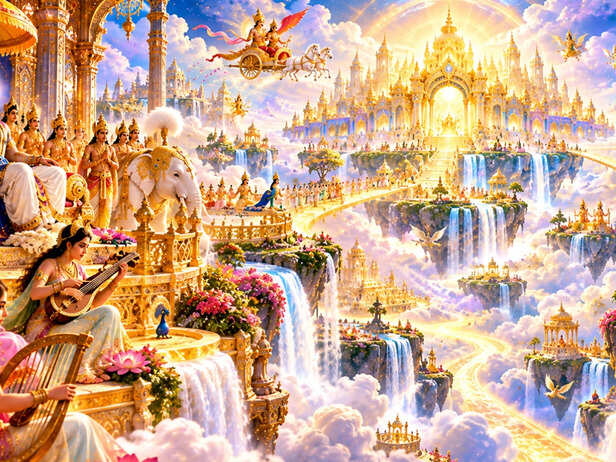
Swarg Lok described as a celestial realm
Image credit : ChatGPT (ai)
In Hindu philosophical and religious traditions, Swarg Lok is commonly described as a celestial realm associated with Devas and the enjoyment of punya earned through righteous actions. A person may experience happiness and heavenly pleasures there after death, but those results are not necessarily permanent. The Bhagavad Gita explains that those who seek heavenly enjoyment through accumulated merit eventually return to the mortal world when their punya is exhausted. This makes Swarg different from final liberation. It is a destination associated with the results of karma, not necessarily freedom from the cycle of birth and death.
Vaikuntha Has a Different Purpose
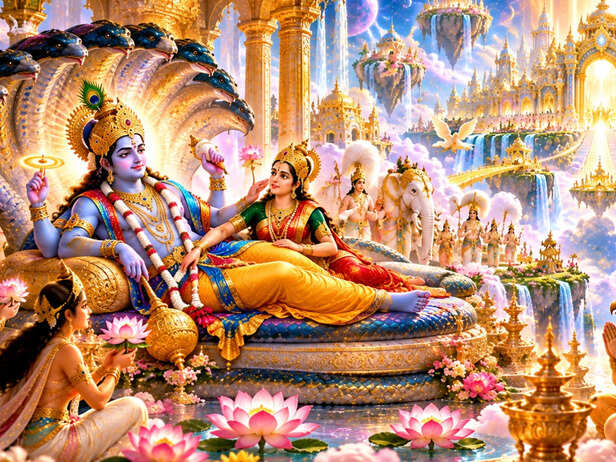
Lord Vishnu in the divine realm of Vaikuntha
Image credit : ChatGPT (ai)
Vaikuntha Dham has a very different place in Vaishnava theology. It is described as the eternal abode of Lord Vishnu, where liberated souls remain in a state of divine bliss and devotion. Unlike the temporary rewards of Swarg, Vaikuntha is associated with freedom from ordinary material existence and the cycle of repeated birth and death. Different Vaishnava traditions explain liberation in their own theological language, but devotion to Vishnu remains central. The goal is not simply to enjoy greater pleasures. It is to attain an eternal relationship with the Divine, free from the limitations of worldly existence.
The Biggest Difference Is Time
Who Reaches These Realms?
What Is Life Like in Vaikuntha?
Why Swarg Is Not Moksha
The Real Question Is the Final Goal
Unlock insightful tips and inspiration on personal growth, productivity, and well-being. Stay motivated and updated with the latest at My Life XP