Did Surya’s Curse Lead to Ganesha’s Beheading
Noopur Kumari | Sept 23, 2026, 16:00 IST
The story ofGanesha's beheadingis familiar, but one traditional version connects it to an event that happened much earlier. Two powerful demons, a battle with Surya, Shiva's intervention and an angry father's curse eventually lead to the heartbreaking moment when Shiva confronts Ganesha. Here is the lesser-known chain of events behind one of Hindu mythology's most famous stories.

Shiva Kill Ganesha
Image credit : ChatGPT (ai)
Why would Lord Shiva, the father of Ganesha, raise his weapon against his own son?
The familiar story says that Shiva returned while Goddess Parvati was bathing and found a young boy guarding the entrance. Ganesha refused to let Shiva pass because he was following his mother's command. Angered by the confrontation, Shiva severed the boy's head. But one traditional account adds a much deeper layer to this famous Ganesha story.
According to the version attributed to the Brahma Vaivarta Purana, Ganesha's tragedy was connected to an earlier conflict involving Surya, Shiva, Kashyapa, Mali and Sumali. At the centre of it all was a curse that seemed destined to come true.
![Mali and Sumali Performing Severe Penance]()
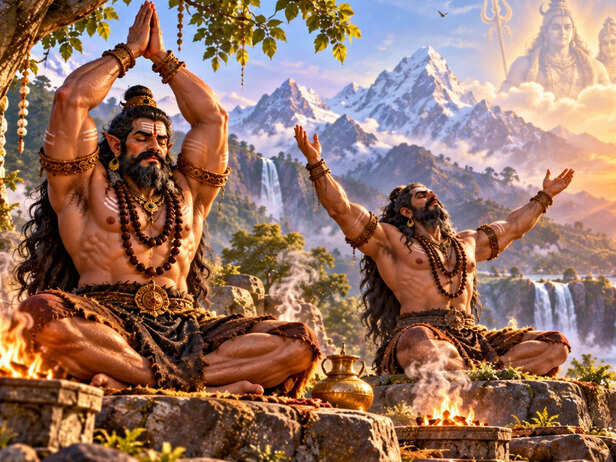
The story begins with two powerful brothers, Mali and Sumali, who are described in this traditional account as rakshasas. They performed intense penance to please Lord Shiva. Pleased with their devotion, Shiva granted them protection and promised to stand by them when they faced enemies. Empowered by this boon, the brothers became increasingly formidable and began creating trouble across different realms. Their growing power eventually brought them into conflict with Surya Dev, the Sun God. This marked the beginning of a chain of events that would later become connected with the tragic story of Lord Ganesha.
![Surya Dev Confronting Mali and Sumali]()
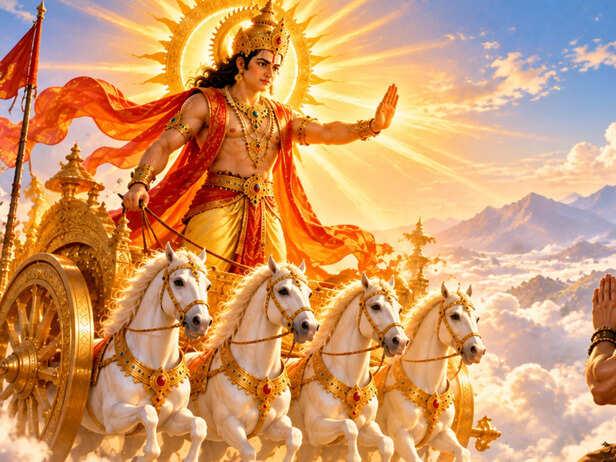
According to this version of the Hindu mythology story, Surya decided to confront Mali and Sumali. The brothers struggled to withstand his immense power and turned to Shiva for protection. Shiva then entered the conflict and struck Surya with his trident. The battle took a devastating turn when Surya was defeated. But the consequences did not end there. Surya's father, Sage Kashyapa, was overcome with anger and grief. What followed was not another battle, but a curse. Kashyapa declared that Shiva would one day experience the pain of killing his own son, creating the mysterious connection between Surya's story and Ganesha's story.
The curse became the hidden thread running through the later events. Kashyapa's words, as preserved in this traditional narrative, foretold that Shiva would himself become responsible for the death of his son, just as Surya had been struck down. At the time, there was no Ganesha in the story. Years later, however, Goddess Parvati created a child from the material of her body and gave him an important responsibility. This is where the birth of Ganesha enters the narrative. The earlier curse suddenly gains a disturbing meaning, turning an old conflict into a future tragedy.
When Parvati went to bathe, she instructed her newly created son, Ganesha, to guard the entrance and allow no one inside. Ganesha took his duty seriously. Soon, Shiva arrived and wanted to enter. But Ganesha did not recognise him as someone who could simply pass through the doorway. He followed his mother's command and stopped Shiva. What began as a simple disagreement quickly became a confrontation. The young Ganesha was protecting his mother's privacy, while Shiva saw an unknown child blocking his path. Neither side stepped back, and the tension soon reached its tragic turning point.
In the traditional Ganesha beheading story, Shiva became furious when Ganesha refused to move. The confrontation ended when Shiva used his weapon and severed Ganesha's head. Parvati was devastated when she discovered what had happened. The moment is remembered as one of the most emotional scenes in Hindu mythology because the child had simply been carrying out his mother's command. In the Brahma Vaivarta Purana account described here, however, the tragedy carries another layer: Kashyapa's earlier curse had now appeared to be fulfilled. What looked like a sudden act of anger was connected to an event from the past.
The connection between Kashyapa's curse and Ganesha is what makes this version especially striking. Kashyapa had declared that Shiva would experience the same loss connected to the earlier death of Surya. When Shiva unknowingly caused the death of Ganesha, the old words appeared to have become reality. The story then moves toward restoration. Shiva sought a way to bring the child back, and Ganesha eventually received an elephant head. This transformation gave rise to the beloved form of Lord Ganesha, who is worshipped today as the remover of obstacles and the son of Shiva and Parvati.
Beyond the supernatural elements, this Ganesha mythology story carries a powerful idea about consequences. A decision made during an earlier conflict eventually returns in an unexpected form. Shiva's encounter with Ganesha also reminds us how quickly anger can turn a small disagreement into something irreversible. Yet the story does not end with loss. Ganesha receives a new beginning and becomes one of the most widely revered deities in Hindu tradition. That is perhaps why the story remains so memorable: it moves from curse to tragedy, tragedy to transformation, and transformation to divine identity.
Unlock insightful tips and inspiration on personal growth, productivity, and well-being. Stay motivated and updated with the latest at My Life XP
The familiar story says that Shiva returned while Goddess Parvati was bathing and found a young boy guarding the entrance. Ganesha refused to let Shiva pass because he was following his mother's command. Angered by the confrontation, Shiva severed the boy's head. But one traditional account adds a much deeper layer to this famous Ganesha story.
According to the version attributed to the Brahma Vaivarta Purana, Ganesha's tragedy was connected to an earlier conflict involving Surya, Shiva, Kashyapa, Mali and Sumali. At the centre of it all was a curse that seemed destined to come true.
The Two Brothers Who Challenged the Gods
Mali and Sumali Performing Severe Penance
Image credit : ChatGPT(ai)
The story begins with two powerful brothers, Mali and Sumali, who are described in this traditional account as rakshasas. They performed intense penance to please Lord Shiva. Pleased with their devotion, Shiva granted them protection and promised to stand by them when they faced enemies. Empowered by this boon, the brothers became increasingly formidable and began creating trouble across different realms. Their growing power eventually brought them into conflict with Surya Dev, the Sun God. This marked the beginning of a chain of events that would later become connected with the tragic story of Lord Ganesha.
Surya Could Not Ignore Them
Surya Dev Confronting Mali and Sumali
Image credit : chatgpt(ai)
According to this version of the Hindu mythology story, Surya decided to confront Mali and Sumali. The brothers struggled to withstand his immense power and turned to Shiva for protection. Shiva then entered the conflict and struck Surya with his trident. The battle took a devastating turn when Surya was defeated. But the consequences did not end there. Surya's father, Sage Kashyapa, was overcome with anger and grief. What followed was not another battle, but a curse. Kashyapa declared that Shiva would one day experience the pain of killing his own son, creating the mysterious connection between Surya's story and Ganesha's story.
Kashyapa’s Curse Takes Shape
Ganesha Guards His Mother
The Moment Everything Changed
The Curse Finally Comes True
A Story About Consequences
Unlock insightful tips and inspiration on personal growth, productivity, and well-being. Stay motivated and updated with the latest at My Life XP