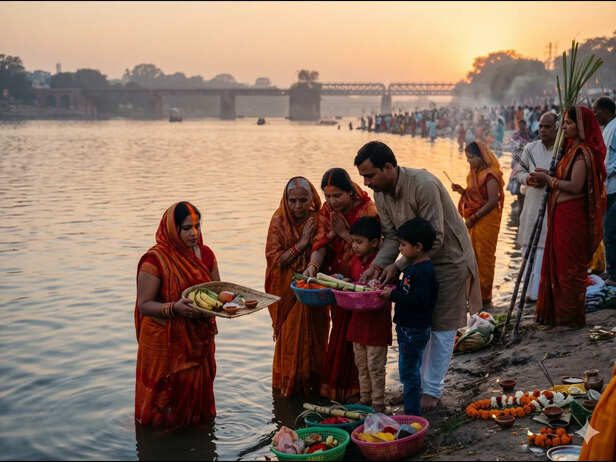
When Chhath Puja arrives in Bihar, the sight of devotees standing in rivers with folded hands is familiar. But there is something many people may not know: some Muslim families in Bihar also observe this festival, keep fasts and offer Arghya to the setting and rising Sun. In certain villages, this tradition has continued for generations. Muslim women sing Chhath songs, prepare traditional offerings and join their Hindu neighbours at the ghats. What makes these stories even more interesting is that, for these families, Chhath is not simply a festival they witness from outside. It has become a tradition they actively follow.
A Tradition That Goes Beyond Religion
![Chhath Puja]()
Chhath Puja
Image credit : chatgpt(ai)
Some Muslim families in Bihar have been observing Chhath Puja for decades. They follow the traditional rituals, prepare offerings and join other devotees at riverbanks and ponds. This practice can be seen in districts such as Samastipur, Gopalganj and Bhagalpur. For these families, the festival has become part of their family and village traditions. Their participation also shows how local customs can bring people from different religious communities together.
The Village Where Muslims Have Observed Chhath for 100 Years
![Chhath Puja]()
Chhath Puja
Image credit : chatgpt(ai)
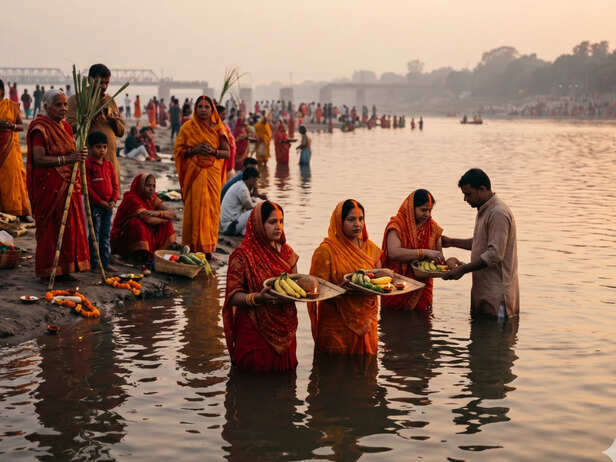
One of the best-known examples comes from Bathua Bujurg village in Samastipur district. Reports have documented a tradition in which Muslim families have observed Chhath for around 100 years. According to accounts from the village, the practice began with just two or three Muslim families and gradually continued through later generations. Around 15 Muslim families were reported to be following the rituals. Devotees from both communities gather at the same pond to offer Arghya to the Sun.
Why Muslim Women Keep the Chhath Fast
For some Muslim women, observing Chhath is connected to personal faith, family wishes and long-held promises. Some begin the fast after making a mannat for the health and well-being of their children or other family members. Others continue a family tradition they learned from older women. They follow the rituals with the same dedication as other devotees, including preparing prasad and offering Arghya. Their stories show why the festival holds a special place in their lives.
Gopalganj Families Continue the Practice
Machhagar Lachhiram village in Gopalganj district offers another example of this shared tradition. In 2025, reports from the village described around 20 Muslim families preparing for Chhath Puja. People including Eidu Miyan and other village residents were involved in the celebrations. The preparations included cleaning the ghats, arranging puja materials and singing traditional Bhojpuri Chhath songs. For these families, the festival is a tradition passed down through generations rather than a one-time celebration.
From Nahai Khai to Arghya, They Follow the Rituals
Muslim families who observe Chhath follow the festival's traditional four-day schedule. It begins with Nahai Khai, when devotees bathe and prepare for the rituals. The second day is Kharna, followed by the evening Arghya to the setting Sun on the third day. The festival concludes with an offering to the rising Sun. Women and other family members prepare fruits, thekua and other traditional offerings before heading to the ghats. The rituals require discipline, patience and careful preparation.
Hindu and Muslim Families Share the Same Ghats
The tradition is not limited to performing rituals. Muslim residents also help their Hindu neighbours prepare for the festival. Some participate in cleaning ponds and riverbanks, while others arrange fruits, bamboo baskets and earthen stoves used during the puja. In many places, neighbours support one another throughout the celebrations. These everyday acts of cooperation make Chhath a shared community experience, where people work together regardless of their religious backgrounds.
What Makes This Tradition So Special?
Chhath Puja is rooted in the worship of the Sun and Chhathi Maiya, but its cultural presence in Bihar reaches beyond one community. The participation of Muslim families offers a glimpse of how traditions can become part of a village's shared identity. Their stories are different, but many share the same feelings of devotion, gratitude and family well-being. Rather than treating these families as exceptions, their experiences deserve to be understood as part of Bihar's diverse cultural heritage.
Unlock insightful tips and inspiration on personal growth, productivity, and well-being. Stay motivated and updated with the latest at
My Life XP.