What made Lord Rama’s appearance so distinctive that Maharishi Valmiki described his features in such precise detail? The answer lies in the Sanskrit verses of the Valmiki Ramayana, where Rama is described through words that portray his arms, eyes, forehead, chest and overall appearance. These descriptions do more than help readers imagine the prince of Ayodhya. They introduce a figure associated with strength, grace, balance, and noble character. From the meaning of Ajanubahu to the description of his radiant complexion, every term offers a glimpse into how the ancient epic presents Lord Rama.
Ajanubahu: Arms That Reached His Knees
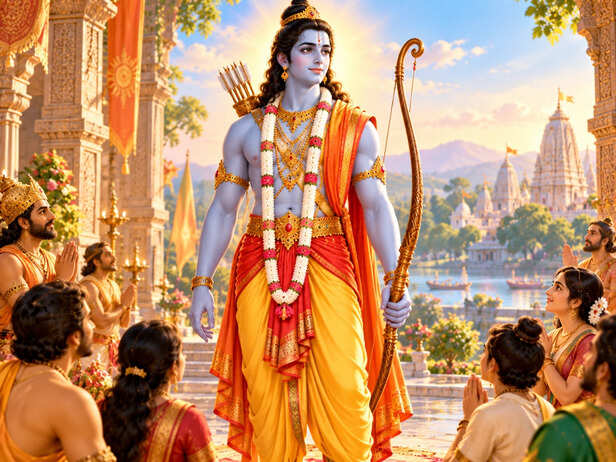
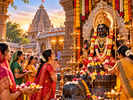
![Lord Rama in a Golden Temple Courtyard]()
Lord Rama in a Golden Temple Courtyard
Image credit : chatgpt(ai)
One of the most distinctive descriptions of Lord Rama is Ajanubahu. The Sanskrit expression refers to arms that extend down to the knees, a feature traditionally associated with an impressive and well-proportioned physique. Maharishi Valmiki includes this description while presenting Rama’s physical characteristics in the opening section of the epic. The detail helps readers picture a figure whose appearance conveys strength and dignity. It is not simply about the length of his arms; within the epic’s portrait, it contributes to the image of an exceptional prince admired for both his physical presence and his conduct.
Sulalata: A Beautiful Forehead
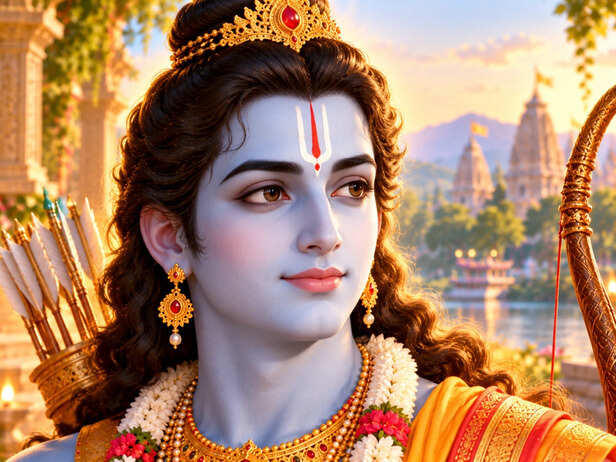
![Lord Rama’s Graceful Forehead]()
Lord Rama’s Graceful Forehead
Image credit : ChatGPT(AI)
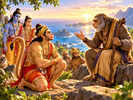
The Sanskrit expression Sulalata is used in some retellings to describe Lord Rama’s forehead as beautiful and well-shaped. In the commonly cited Sanskrit verse of the Valmiki Ramayana, the related word is Sulalata, meaning one with a beautiful forehead. This detail adds to the description of Rama’s balanced features. Rather than focusing on one striking characteristic alone, Valmiki presents an overall portrait in which different features come together to create an appearance associated with grace, nobility and composure.
Samavibhaktanga: A Well-Proportioned Body
The expression Samavibhaktanga refers to a body whose limbs and parts are proportionately formed. Maharishi Valmiki uses this description as part of Rama’s physical portrait, presenting a figure whose appearance is harmonious rather than uneven or exaggerated. In traditional descriptions of an ideal prince, physical balance often accompanies strength, discipline and composure. This word therefore helps readers understand how carefully the epic presents Rama’s appearance. His features are described as parts of a complete portrait, not as isolated qualities.
Pinavaksha: A Strong Chest
Lord Rama is also described as Pinavaksha, a term referring to a broad or well-developed chest. This feature conveys physical strength and the presence expected of a warrior prince. Rama’s life in the epic includes difficult journeys, battles and responsibilities that test his courage and endurance. His physical description establishes the image of someone capable of facing such challenges. Yet his strength is not presented as his only defining quality. His decisions, restraint and commitment to dharma are equally central to the character portrayed throughout the Ramayana.
Vishalaksha: Large and Beautiful Eyes
The word Vishalaksha means large-eyed and is often used in descriptions of Lord Rama’s appearance. His eyes are among the features frequently emphasised in devotional art, paintings and traditional storytelling. Artists may portray them as calm, expressive and compassionate, although artistic interpretations vary. The Sanskrit description itself refers to their size; the deeper associations with kindness and serenity come from the broader devotional image of Rama. Together with his other features, the description helps create the familiar portrait of a prince whose appearance inspires admiration among devotees.
Snigdhavarna: A Radiant Complexion
The expression Snigdhavarna describes a smooth, lustrous or pleasing complexion. In the Valmiki Ramayana, this detail forms part of the wider description of Rama’s appearance. Devotional traditions and artistic representations portray his complexion in different ways, so the word should not be taken as a precise modern skin-colour specification. Its emphasis is on the quality and radiance of his appearance. Along with his balanced physique, beautiful forehead and large eyes, it completes a portrait of a figure remembered for both his noble presence and his conduct.
Unlock insightful tips and inspiration on personal growth, productivity, and well-being. Stay motivated and updated with the latest at
My Life XP.