What happens when a person who has been treated as property questions the very right of others to control them? In the Mahabharata, Draupadi faced this situation in the Kaurava court after Yudhishthira lost her in a game of dice. But instead of simply pleading for mercy, she raised a question that challenged the entire assembly: If Yudhishthira had already lost himself, how could he stake her afterward? Her question exposed a deep conflict between power, justice and dharma.
The Game of Dice Changed Everything
![Mention Draupadi and most people immediately remember the dice game,]()
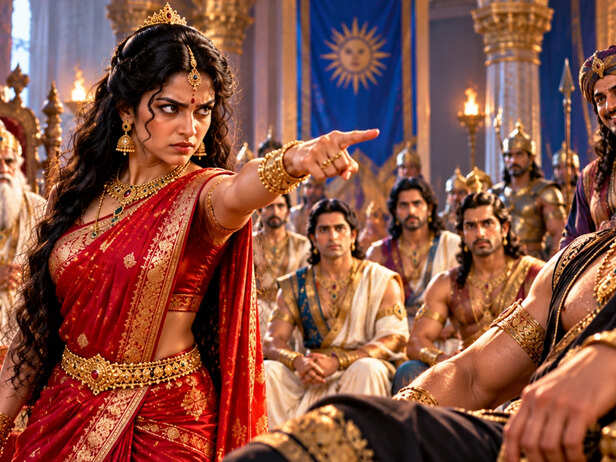
Mention Draupadi and most people immediately remember the dice game,
Image credit : CHATGPT(AI)
The turning point came when Yudhishthira accepted Duryodhana's invitation to play a game of dice. Shakuni played on Duryodhana's behalf, and Yudhishthira gradually lost his wealth, kingdom, brothers and even himself. The situation became more disturbing when he then placed Draupadi as his next stake. When she was brought into the Kaurava court, the question was no longer just about a lost game. It had become a matter of dignity, rights and justice.
Draupadi Refused to Accept the Decision
![Draupadi standing in the Hastinapur royal court]()
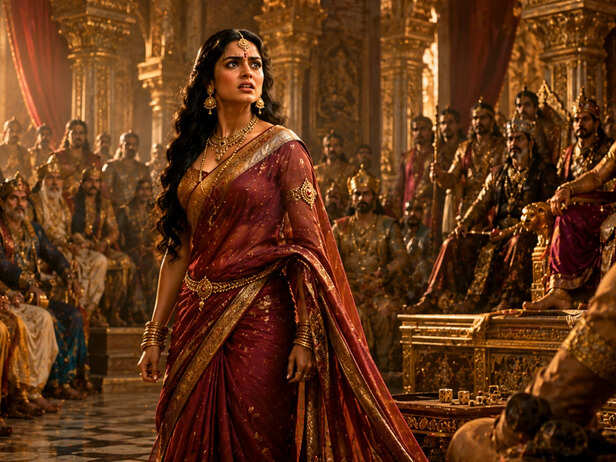
Draupadi standing in the Hastinapur royal court
Image credit : CHATGPT(AI)
When Draupadi learned that Yudhishthira had staked her, she did not silently accept the decision. Instead, she wanted to know how he could wager her after losing himself. She asked the people in the assembly to consider the order of events. Her question was direct: Had Yudhishthira lost his own freedom before placing her as a stake? If so, did he still have the authority to make that decision?
The Question That Challenged the Entire Sabha
Draupadi's argument went to the heart of the dispute. If Yudhishthira had already lost himself, how could he claim the right to stake another person afterward? She was not merely questioning her husband's decision but challenging the moral and legal basis of the entire game. Her question forced the elders to confront an uncomfortable issue: could an action be considered valid simply because a powerful person had performed it?
Why Could the Elders Not Give a Clear Answer?
The assembly included respected figures such as Bhishma, Dronacharya, Vidura and Dhritarashtra. Yet Draupadi's question did not receive the clear and decisive response that the situation demanded. Bhishma expressed the difficulty of determining dharma in such a complicated situation, while Vidura opposed the injustice. The silence and hesitation of powerful elders became one of the most troubling parts of the episode. Their knowledge could not prevent the humiliation taking place before them.
Draupadi Turned Her Humiliation Into Resistance
Draupadi's strength was not limited to her willingness to challenge powerful men. She understood the weakness in the argument being used against her and questioned it directly. Instead of allowing the assembly to treat her as an object in a game, she demanded that her position be examined. Her response showed that intelligence can become a powerful form of resistance, especially when someone faces injustice and has very little control over the situation.
The Sabha's Failure Became a Moral Question
The episode became even more disturbing when Dushasana attempted to disrobe Draupadi. She appealed to the assembly, but those present failed to stop the humiliation effectively. In the traditional account, she eventually prayed to Lord Krishna, who protected her through divine intervention. The incident exposed a painful truth about the court: having respected elders and knowledgeable people is not enough if they fail to act when injustice happens in front of them.
The Lesson Behind Draupadi's Question
Draupadi's question continues to matter because it shows that resistance does not always begin with anger or confrontation. Sometimes, it begins by identifying the flaw in an unjust decision and asking the question everyone else is avoiding. She challenged the authority behind the action rather than simply accepting its outcome. Her courage reminds us that knowledge becomes meaningful when it is used to question injustice, and silence can become a failure when someone needs support.
The Power of Asking the Right Question
Draupadi entered the Kaurava Sabha as a woman whose dignity had been challenged, but she refused to let others define her position without questioning their authority. Her question exposed the conflict between power and dharma and revealed the failure of those who were expected to uphold justice.
Sometimes, the strongest form of resistance is not raising your voice but asking a question that injustice cannot answer.
Unlock insightful tips and inspiration on personal growth, productivity, and well-being. Stay motivated and updated with the latest at
My Life XP.