The Katha Upanishad opens with a small, sharp act of defiance. A boy named Nachiketa watches his father perform a yajna in which he gives away his cattle, old, spent animals that will yield neither milk nor calves. Nachiketa asks, three times, to whom his father will give him. Irritated, his father says: to Yama, the god of death. So Nachiketa goes.
He arrives at Yama's house and waits. Yama is away for three days, and no one feeds the boy or offers him shelter. When Yama returns and finds a brahmin child sitting hungry at his door, he is troubled. A guest left unattended is an inauspicious thing. He offers Nachiketa three boons, one for each day he waited without complaint.
The First Two Boons Were Easy to Grant
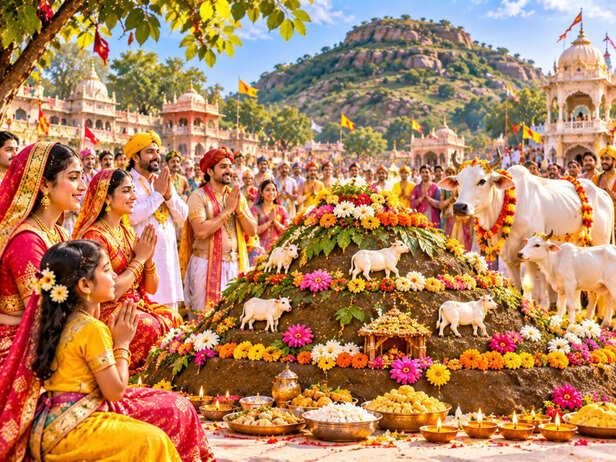
![bhaidooj]()
bhaidooj
Image credit : chatgpt(ai)
For his first boon, Nachiketa asks that his father's anger be lifted, that when he returns home, his father will recognise him and welcome him with a calm heart. Yama grants it without hesitation.
For his second boon, Nachiketa asks to know the fire ritual that leads to the heavenly worlds, the one that frees a person from rebirth into suffering. Yama teaches him the sequence of the sacred fire, the arrangement of the bricks, and the understanding behind it. He is so pleased with the question that he names the fire after Nachiketa.
Two boons given. One remains. And here the Upanishad slows down, because what comes next is the real story.
What Nachiketa Asked for as His Third Boon
Nachiketa asks Yama to tell him what happens after a person dies. He has heard that some say the self continues and some say it does not. He wants to know the truth of it.
Yama does not answer immediately. He tries to redirect the boy. This question, he says, has troubled even the gods. It is subtle, finer than fine. Choose something else. Ask for sons and grandsons who will live a hundred years. Ask for herds of cattle, elephants, gold. Ask for a kingdom that stretches as far as you can see. Ask for whatever pleasures a human life can hold, I will give them all to you. But do not ask me this.
Nachiketa listens to every offer. Then he says: all of those things are temporary. Cattle grow old. Pleasures exhaust themselves. A kingdom ends. Even a life of a hundred years ends. What good is any of it when I am standing here, at the door of death, asking about the only thing that matters? Keep your gifts. Tell me what you know.
Why Yama Was Testing Him
In the Katha Upanishad's telling, Yama's refusal is not a withholding, it is an examination. The knowledge of the self, what the tradition calls atman and its relationship to Brahman, cannot be handed to someone who does not already understand why they need it. A person distracted by wealth or pleasure will not be able to hold the teaching. It will slide off them.
Nachiketa's refusals prove that he is ready. He has already seen through the thing that most people spend a life chasing. He is not renouncing pleasure out of discipline or fear. He is refusing it because he has looked at it clearly and found it insufficient. That clarity is the qualification.
Yama calls him a student of the highest kind, one who has already done the first and hardest work, which is to stop being fooled.
What Yama Finally Teaches Him
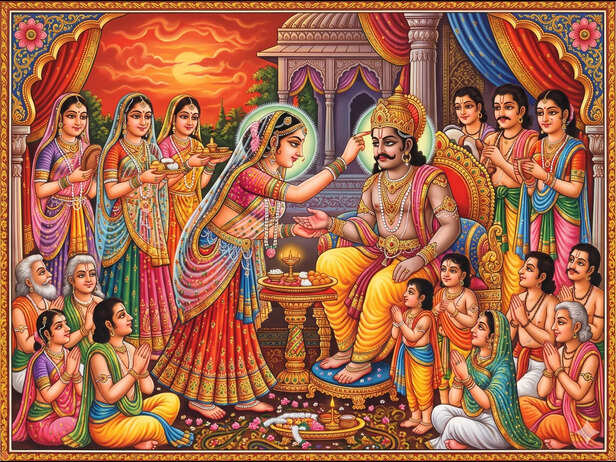
![yaama]()
yaama
Image credit : chatgpt(ai)
The teaching that follows is among the most carefully constructed passages in any Upanishad. Yama uses a series of images to describe the self: it is smaller than the smallest thing, larger than the largest. It does not die when the body dies. It was not born when the body was born. It cannot be cut, burned, or dried. Weapons do not reach it.
The self, Yama tells Nachiketa, is not something you find by looking outward. It is the one doing the looking. The senses pull toward their objects, sound, touch, form, taste, smell, and a person who follows them outward will not find what Nachiketa is asking about. The direction is inward, and the method is a settled, unwavering attention.
He gives Nachiketa the image of the chariot: the body is the chariot, the intellect is the charioteer, the mind is the reins, and the self is the one riding. When the charioteer is alert and the reins are firm, the horses, the senses, go where they should. When the charioteer is asleep, the horses go wherever they want, and the rider ends up somewhere they never intended to be.
What the Story Is Actually About
The Katha Upanishad uses Nachiketa's refusals to make a point that is easy to state and difficult to absorb: most of what a person wants is a substitute for the one thing they actually need. Wealth, pleasure, long life, and recognition are not wrong in themselves, the tradition does not condemn them. But they are finite answers to a question that is not finite. Nachiketa's clarity lies in knowing the difference between the two kinds of questions before he has even received an answer to either.
The story is remembered because Nachiketa does not refuse Yama's gifts out of piety or performance. He refuses them because he has already thought it through. He is twelve years old, sitting at the door of death, and he is the calmest person in the room.
Each refusal is a kind of seeing. The wealth is real, the pleasure is real, the long life is real, and none of it answers the question he came with. The tradition holds this up not as an ideal to imitate but as a description of what genuine inquiry looks like: it cannot be bought off, it does not settle for a comfortable answer, and it keeps asking until it reaches the thing that does not change.
Unlock insightful tips and inspiration on personal growth, productivity, and well-being. Stay motivated and updated with the latest at
My Life XP.