Why Bhishma Said Duryodhana Could Never Defeat Krishna
Noopur Kumari | Sept 24, 2026, 16:00 IST
What did Bhishma know about Krishna that Duryodhana refused to understand? With eleven Akshauhinis behind him, Duryodhana believed the Kauravas had the advantage. But Bhishma saw beyond numbers. He warned that continuing the war would cost countless lives for something the Pandavas were already willing to settle through a division of the kingdom. His words reveal a powerful moment where wisdom stood face-to-face with stubbornness.

Bhishma Ask Duryodhana to Stop the War
Image credit : ChatGPT(ai)
The Kurukshetra war had barely reached its ninth day, yet the battlefield had already witnessed unimaginable destruction. Thousands of warriors had fallen, families had been torn apart, and both sides had suffered enormous losses. But according to this traditional retelling of the Mahabharata, Bhishma saw something even more dangerous: the war could not end in victory for the Kauravas as long as Krishna stood beside Arjuna.
Bhishma therefore urged Duryodhana to stop. His warning was not simply about military strength. It was about understanding when pride must give way to reason.
![Bhishma Warns Duryodhana on the Battlefield]()
Duryodhana reportedly questioned Krishna’s importance, seeing him merely as a cowherd who was not even fighting with a weapon. Bhishma, however, understood the deeper significance of Krishna serving as Arjuna’s charioteer. In this traditional Mahabharata narrative, he warned that as long as Krishna remained beside Arjuna, defeating Arjuna would be extremely difficult. The Kurukshetra war, therefore, could not be judged simply by counting warriors or weapons. Bhishma believed Krishna’s presence had changed the balance of the battlefield in a way Duryodhana was unwilling to accept.
![Ved Vyasa]()
Only nine days had passed, yet the destruction was already immense. Bhishma reminded Duryodhana that both sides had lost a large part of their armies. The Kauravas had entered the Mahabharata war with eleven Akshauhinis, while the Pandavas had seven. Yet their numerical advantage had not delivered the easy victory Duryodhana expected. Bhishma understood what those numbers meant beyond strategy: every fallen warrior represented a family waiting at home. His appeal was becoming less about winning a battle and more about preventing further unnecessary deaths.
Bhishma urged Duryodhana to consider a settlement. The Pandavas, he argued, were seeking their rightful share rather than demanding the entire Kuru kingdom. If both sides had already suffered terrible losses, why continue destroying what remained? Bhishma reminded him that forgiveness and reconciliation had been valued by rulers in the past. His message was simple: stop the Kurukshetra battle, allow both sides to return to their respective territories and save the lives of countless soldiers. For Bhishma, stepping back at that moment was not weakness. It was a chance to prevent greater destruction.
Duryodhana had a major numerical advantage. The Kaurava army consisted of eleven Akshauhinis, compared with seven on the Pandava side. Yet Bhishma warned him not to mistake numbers for certainty. He believed the Pandava army would become increasingly difficult to defeat as the days passed. More importantly, he expected Krishna to intervene through strategy whenever the balance began shifting. This was the hidden danger Duryodhana failed to appreciate. Bhishma was looking beyond the size of the armies and toward the people guiding them.
To Duryodhana, Krishna’s refusal to fight directly may have looked like a weakness. Bhishma saw it differently. Krishna did not need to hold a weapon to influence the course of the Mahabharata battle. His guidance, strategy and presence beside Arjuna carried enormous significance. This is one of the most memorable ideas in the Krishna and Arjuna story: power is not always expressed through physical strength. Sometimes it appears through wisdom, timing and guidance. Bhishma understood that distinction, while Duryodhana remained focused on armies and battlefield strength.
Bhishma’s appeal ultimately came down to one question: how many more lives should be sacrificed for a kingdom? Soldiers had wives, children, parents and families waiting for them. The Pandavas were not asking for Duryodhana’s entire share of the kingdom. Yet Duryodhana could not bring himself to accept a compromise. His attachment to power had become stronger than the warnings of the elder he respected. That makes this moment in the Mahabharata so powerful. Sometimes the greatest warning is not the one we fail to hear, but the one we hear clearly and still choose to ignore.
Bhishma’s words carry a lesson far beyond the Kurukshetra war. Conflict often grows when people become more concerned with proving themselves right than preventing further damage. Duryodhana had armies, powerful warriors and the confidence of his position, but Bhishma asked him to look at what victory would actually cost. The tragedy of the Mahabharata is not only about who fought whom. It is also about the moments when peace remained possible but was rejected. Sometimes wisdom arrives as a warning from someone who has already seen where the road leads. The hardest decision may be knowing when to stop.
Unlock insightful tips and inspiration on personal growth, productivity, and well-being. Stay motivated and updated with the latest at My Life XP
Bhishma therefore urged Duryodhana to stop. His warning was not simply about military strength. It was about understanding when pride must give way to reason.
Bhishma Saw the Real Danger
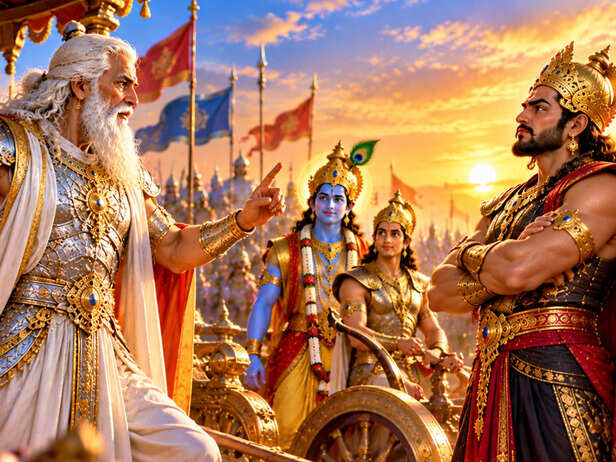
Bhishma Warns Duryodhana on the Battlefield
Image credit : ChatGPT(ai)
Duryodhana reportedly questioned Krishna’s importance, seeing him merely as a cowherd who was not even fighting with a weapon. Bhishma, however, understood the deeper significance of Krishna serving as Arjuna’s charioteer. In this traditional Mahabharata narrative, he warned that as long as Krishna remained beside Arjuna, defeating Arjuna would be extremely difficult. The Kurukshetra war, therefore, could not be judged simply by counting warriors or weapons. Bhishma believed Krishna’s presence had changed the balance of the battlefield in a way Duryodhana was unwilling to accept.
Nine Days Had Changed Everything
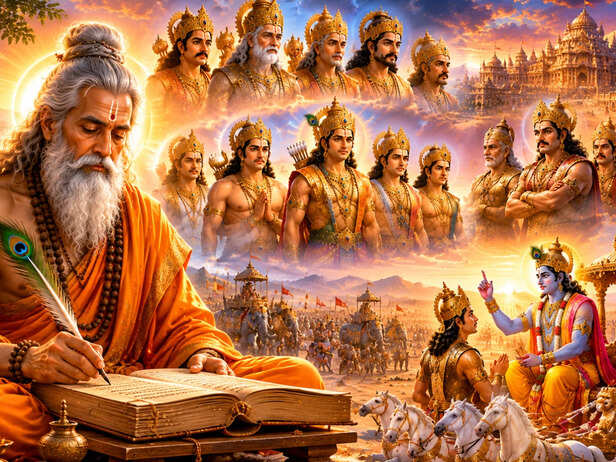
Ved Vyasa
Image credit : chatgpt(ai)
Only nine days had passed, yet the destruction was already immense. Bhishma reminded Duryodhana that both sides had lost a large part of their armies. The Kauravas had entered the Mahabharata war with eleven Akshauhinis, while the Pandavas had seven. Yet their numerical advantage had not delivered the easy victory Duryodhana expected. Bhishma understood what those numbers meant beyond strategy: every fallen warrior represented a family waiting at home. His appeal was becoming less about winning a battle and more about preventing further unnecessary deaths.
Bhishma Offered One Last Way Out
The Army Could Not Guarantee Victory
Krishna Was More Than a Charioteer
Duryodhana Still Refused to Bend
The War’s Greatest Lesson
Unlock insightful tips and inspiration on personal growth, productivity, and well-being. Stay motivated and updated with the latest at My Life XP