Ahoi Ashtami is one of the important Hindu festivals observed by mothers who pray for the long life, happiness and well-being of their children. While many families know about the traditional fasting rituals, the story behind Ahoi Mata's blessings is equally fascinating.
According to a popular North Indian folk legend, a woman once experienced a heartbreaking tragedy after an accidental incident in the forest. What began as an ordinary day of collecting soil turned into a lifetime of regret when she unintentionally harmed the young ones of a wild animal.
The story is often remembered as a reminder of compassion, repentance and the power of sincere prayers.
The Forest Incident That Brought a Mother's Curse
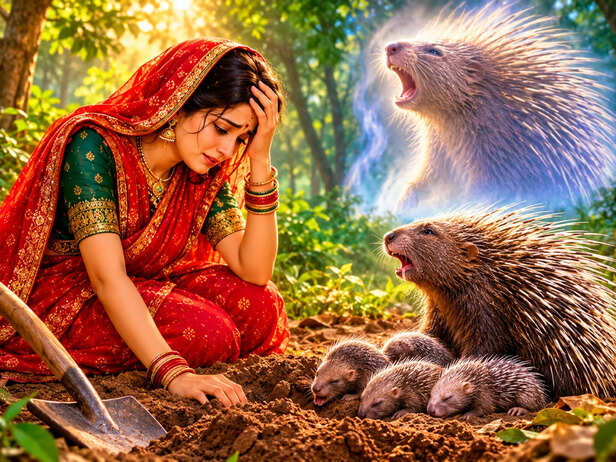
![Grieving Porcupine Mother in the Forest]()
Grieving Porcupine Mother in the Forest
Image credit : ChatGPT
According to the traditional Ahoi Ashtami katha, a woman from a village went into a forest during the month of Kartik. She wanted to collect soil to prepare her home for the upcoming festive season.While digging the earth, she accidentally struck and killed the babies of a Syahu, commonly identified in the story as a porcupine. The mother animal was devastated after losing her young ones.The woman immediately realised what had happened. Although she had not intended to hurt them, she felt guilty about the incident.
In some versions of the folk tale, the grieving Syahu cursed the woman, saying that she would experience the pain of losing her own children.The woman returned home, but the incident continued to trouble her. She could not escape the thought that her careless action had destroyed another mother's happiness.
The Pain of Losing Seven Sons
The legend takes a tragic turn when the woman begins losing her children.According to a widely circulated version of the Ahoi Ashtami story, she gives birth to seven sons, but each of them dies. With every loss, her sorrow becomes deeper, and she begins connecting her misfortune with the incident in the forest.She eventually understands the emotional weight of what happened to the Syahu and her babies.
The woman realises that the pain she is experiencing is similar to the suffering she unknowingly caused another mother.This part of the story is particularly significant because it highlights the idea that every living creature has a bond with its young ones. A mother's love and grief are not limited to human beings.
How Ahoi Mata Became Her Source of Hope
Unable to bear the repeated losses, the woman begins seeking a way to overcome her suffering.In popular retellings, she turns towards Ahoi Mata with complete devotion. She observes the Ahoi Ashtami fast, offers prayers and seeks forgiveness for her earlier mistake.
Her prayers are not simply about asking for happiness. They also reflect her desire to make peace with the guilt she has carried for years.According to the folk tradition, her sincere devotion eventually brings her the blessings of Ahoi Mata. The goddess is believed to forgive her and restore happiness to her family.Different regional versions narrate the details differently, but the central message remains the same: sincere repentance and devotion can bring hope even after immense suffering.
Why Is Syahu Important in the Ahoi Ashtami Story?
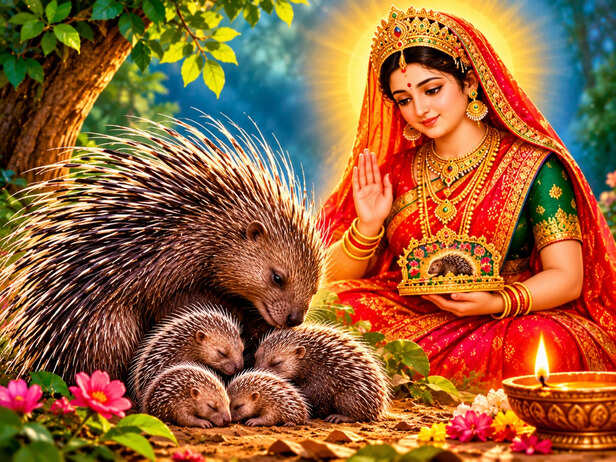
![Ahoi Mata and the Sacred Story of Syahu]()
Ahoi Mata and the Sacred Story of Syahu
Image credit : ChatGPT
One of the most interesting aspects of this legend is the presence of Syahu.Unlike many Hindu festival stories that revolve around kings, gods or powerful warriors, the Ahoi Ashtami katha gives importance to a small forest animal.
Syahu represents the mother whose babies were accidentally killed. Her grief becomes the turning point in the woman's life.This also explains why the traditional Ahoi Mata image often includes a representation of Syahu and her offspring.The animal is not merely a decorative element in the festival's artwork. It reminds devotees of the story's central incident and the importance of respecting life.The legend also offers a lesson about kindness towards animals and the natural world. Even an unintentional action can have painful consequences for another living being.
Why Do Mothers Observe Ahoi Ashtami?
Ahoi Ashtami is observed on the eighth day of Krishna Paksha in the Hindu month of Kartik. Mothers traditionally observe a day-long fast and pray for their children's health, happiness and long life.
The main rituals generally include:
- Drawing or worshipping Ahoi Mata: Families worship an image of Ahoi Mata, often featuring Syahu and her young ones.
- Observing the fast: Mothers traditionally avoid eating and drinking during the day, although customs differ between families.
- Offering prayers in the evening: Devotees perform Ahoi Mata puja and listen to the vrat katha.
- Offering water to the stars: In many North Indian traditions, mothers offer arghya to the stars after sunset and conclude their fast.
Some families also keep a silver representation of Syahu, traditionally known as Syahu, during the puja.
The Deeper Message Behind Ahoi Mata's Story
The story of the woman who lost seven sons is more than a tale about a religious fast. It carries several meaningful lessons that remain relevant today.
1. Compassion should extend to every living creatureThe Syahu's loss reminds us that animals experience attachment and grief. The story encourages people to treat nature and wildlife with care.
2. Good intentions do not erase consequencesThe woman did not deliberately harm the animal's babies. However, the incident made her understand that even accidental actions can cause suffering.
3. Asking for forgiveness requires self-realisationHer journey towards Ahoi Mata begins when she accepts her mistake rather than ignoring it. This makes repentance an important part of the legend.
4. Hope can emerge after difficult experiencesThe woman's prayers represent the belief that devotion can provide emotional strength during periods of grief and uncertainty.
A Festival That Reminds Mothers of the Value of Life
Ahoi Ashtami is widely associated with a mother's prayers for her children, but its traditional story also asks people to think about the lives of other creatures.The woman in the legend learns a difficult lesson after experiencing the same kind of loss that the Syahu once suffered. Her journey towards forgiveness gives the festival a deeper emotional meaning.For generations, families have continued observing Ahoi Ashtami with faith and devotion. Beyond the rituals, the story reminds everyone that kindness, compassion and respect for life are values worth carrying throughout the year.
Unlock insightful tips and inspiration on personal growth, productivity, and well-being. Stay motivated and updated with the latest at
My Life XP.