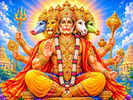
Why Did Hanuman Ji Sit on Arjuna's Chariot During the Mahabharata War?
Sudha Mishra | Published:
Lord Hanuman's presence on Arjuna's chariot during the Kurukshetra war was not just a symbol of devotion. It carried a deeper meaning connected to Lord Rama, Lord Krishna and the protection of dharma. Discover why Hanuman Ji agreed to stay on Arjuna's flag, how he fulfilled his promise and what happened to the chariot after the war ended.

The Divine Protector: Hanuman Ji on Arjuna’s Chariot<br>
Image credit : ChatGPT
The Surprising Connection Between Hanuman Ji and Arjuna
He did not enter the battlefield carrying weapons or fighting alongside the Pandavas. Instead, he stayed on the flag of Arjuna's chariot, which was driven by Lord Krishna.
This is why Arjuna's chariot was known as Kapidhwaja. The word comes from two Sanskrit terms: Kapi, meaning monkey, and Dhwaja, meaning flag. It refers to the image of Hanuman Ji placed on Arjuna's battle standard.
But why did Hanuman Ji choose to sit on Arjuna's chariot? The story begins with an encounter between the two during their forest journey.
How Did Hanuman Ji Meet Arjuna?
Arjuna believed that a skilled archer like him could have built a strong bridge using arrows alone.
Hearing this, Hanuman Ji appeared before him in the form of a monkey. He challenged Arjuna's confidence and questioned whether a bridge made only of arrows could bear even his weight.
Arjuna accepted the challenge and constructed a bridge using his arrows. However, Hanuman Ji stepped onto it, and the bridge began to collapse.
Arjuna was shocked and realised that his skill alone was not enough to accomplish everything.
In some versions of this story, Lord Krishna appears in disguise and supports the bridge, preventing it from collapsing. When his divine identity is revealed, Arjuna understands the importance of humility and divine guidance.
Why Did Hanuman Ji Agree to Stay on Arjuna's Chariot?
This promise was significant for several reasons.
- A blessing of protection: Hanuman Ji's presence represented divine protection for Arjuna's chariot.
- A connection between the Ramayana and Mahabharata: Hanuman Ji had served Lord Rama in the Ramayana, while Lord Krishna, an incarnation of Vishnu, guided Arjuna in the Mahabharata.
- A symbol of devotion: His presence reflected his eternal devotion to Lord Vishnu and his divine forms.
What Was Hanuman Ji's Role During the Kurukshetra War?
Arjuna fought against great warriors, including Bhishma, Dronacharya, Karna and many others. His chariot faced countless attacks, powerful weapons and dangerous situations.
According to the traditional account, Hanuman Ji's presence on the flag protected the chariot and gave it divine strength. His image also reminded Arjuna of courage, discipline and devotion throughout the battle.
There is another important connection here. Lord Krishna, who served as Arjuna's charioteer, was also worshipped as an incarnation of Lord Vishnu. Hanuman Ji's devotion to Lord Rama, another incarnation of Vishnu, made his presence alongside Krishna especially meaningful.
What Happened to Arjuna's Chariot After the War?
When the battle ended, Lord Krishna asked Arjuna to step down from the chariot first. Arjuna followed his instruction and got down. Krishna then stepped away, and Hanuman Ji left the flag.
Soon afterwards, the chariot caught fire and was destroyed.
Arjuna was surprised to see this happen. Lord Krishna explained that the chariot had already been damaged by the powerful weapons used during the war. His divine presence had kept it intact until that moment.
The destruction of the chariot revealed how much protection it had received throughout the battle. Hanuman Ji's presence on the flag was also understood as part of this divine protection.
This episode is often remembered as a reminder that the chariot had survived not simply because of its strength but because of divine grace.
What Does Hanuman Ji's Presence on Arjuna's Flag Symbolise?
1. Strength Must Be Accompanied by Humility
Arjuna was a skilled archer, but his encounter with Hanuman Ji taught him that talent should never become a reason for pride. True strength also requires humility.
2. Devotion Can Take Different Forms
Hanuman Ji did not fight on the battlefield with a weapon. He served through his presence on Arjuna's flag. This shows that devotion is not always about performing grand actions. Sincere service also has great value.
3. Divine Guidance Matters During Difficult Times
Arjuna had Lord Krishna guiding his chariot and Hanuman Ji blessing its flag. Their presence symbolised the importance of faith and guidance when facing difficult challenges.
4. The Ramayana and Mahabharata Share a Deeper Connection
Hanuman Ji's appearance in the Mahabharata connects the two great Indian epics. His devotion to Lord Rama continued even in the age of Krishna, showing that his dedication to dharma remained unchanged.
Why Is Hanuman Ji Still Remembered as Kapidhwaja?
This name represents more than a battlefield symbol. It reflects the connection between courage, devotion and divine protection. Hanuman Ji's presence also reminds devotees that even the strongest warriors need humility and faith.
The Spiritual Meaning Behind Hanuman Ji's Presence
He did not need to lift a weapon or defeat an enemy to make a difference in the Kurukshetra war. His presence on Arjuna's chariot became a symbol of protection, loyalty and unwavering faith.The story also teaches that victory does not come from strength alone. Courage, humility, devotion and divine guidance are equally important. That is why Hanuman Ji's image on Arjuna's flag continues to hold a special place in Hindu tradition.
Unlock insightful tips and inspiration on personal growth, productivity, and well-being. Stay motivated and updated with the latest at My Life XP.