Surya Dev's chariot is traditionally described as having seven horses. But have you ever heard the story that, during Kharmas, two donkeys take the place of these horses? The unusual tale is connected to an interesting explanation of why this month is considered unsuitable for weddings in many Hindu traditions. According to a popular religious story, Surya Dev cannot stop his journey across the sky, even when his horses become exhausted. What happens next explains the traditional connection between Surya Dev, his chariot and the name Kharmas.
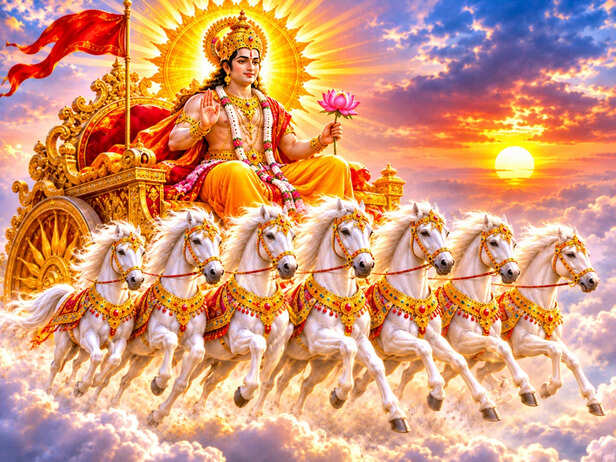
Surya Dev's Seven Horses
![Surya Dev Riding His Seven-Horse Chariot]()
Surya Dev Riding His Seven-Horse Chariot
Image credit : chatgpt(ai)
According to Hindu tradition, Surya Dev travels across the sky in a magnificent chariot pulled by seven horses. These horses are often associated with the seven days of the week and the seven colours of light. His journey is essential because the Sun provides light and energy to the world. Surya Dev cannot simply stop his chariot whenever he wishes. A popular Kharmas story begins when his horses become exhausted after continuously travelling across the sky.
Why Did Two Donkeys Join the Chariot?
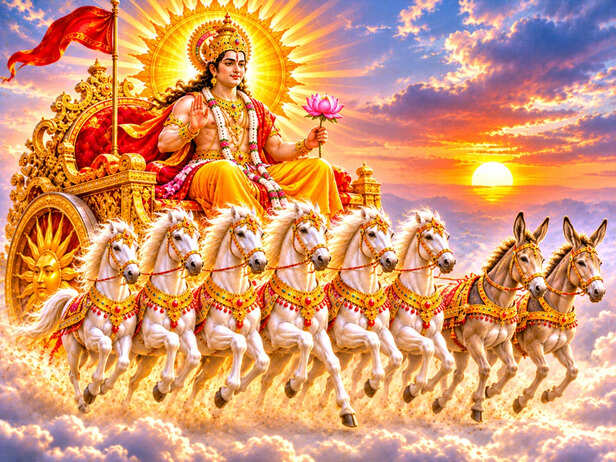
![Two Donkeys Join Surya Dev's Divine Chariot]()
Two Donkeys Join Surya Dev's Divine Chariot
Image credit : chatgpt(ai)
According to a popular traditional tale, Surya Dev's seven horses once became extremely tired and thirsty while pulling his chariot. They needed water and rest, but Surya Dev could not stop his journey because the world depended on the Sun's movement. While passing a pond, he noticed two donkeys, also called khar, standing nearby. He decided to attach them to his chariot so that his horses could drink water and recover. The donkeys began pulling the chariot, allowing Surya Dev's journey to continue.
How Kharmas Got Its Name
In this story, the donkeys move more slowly than the seven horses, causing the chariot to travel at a slower pace. The period associated with this unusual journey is popularly explained through the word Kharmas. The word khar refers to a donkey, while maas means month. This is how the tale explains the name Kharmas. Although this account is a popular traditional explanation rather than a universally accepted scriptural account, it remains an interesting part of the stories associated with the Hindu calendar.
Why Are Weddings Avoided During Kharmas?
The reason weddings are traditionally avoided during Kharmas is also connected with astrology. During this period, the Sun enters Dhanu Rashi, or Sagittarius, which is ruled by Jupiter (Guru). In Vedic astrology, Jupiter is associated with marriage, wisdom and auspicious ceremonies. Many traditional astrologers believe that this solar transit is not suitable for important ceremonies such as weddings and griha pravesh. Therefore, families generally choose marriage dates before or after Kharmas, depending on the available muhurat and their family traditions.
When Does Kharmas Begin in 2026?
In 2026, Kharmas begins on Wednesday, December 16, when Surya Dev enters Dhanu Rashi. The period continues until the Sun enters Makara Rashi, marking Makar Sankranti on January 14, 2027. Many families observe this time by avoiding weddings and other major auspicious ceremonies. However, daily prayers, charity, Surya worship and religious activities continue during this month. Devotees can use this period to focus on spiritual practices and devotion rather than considering it an entirely inauspicious time.
What Should You Do During Kharmas?
Kharmas is traditionally considered a suitable period for prayer, charity and spiritual reflection. Devotees often offer water to Surya Dev in the morning, chant devotional mantras and worship Lord Vishnu. Some families also read religious texts and donate food or essential items to people in need. Rather than treating Kharmas as a period when all activities must stop, it is better understood as a time when certain auspicious ceremonies are traditionally postponed while spiritual practices receive greater attention.
Unlock insightful tips and inspiration on personal growth, productivity, and well-being. Stay motivated and updated with the latest at
My Life XP.