Have you ever noticed that devotees who worship Lord Vishnu collect Tulsi leaves before Ekadashi? There is a special reason behind this practice. According to a popular Vaishnava belief, Goddess Tulsi observes a fast for Lord Vishnu on Ekadashi and rests on the following day, Dwadashi. That is why devotees avoid plucking her leaves on this day. But this is not just a religious restriction. It is also considered a way of showing respect to a plant that holds an extraordinary place in Hindu worship. There is even a reference to this practice in the traditional text
Hari Bhakti Vilasa.
Why Tulsi Leaves Are Not Plucked on Dwadashi
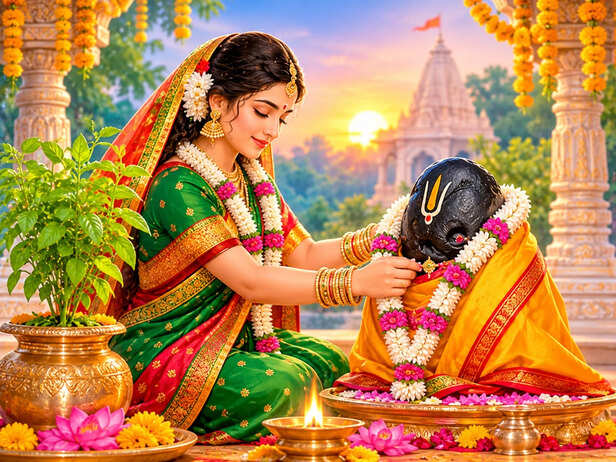
![Sacred Tulsi Shaligram Wedding Ceremony]()
Sacred Tulsi Shaligram Wedding Ceremony
Image credit : CHATGPT(AI)
Many Hindu households follow a special rule after Ekadashi: they do not pluck Tulsi leaves on Dwadashi. According to a popular Vaishnava belief, Goddess Tulsi observes a fast for Lord Vishnu on Ekadashi and takes rest on the following day. Plucking her leaves during this time is therefore avoided out of respect for her devotion. This is why devotees make sure they have enough Tulsi leaves ready before the Dwadashi tithi begins.
The Connection Between Tulsi and Ekadashi
![Lord Vishnu Resting on Sheshnag in the Cosmic Ocean]()
Lord Vishnu Resting on Sheshnag in the Cosmic Ocean
Image credit : CHATGPT(AI)
Ekadashi holds a special place in the worship of Lord Vishnu. Devotees observe fasts, offer prayers and chant Vishnu's names on this auspicious day. According to a popular religious belief, Goddess Tulsi also observes a fast for Lord Vishnu. Since Tulsi is regarded as one of his dearest devotees, her association with Ekadashi makes the following day's restriction even more meaningful. The tradition encourages devotees to treat the sacred plant with care and devotion.
Why Goddess Tulsi Rests on Dwadashi
According to the traditional belief, after observing her fast on Ekadashi, Goddess Tulsi rests on Dwadashi. Devotees believe that plucking her leaves on this day would disturb her rest. This idea gives the custom a personal and emotional meaning. Instead of treating Tulsi merely as a plant used in daily puja, devotees regard her as a divine presence deserving of respect. The practice is followed in many Vaishnava households as an expression of devotion.
What Does Hari Bhakti Vilasa Say?
The practice of avoiding Tulsi leaf plucking on Dwadashi is not limited to household customs. The Hari Bhakti Vilasa, an important text in the Gaudiya Vaishnava tradition, discusses rules and guidelines related to devotional worship, including the observance of Tulsi. Its traditional guidelines advise devotees to avoid plucking Tulsi leaves on Dwadashi. This gives the practice a place in established Vaishnava worship traditions rather than making it simply a family custom passed down through generations.
Why Devotees Collect Tulsi Leaves in Advance
Since Tulsi leaves are considered essential in many forms of Lord Vishnu's worship, devotees plan ahead rather than plucking them on Dwadashi. They collect the required leaves before the restricted day and keep them in a clean place. This allows daily prayers and offerings to continue without disturbing the plant. In many Hindu traditions, previously collected Tulsi leaves can still be used for worship. The custom therefore combines religious discipline with thoughtful preparation.
Why Tulsi Is So Dear to Lord Vishnu
Tulsi holds a special position in Vaishnava worship. Devotees offer her leaves to Lord Vishnu, Lord Krishna and their other forms as a symbol of love and surrender. In many traditions, an offering of food is considered incomplete without Tulsi leaves. The sacred plant is also worshipped in Hindu homes, where people offer water, light lamps and perform daily prayers. Her connection with Lord Vishnu makes the Dwadashi restriction particularly meaningful for devotees.
The Real Meaning Behind This Sacred Rule
The tradition of not plucking Tulsi leaves on Dwadashi carries a simple message: devotion should also include respect and care. Just as devotees worship Tulsi for her connection with Lord Vishnu, they are encouraged to give the sacred plant time and avoid disturbing it on certain days. This custom also teaches the value of planning and discipline in daily worship. For many families, following this small ritual is a way of keeping an age-old religious tradition alive.
Unlock insightful tips and inspiration on personal growth, productivity, and well-being. Stay motivated and updated with the latest at My Life XP.