Diwali is widely celebrated as a festival of light, prosperity and new beginnings. But before the lamps are lit and homes are decorated, many devotees observe Rama Ekadashi, a sacred day dedicated to Lord Vishnu.
Rama Ekadashi falls on the eleventh day, or Ekadashi Tithi, of the Krishna Paksha (waning moon phase) in the Hindu month of Kartik. It is observed shortly before Diwali and is also known as Kartik Krishna Ekadashi in some traditions.
The timing gives the observance a special place in the festive period. While Diwali celebrations focus on welcoming light, prosperity and happiness, Rama Ekadashi encourages devotees to look inward. It is a day to practise restraint, seek forgiveness and turn towards spiritual discipline before the celebrations begin.
What Does the Name Rama Ekadashi Mean?
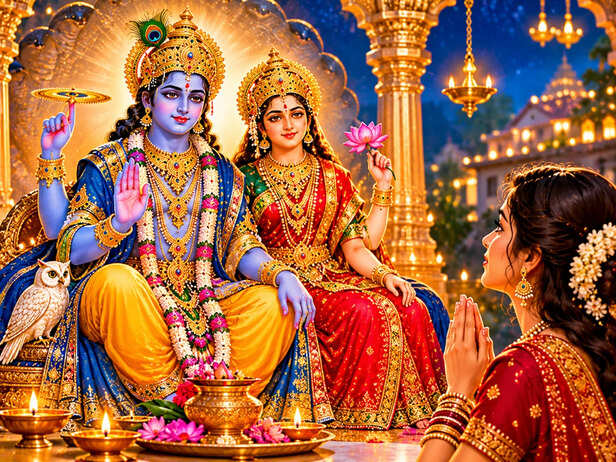
![Vishnu and Lakshmi’s Radiant Blessing]()
Vishnu and Lakshmi’s Radiant Blessing
Image credit : ChatGPT
One interesting detail about this festival is that the word Rama does not refer to Lord Rama, the hero of the Ramayana.
In this context, Rama is traditionally understood as a name of Goddess Lakshmi, the goddess of wealth, abundance and good fortune. Since Lakshmi is closely associated with Lord Vishnu, devotees worship Vishnu on Rama Ekadashi and may also offer prayers to Goddess Lakshmi.This association gives the day an added meaning just before Diwali, when many households prepare to welcome Lakshmi and pray for prosperity. However, the connection should be understood as a devotional tradition rather than a claim that Diwali worship formally begins on Rama Ekadashi.
The Story of Chandrabhaga and Shobhana
The spiritual importance of Rama Ekadashi is explained through a story found in the Uttara Khanda of the Padma Purana. Lord Krishna narrates it to King Yudhishthira to explain the greatness of this sacred fast. The story begins with King Muchukunda, a ruler devoted to Lord Vishnu. He observed Ekadashi with great discipline and encouraged his entire kingdom to follow the fast.His daughter, Chandrabhaga, was equally devoted. She had observed Ekadashi from childhood and treated it as an important part of her spiritual life. She later married a prince named Shobhana.One day, Shobhana visited his wife's family when Rama Ekadashi arrived. Although he was physically weak and worried about keeping the fast, he decided to observe it along with everyone else. Sadly, he died after the fast.
However, the story does not end there. Through the merit of observing Rama Ekadashi, Shobhana attained a beautiful celestial kingdom near Mount Mandara. But there was one problem: his kingdom was not permanent because he had observed the fast without complete faith.When Chandrabhaga learned about her husband's condition, she approached Sage Vamadeva for help. With the sage's blessings and the spiritual merit she had accumulated through years of faithful Ekadashi observances, she was able to make her husband's kingdom permanent.The story highlights the importance of sincere devotion. It suggests that a religious observance is not simply about following rules but also about the faith and intention behind the practice.
What Is the Spiritual Connection Between Rama Ekadashi and Diwali?
Rama Ekadashi and Diwali are connected through their place in the Kartik festival period and their shared devotional themes. Both encourage people to move towards positivity, gratitude and spiritual awareness.
Here are a few ways to understand this connection.
1. A Time for Inner Cleansing
Diwali is associated with cleaning homes, lighting lamps and welcoming auspiciousness. Rama Ekadashi offers a chance to focus on inner cleansing.Devotees believe that fasting, prayer and remembering Lord Vishnu help them move away from negative thoughts and habits. The observance encourages people to reflect on their actions before entering the festive celebrations.
2. The Connection With Goddess Lakshmi
The name Rama is traditionally associated with Goddess Lakshmi. This makes the Ekadashi particularly meaningful during the days leading up to Diwali, when devotees prepare to worship the goddess.While Diwali prayers often focus on wealth and prosperity, Rama Ekadashi reminds devotees that gratitude, discipline and devotion also have an important place in a meaningful life.
3. A Reminder That Faith Matters More Than Rituals
The story of Chandrabhaga and Shobhana carries a message that goes beyond fasting.Shobhana observes the fast but does not have complete faith in it. Chandrabhaga, on the other hand, follows the observance with devotion over many years. The difference between their experiences highlights the value of sincerity.The lesson is relevant during Diwali preparations too. Lighting lamps, decorating homes and performing puja are meaningful when they come with genuine gratitude and good intentions.
4. Preparing for a Fresh Beginning
Diwali marks a time when families come together, exchange gifts and look forward to new beginnings. Rama Ekadashi encourages devotees to pause before the celebrations and reflect on what they wish to change in their lives.It can be a reminder to let go of resentment, practise forgiveness, help others and make room for more positive habits.
How Do Devotees Observe Rama Ekadashi?
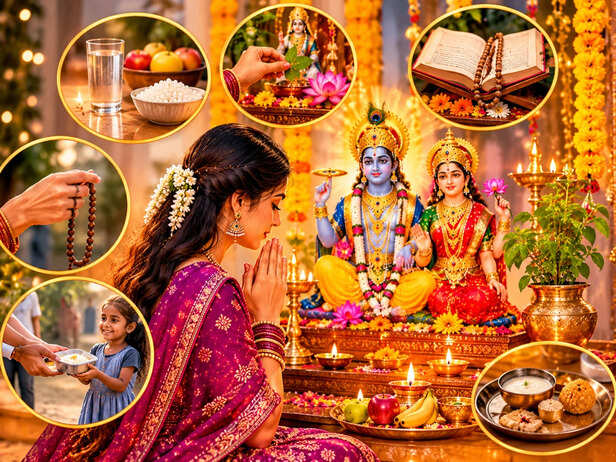
![Golden Vrat Puja Celebration]()
Golden Vrat Puja Celebration
Image credit : ChatGPT
The way Rama Ekadashi is observed can differ between families and regions. Common practices include:
- Fasting: Devotees observe a fast according to their ability and family tradition. Some avoid grains and pulses, while others follow a stricter fast.
- Worshipping Lord Vishnu: Devotees offer prayers, flowers, Tulsi leaves and other traditional offerings.
- Reading the vrat katha: Many families listen to or read the story of Chandrabhaga and Shobhana.
- Chanting prayers: Devotees may recite Vishnu mantras, the Vishnu Sahasranama or other devotional hymns.
- Charity and kindness: Some people donate food, clothes or other essentials to those in need.
- Breaking the fast: The fast is traditionally completed on the following Dwadashi, according to the prescribed Parana time.
People who are unwell, elderly, pregnant or unable to fast strictly can follow a suitable form of worship instead. Fasting should not come at the cost of health.
Why Rama Ekadashi Still Matters Today
Rama Ekadashi is more than a day of fasting before Diwali. Its story encourages people to look beyond outward rituals and understand the importance of faith, patience and sincere effort.
As families prepare for the festival of lights, this observance offers a quieter moment for reflection. It reminds devotees that prosperity is not only about material wealth. Peace of mind, strong relationships, kindness and gratitude are also valuable blessings.Perhaps that is the deeper message of Rama Ekadashi: before lighting lamps in our homes, we can also make an effort to bring light into our thoughts and actions.
Unlock insightful tips and inspiration on personal growth, productivity, and well-being. Stay motivated and updated with the latest at
My Life XP.