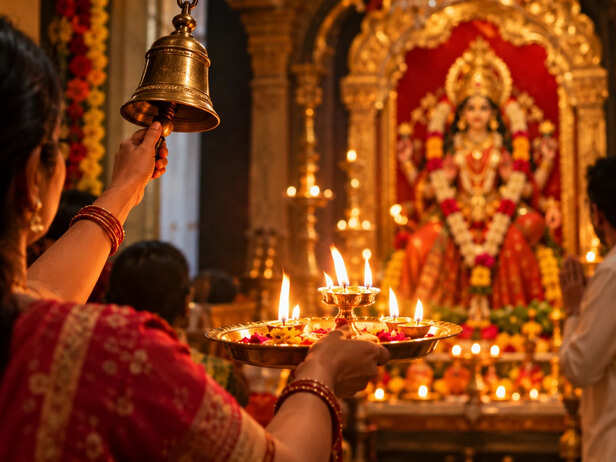
Walk into almost any Hindu temple, and you will notice something familiar: a bell hanging near the entrance. Before entering the sanctum or offering prayers, devotees often pause to ring it. The sound travels through the temple, briefly filling the surroundings with a distinctive metallic resonance.
But have you ever stopped to wonder why this tradition exists?
![The Spiritual Meaning Behind Ringing a Hindu Temple Bell]()
The Spiritual Meaning Behind Ringing a Hindu Temple Bell
Image credit : ChatGPT
Is it simply a way of announcing our arrival before God, or does ringing a temple bell have a deeper spiritual meaning?
In Hindu tradition, ringing a bell is much more than an ordinary ritual. It is considered a symbolic way of preparing oneself for worship, leaving behind worldly distractions and directing attention towards the divine. The sound of the bell also holds significance in traditional Hindu rituals, where it is associated with auspiciousness and the beginning of a sacred activity.
Let's explore the fascinating reasons behind this age-old practice.
1. Ringing the Bell Is a Way of Announcing Your Arrival Before the Divine
One of the most widely understood meanings of ringing a temple bell is that it symbolically announces the devotee's arrival before the deity.Just as we announce our presence before entering someone's home, ringing the bell represents entering a sacred space with devotion and respect.In Hindu worship, the bell is also associated with invoking divine presence and beginning a spiritual interaction. Its sound marks the transition from everyday activities to a moment dedicated to prayer.However, it is important to understand that this is symbolic rather than an indication that God is unaware of anyone's arrival.
2. It Helps the Mind Shift Away From Everyday Distractions
Our minds are often occupied with countless thoughts. Work, responsibilities, personal worries and everyday concerns can make it difficult to concentrate, even when we are standing inside a temple.
Ringing the bell creates a moment of pause.As the sound resonates, devotees are encouraged to bring their attention to the present moment. Instead of carrying their daily worries into the temple, they can use this ritual as an opportunity to focus on prayer and devotion.In this sense, the bell serves as a reminder to leave behind mental distractions and enter the temple with a calm and receptive mind.
3. The Sound of the Bell Is Considered Auspicious
In Hindu traditions, sound plays an important role in spiritual practices. Mantras, chants, conch sounds and temple bells are all associated with sacred activities.
The sound of a temple bell is traditionally considered auspicious. It marks the beginning of worship and creates an atmosphere associated with devotion and positivity.Many Hindu rituals also involve ringing bells while performing aarti or offering prayers to deities.The sound is not merely an addition to the ceremony; it becomes part of the devotional experience, helping create a sense of sacredness within the surroundings.
4. The Bell Symbolises the Connection Between the Material and Spiritual Worlds
A Hindu temple is traditionally regarded as a sacred space where devotees seek a connection with the divine.Ringing the bell before entering can symbolise the transition from the ordinary world into a spiritual environment.
The moment reminds devotees that they are entering a place where attention, humility, faith and devotion take priority over everyday concerns.In this way, the bell becomes a symbolic bridge between daily life and spiritual practice.
5. What Does the Shape of a Hindu Temple Bell Represent?
Have you ever noticed that traditional temple bells are not ordinary bells?
Many are carefully crafted with a distinct shape and decorative designs. In traditional interpretations, the different parts of a bell can carry symbolic meanings.The handle may feature representations of deities or sacred motifs, while the bell itself is designed to produce a clear and resonant sound.
Some traditional explanations associate the bell with divine symbolism, including the connection between sound and creation.However, the exact symbolism can vary according to regional traditions, temple practices and the craftsmanship of the bell.
6. Is There a Scientific Explanation Behind Ringing Temple Bells?
Apart from its religious significance, ringing a bell also has an interesting sensory effect.
The sound of a bell produces vibrations that can be heard and felt in the surrounding environment. Its resonance naturally draws attention, making it difficult to ignore the moment when it rings.This immediate sensory experience can help interrupt ongoing thoughts and encourage people to focus on what they are doing.
However, claims that temple bells automatically eliminate negative energy, cure diseases or activate particular brain functions should not be treated as scientifically established facts.The more meaningful explanation is that the sound creates a distinct moment of awareness, which can support concentration and make the transition into prayer more intentional.
7. Why Do We Also Ring Bells During Aarti?
![Golden Aarti at the Temple]()
Golden Aarti at the Temple
Image credit : ChatGPT
Ringing bells is not limited to the entrance of a temple. They are also commonly used during aarti and other Hindu religious ceremonies.During aarti, devotees often ring bells while lamps are offered before the deity. The sound of the bell combines with devotional songs, mantras and the movement of the lamps to create a deeply engaging worship experience.This combination of sound, light and prayer is an important part of Hindu devotional traditions.It also allows several devotees to participate collectively, creating an atmosphere of shared faith and devotion.
Hindu temple
The next time you visit a Hindu temple and ring the bell at its entrance, remember that you are participating in a tradition that carries meaning beyond its familiar sound.For centuries, the temple bell has represented the beginning of worship, the invocation of auspiciousness and the importance of preparing the mind for prayer.
It reminds devotees to pause, leave behind everyday distractions and enter a sacred space with faith and humility.Perhaps the most beautiful meaning of this ritual is not simply that the bell makes a sound, but that it encourages us to become more attentive to the moment.After all, sometimes a single sound is enough to remind us to stop, reflect and reconnect with our spiritual side.
Unlock insightful tips and inspiration on personal growth, productivity, and well-being. Stay motivated and updated with the latest at
My Life XP.