Why This Maharashtra Village Refuses to Worship Hanuman
Noopur Kumari | Sept 15, 2026, 07:00 IST
The story sounds almost impossible at first: a village where Hanuman worship is traditionally prohibited, while a daitya is remembered as the local guardian deity. According to the oral tradition, Nimba was not simply a demon who opposed Lord Ram. He was said to be a devoted follower of Ram whose encounter with Hanuman changed the fate of the entire village.

Hanuman Worship Happens in This Village
Image credit : ChatGPT(ai)
Imagine entering a village where Hanuman worship is traditionally avoided, a deity associated with a powerful local legend is treated as the village protector, and even the name “Maruti” carries a different meaning for residents. This unusual tradition is associated withTola village in Maharashtra’s Ahmednagar region, where local belief centres around a figure calledDaitya Nimba. But why would a community known for Hindu traditions choose not to worship one of the most widely revered deities in India? The answer lies in a fascinating local legend involving Lord Ram, Hanuman and Nimba.
![Traditional Village in Maharashtra]()
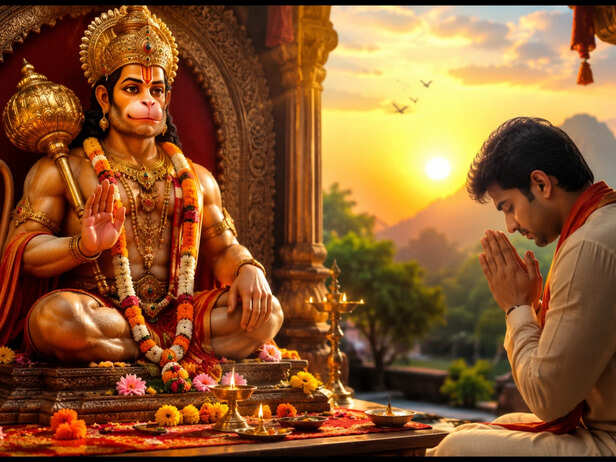
Hanuman is worshipped across Maharashtra, especially through the many temples dedicated to him as Maruti. But local traditions can sometimes take surprisingly different forms. In the village associated with the Nimba legend, residents are traditionally said to avoid Hanuman worship and instead honour Daitya Nimba as their protective deity. Local accounts also connect the tradition with restrictions around Hanuman-related worship and even the use of the name Maruti. These customs are best understood as part of the village’s folk tradition rather than as a rule followed across Maharashtra. That makes the story unusual without treating the legend as documented history.
![Traditional Village in Maharashtra]()
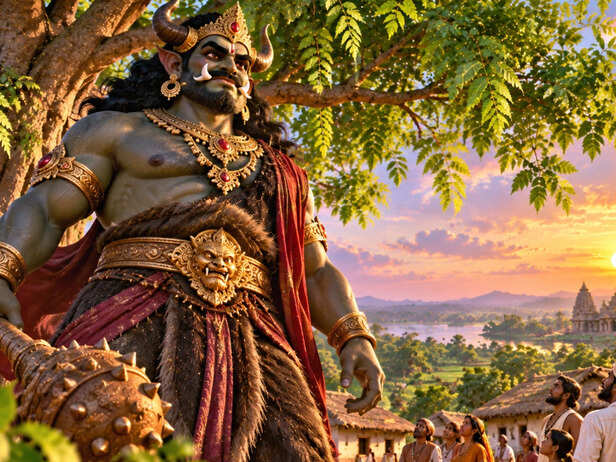
According to the local legend, Daitya Nimba was a powerful daitya who had deep devotion toward Lord Ram. The story says that when Nimba learned that Ram was travelling through the region during his exile, he wanted to meet him. His devotion, however, was mixed with jealousy toward Hanuman, who was already known as Ram’s devoted follower. This jealousy eventually led to a confrontation between Nimba and Hanuman. What began as a personal conflict then became something much larger, forcing Lord Ram himself to intervene.
The most dramatic part of the story is the encounter between Hanuman and Nimba. Nimba is said to have become jealous of the special place Hanuman held in Ram’s devotion and service. The two eventually fought, and according to the legend, the conflict became serious enough that Ram had to step in. The story does not portray Nimba simply as an enemy of Ram. Instead, his devotion remains central to the tale. This detail gives the legend a different character: Nimba’s actions come from an intense desire to serve and meet Ram, even though his jealousy brings him into conflict with Hanuman.
The legend takes an unexpected turn when Lord Ram recognises Nimba’s devotion. Rather than simply punishing him for fighting Hanuman, Ram is said to have acknowledged his dedication and granted him a special responsibility. Nimba was blessed to become the guardian of the area. This blessing is considered the reason local residents began treating Nimba as their village deity. The story therefore shifts from rivalry to protection. Nimba’s identity in the village tradition is not only that of a daitya but also that of a protective figure whose connection with Ram became central to the community’s religious memory.
The village’s unusual attitude toward Hanuman is linked to this story. Local tradition holds that after Ram granted Nimba the role of protector, residents began honouring him as their kul devta, or family and community deity. Hanuman worship was traditionally avoided because of Nimba’s legendary conflict with Hanuman. Some accounts even claim that families were reluctant to arrange marriages with villages where Hanuman worship was prominent. These details belong to local oral tradition and can vary between retellings. They show how a single legend can shape customs around worship, marriage and community identity for generations.
There is another fascinating detail in the story. In Maharashtra, Maruti is a widely used name for Lord Hanuman, and Maruti temples are common across the state. Local accounts about this village claim that even vehicles associated with the name Maruti are traditionally avoided or not allowed inside. Whether every resident follows this practice today is difficult to establish, so it should be treated as a reported custom rather than a universal rule. Still, the connection makes the legend memorable because it extends the traditional distinction beyond temple worship into everyday village life.
Stories like this show how Indian religious traditions can change from one community to another. Across the country, the same deity may have different names, legends, festivals and customs depending on local history and oral traditions. The Nimba story is especially unusual because it places a daitya in the role of a protector while connecting that role directly with Lord Ram. Whether one views the story as mythology, folklore or inherited village tradition, its central idea remains striking: devotion can take unexpected forms, and a local community can preserve a centuries-old identity through the stories passed from one generation to the next.
Unlock insightful tips and inspiration on personal growth, productivity, and well-being. Stay motivated and updated with the latest at My Life XP
A Village With a Very Different Tradition
Traditional Village in Maharashtra
Image credit : chatgpt(ai)
Hanuman is worshipped across Maharashtra, especially through the many temples dedicated to him as Maruti. But local traditions can sometimes take surprisingly different forms. In the village associated with the Nimba legend, residents are traditionally said to avoid Hanuman worship and instead honour Daitya Nimba as their protective deity. Local accounts also connect the tradition with restrictions around Hanuman-related worship and even the use of the name Maruti. These customs are best understood as part of the village’s folk tradition rather than as a rule followed across Maharashtra. That makes the story unusual without treating the legend as documented history.
The Story Begins With Nimba
Traditional Village in Maharashtra
According to the local legend, Daitya Nimba was a powerful daitya who had deep devotion toward Lord Ram. The story says that when Nimba learned that Ram was travelling through the region during his exile, he wanted to meet him. His devotion, however, was mixed with jealousy toward Hanuman, who was already known as Ram’s devoted follower. This jealousy eventually led to a confrontation between Nimba and Hanuman. What began as a personal conflict then became something much larger, forcing Lord Ram himself to intervene.
Nimba’s Jealousy Led to a Fight
Ram Gave Nimba a Different Role
Why Hanuman Worship Became Different
The Curious Maruti Connection
A Legend That Still Defines the Village
Unlock insightful tips and inspiration on personal growth, productivity, and well-being. Stay motivated and updated with the latest at My Life XP