Did Lord Rama Break His Own Values? The Truth Revealed
Noopur Kumari | Jul 12, 2026, 12:00 IST
The Shambuka episode from the Uttara Kanda is one of the most discussed passages in the Valmiki Ramayana. While it is often presented as a story of caste discrimination, many traditional commentators interpret it differently. They explain that the episode reflects the concept of Yuga Dharma, the duties and social order believed to apply during a specific age, rather than hatred toward any community. Understanding the broader context of Lord Rama's life and the complete narrative helps readers appreciate why this episode continues to inspire discussion among scholars and devotees alike.

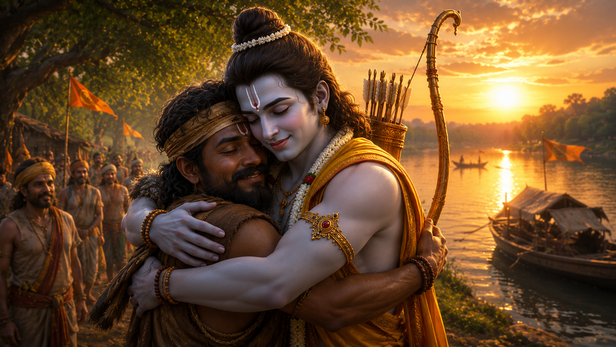
Lord Rama warmly embracing Nishadraj Guha on the banks of the Ganga
Image credit : ChatGPT(AI)
Few episodes from the Ramayana have created as much debate as the story of Shambuka. Some believe it proves that Lord Rama punished a man simply because of his birth. Others argue that the episode has been misunderstood for centuries. But can the same Rama who embraced Shabari, honored Nishadraj Guha, welcomed Vibhishana, and bowed before Sage Valmiki truly act out of caste discrimination? To understand this controversial episode, we must look beyond isolated claims and examine the complete narrative with historical, scriptural, and philosophical context.
![Lord Rama meeting the ascetic Shambuka in a forest]()
Before examining the Shambuka episode, it is important to remember Lord Rama's conduct throughout the Ramayana. He accepted Shabari's berries with love, embraced Nishadraj Guha as a dear friend, gave refuge to Vibhishana despite his Rakshasa lineage, respected Sage Valmiki, and trusted the Vanaras in the battle against Ravana. These episodes show a consistent pattern of compassion and respect that challenges the idea that Rama judged people solely by birth.
![Lord Rama meeting the ascetic Shambuka in a forest]()
The Uttara Kanda narrates that a Brahmin approached Lord Rama after his young son's untimely death, believing that an act against the prevailing order had disturbed the kingdom. After consulting Sage Narada, Rama searched for the cause and found an ascetic named Shambuka performing severe penance. Shambuka identified himself as a Shudra seeking heaven through intense austerities. The text then describes Rama killing Shambuka, after which the child is restored to life.
Many traditional scholars explain that this episode should be understood through the lens of Yuga Dharma, the duties and rules believed to differ across cosmic ages. According to this interpretation, Rama's decision was connected to preserving the moral order described for the Treta Yuga, not to personal prejudice. Other scholars debate the authorship and historical placement of the Uttara Kanda, leading to different interpretations of the same episode.
If Lord Rama truly believed that birth alone determined a person's worth, many well-known episodes of the Ramayana become difficult to explain. His affection for Shabari, friendship with Guha, acceptance of Vibhishana, and reverence for Valmiki present a broader picture of his character. These incidents encourage readers to examine the Shambuka story alongside the rest of Rama's life instead of judging it in isolation.
Sacred texts are frequently interpreted on multiple levels. Some readers focus on the literal narrative, while others seek philosophical symbolism and historical context. Traditional commentators have long advised studying controversial passages together with the broader teachings of dharma, compassion, and justice. Reading a single episode without considering the entire scripture may lead to incomplete conclusions.
The Shambuka episode continues to spark discussions because it raises important questions about justice, duty, and interpretation. Rather than becoming a source of division, it can inspire deeper study of the Ramayana and its historical context. Exploring multiple viewpoints with respect allows readers to better understand why this passage has remained significant for centuries and why scholars continue to discuss its meaning today.
The Search for
The story of Shambuka is one of the most debated episodes in the Ramayana, and it cannot be understood through a single sentence or isolated quotation. Whether viewed through traditional interpretations of Yuga Dharma, textual scholarship, or philosophical symbolism, the episode deserves careful study rather than quick conclusions. The life of Lord Rama consistently emphasizes compassion, righteousness, and responsibility, reminding readers that understanding scripture requires context, balance, and an open mind.
Disclaimer This article is based on traditional beliefs and is intended for informational purposes only.
Unlock insightful tips and inspiration on personal growth, productivity, and well-being. Stay motivated and updated with the latest at My Life XP.
Rama's Life Tells a Different Story
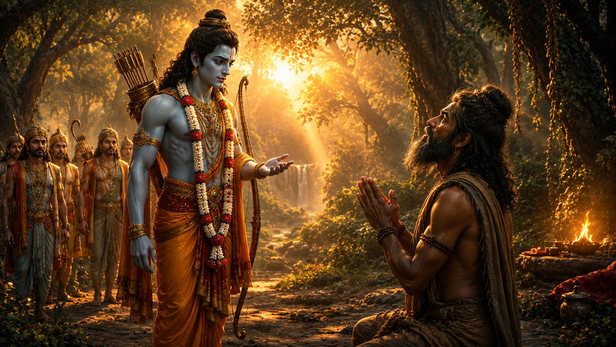
Lord Rama meeting the ascetic Shambuka in a forest
Image credit : ChatGPT(AI)
Before examining the Shambuka episode, it is important to remember Lord Rama's conduct throughout the Ramayana. He accepted Shabari's berries with love, embraced Nishadraj Guha as a dear friend, gave refuge to Vibhishana despite his Rakshasa lineage, respected Sage Valmiki, and trusted the Vanaras in the battle against Ravana. These episodes show a consistent pattern of compassion and respect that challenges the idea that Rama judged people solely by birth.
What Actually Happens in the Story
Lord Rama meeting the ascetic Shambuka in a forest
Image credit : ChatGPT(AI)
The Uttara Kanda narrates that a Brahmin approached Lord Rama after his young son's untimely death, believing that an act against the prevailing order had disturbed the kingdom. After consulting Sage Narada, Rama searched for the cause and found an ascetic named Shambuka performing severe penance. Shambuka identified himself as a Shudra seeking heaven through intense austerities. The text then describes Rama killing Shambuka, after which the child is restored to life.
Why Scholars Interpret It Differently
The Question That Changes Everything
Looking Beyond Literal Interpretation
Why This Debate Still Matters
The Search for Truth Requires the Full Story
Disclaimer This article is based on traditional beliefs and is intended for informational purposes only.
Unlock insightful tips and inspiration on personal growth, productivity, and well-being. Stay motivated and updated with the latest at My Life XP.