Garuda Purana After Death: Why Its Recitation Is Considered Spiritually Important
Kashish Pandey | Jul 06, 2026, 17:30 IST
For generations, Hindu families have recited the Garuda Purana after the death of a loved one. While it's often associated with funeral rituals, its purpose is much deeper. The scripture explains the soul's journey, encourages families to find peace in difficult times, and reminds us that our actions define our legacy. Here's why this ancient tradition continues to hold meaning even in today's fast-moving world.

When someone we love passes away, life seems to stop. The house feels quieter, routines change overnight, and even the smallest memories can bring tears. During these difficult days, many Hindu families follow a centuries-old tradition they read the Garuda Purana. To some, it may seem like just another ritual, but for those who have experienced loss, it often becomes a source of comfort, hope, and spiritual guidance. The beliefs and practices surrounding the Garuda Purana may differ across regions, communities, and individual families. This article explores the traditional Hindu understanding of why the scripture is recited after a loved one's passing and the spiritual significance it holds for many believers. Rather than dwelling only on death, this sacred scripture gently reminds us about life's biggest truths and why every moment we have with our loved ones matters.
People often assume the Garuda Purana is read only because "that's how it's always been done." But every ritual has a deeper meaning, and this one is no different. According to Hindu tradition, the soul continues its journey after leaving the physical body. The Garuda Purana explains this journey and describes why prayers, remembrance, and spiritual reflection are considered important during the days following a person's passing.
For the family, the recitation serves another purpose it creates a space to pause. In the middle of grief, relatives gather, pray together, remember the person they've lost, and find strength in one another. The words of the scripture encourage acceptance, reminding everyone that while the body is temporary, the soul is eternal. Perhaps most importantly, the Garuda Purana gently shifts our attention from asking "Why did this happen?" to "How can we live a life that truly matters?"
![Garun Puran Book]()
One of the biggest misconceptions about the Garuda Purana is that it is only meant for someone who has passed away. In reality, its lessons are directed just as much toward those who are left behind. The scripture reminds us that life is unpredictable. The things we spend years worrying about money, status, possessions eventually fade away. What remains are our actions, our relationships, and the kindness we've shown to others.
That message often hits differently after losing someone close. Suddenly, the little things seem more important than the big ones. A phone call you forgot to make. A hug you postponed. Time spent with family. The Garuda Purana encourages us to value these moments before they become memories.
Many people grow up hearing that the Garuda Purana describes what happens after death, which has led to the misconception that it's a frightening book. But its central message is actually about responsibility and hope. According to Hindu beliefs, every soul continues its journey based on the karma it has accumulated. Good deeds, compassion, honesty, and selfless actions become far more valuable than wealth or power.
Whether someone accepts these teachings literally or symbolically, they carry a powerful reminder: the life we live today shapes the legacy we leave behind tomorrow. Instead of creating fear, the scripture encourages people to live with greater awareness, empathy, and purpose.
Grief affects everyone differently. Some people cry openly, while others remain silent. Some find strength in prayer; others simply want to sit together and remember happier days. The tradition of reading the Garuda Purana creates that shared space. For several days after a loved one's passing, family members gather not only to perform rituals but also to support one another emotionally. Stories are shared. Memories are recalled.
Tears are shed. Slowly, healing begins. The scripture becomes part of that process not because it takes away the pain, but because it reminds everyone they are not alone. It offers hope that love doesn't end with death, even if life as we knew it has changed forever.
Modern life rarely gives us time to pause. We're busy chasing careers, meeting deadlines, paying bills, and scrolling through endless notifications. Yet it often takes the loss of someone we love to remind us what truly matters. That's exactly why the Garuda Purana still resonates today. Its teachings encourage us to be kinder, forgive more quickly, spend time with family, respect our parents and elders, help those in need, and live honestly.
These aren't just religious ideals they're values that can make everyday life richer and relationships stronger. Perhaps that's why this ancient scripture has survived for centuries. Its message isn't trapped in the past. It speaks to anyone who has ever loved, lost, and wondered how to move forward.
The Garuda Purana isn't simply a book that is read after someone's death it is a gentle reminder of how precious life truly is. For generations, Hindu families have turned to its teachings not only to pray for the departed soul but also to find strength, hope, and perspective during one of life's most difficult moments. In the end, its greatest lesson isn't about death at all. It's about living with compassion, cherishing the people we love, and leaving behind a legacy that is remembered not for what we owned, but for how we lived.
Unlock insightful tips and inspiration on personal growth, productivity, and well-being. Stay motivated and updated with the latest at My Life XP.
Why Is the Garuda Purana Read After Death?
People often assume the Garuda Purana is read only because "that's how it's always been done." But every ritual has a deeper meaning, and this one is no different. According to Hindu tradition, the soul continues its journey after leaving the physical body. The Garuda Purana explains this journey and describes why prayers, remembrance, and spiritual reflection are considered important during the days following a person's passing.
For the family, the recitation serves another purpose it creates a space to pause. In the middle of grief, relatives gather, pray together, remember the person they've lost, and find strength in one another. The words of the scripture encourage acceptance, reminding everyone that while the body is temporary, the soul is eternal. Perhaps most importantly, the Garuda Purana gently shifts our attention from asking "Why did this happen?" to "How can we live a life that truly matters?"
It Isn't Written for the Departed Alone It's Also for the Living
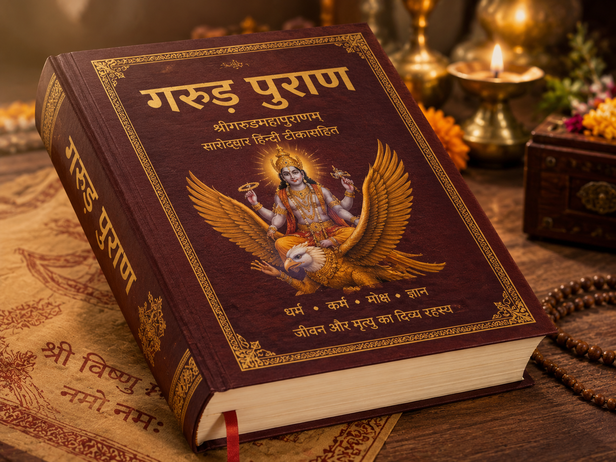
Garun Puran Book
One of the biggest misconceptions about the Garuda Purana is that it is only meant for someone who has passed away. In reality, its lessons are directed just as much toward those who are left behind. The scripture reminds us that life is unpredictable. The things we spend years worrying about money, status, possessions eventually fade away. What remains are our actions, our relationships, and the kindness we've shown to others.
That message often hits differently after losing someone close. Suddenly, the little things seem more important than the big ones. A phone call you forgot to make. A hug you postponed. Time spent with family. The Garuda Purana encourages us to value these moments before they become memories.
The Soul's Journey Offers Hope, Not Fear
Many people grow up hearing that the Garuda Purana describes what happens after death, which has led to the misconception that it's a frightening book. But its central message is actually about responsibility and hope. According to Hindu beliefs, every soul continues its journey based on the karma it has accumulated. Good deeds, compassion, honesty, and selfless actions become far more valuable than wealth or power.
Whether someone accepts these teachings literally or symbolically, they carry a powerful reminder: the life we live today shapes the legacy we leave behind tomorrow. Instead of creating fear, the scripture encourages people to live with greater awareness, empathy, and purpose.
Sometimes, Families Need Comfort More Than Answers
Grief affects everyone differently. Some people cry openly, while others remain silent. Some find strength in prayer; others simply want to sit together and remember happier days. The tradition of reading the Garuda Purana creates that shared space. For several days after a loved one's passing, family members gather not only to perform rituals but also to support one another emotionally. Stories are shared. Memories are recalled.
Tears are shed. Slowly, healing begins. The scripture becomes part of that process not because it takes away the pain, but because it reminds everyone they are not alone. It offers hope that love doesn't end with death, even if life as we knew it has changed forever.
Its Message Feels Surprisingly Relevant Today
Modern life rarely gives us time to pause. We're busy chasing careers, meeting deadlines, paying bills, and scrolling through endless notifications. Yet it often takes the loss of someone we love to remind us what truly matters. That's exactly why the Garuda Purana still resonates today. Its teachings encourage us to be kinder, forgive more quickly, spend time with family, respect our parents and elders, help those in need, and live honestly.
These aren't just religious ideals they're values that can make everyday life richer and relationships stronger. Perhaps that's why this ancient scripture has survived for centuries. Its message isn't trapped in the past. It speaks to anyone who has ever loved, lost, and wondered how to move forward.
The Garuda Purana isn't simply a book that is read after someone's death it is a gentle reminder of how precious life truly is. For generations, Hindu families have turned to its teachings not only to pray for the departed soul but also to find strength, hope, and perspective during one of life's most difficult moments. In the end, its greatest lesson isn't about death at all. It's about living with compassion, cherishing the people we love, and leaving behind a legacy that is remembered not for what we owned, but for how we lived.
Unlock insightful tips and inspiration on personal growth, productivity, and well-being. Stay motivated and updated with the latest at My Life XP.