How Vidura Turned Yudhishthira Into a True Dharmaraja
Noopur Kumari | Jul 03, 2026, 15:00 IST
Yudhishthira spent his entire life obeying the rules of Dharma, yet he remained burdened by the consequences of the Kurukshetra war. Seventeen years later, a mysterious meeting with Vidura in the forest transformed his understanding forever. According to the Mahabharata, Vidura an incarnation of Dharma himself passed his spiritual essence into Yudhishthira through a silent exchange, freeing him from guilt and completing his journey from a man who practiced Dharma to one who embodied it. This little-known episode carries one of the deepest spiritual lessons in the entire epic.

The greatest transformation in the Mahabharata did not happen on the battlefield. It happened in complete silence. No arrows were fired. No conch shells echoed. No speeches were delivered. Yet this single meeting changed Yudhishthira forever. The man who had spent seventeen years carrying the unbearable weight of guilt finally found peace not through victory, but through an encounter that few people even remember today. What happened between Yudhishthira and Vidura was more than an emotional reunion. It was a profound spiritual moment that revealed the true meaning of Dharma and the difference between following righteousness and becoming righteousness itself.
![Yudhishthira Carrying the Burden of Victory]()
Winning the greatest war in history did not bring Yudhishthira happiness. Instead, every victory reminded him of the lives lost because of the conflict. Although he had always acted according to Dharma, he believed that the destruction of his family and kingdom was his responsibility. Seventeen years after the war, he still carried guilt that no crown or success could erase. His greatest battle was no longer against enemies it was against his own conscience.
![The Difference Between Rules and Transformation]()
Throughout his life, Yudhishthira followed every rule of righteousness. He accepted the invitation to the dice game because tradition demanded it. He refused to abandon truth, even in impossible situations. Yet following principles alone did not free him from suffering. The Mahabharata quietly suggests a deeper truth: living by Dharma is one thing, but becoming its living embodiment is an entirely different journey. That transformation had not yet happened.
When Yudhishthira visited the forest to meet Dhritarashtra, he asked about Vidura. Soon he saw him walking alone, dressed like a wandering ascetic, thin and covered in dust. Yudhishthira called out to him repeatedly, but Vidura said nothing. Instead, he stopped beside a tree and simply looked into Yudhishthira's eyes. There were no words, no teachings, and no explanations. Yet that silence carried a wisdom greater than any conversation.
As the two stood facing one another, something extraordinary happened. According to the Mahabharata, a radiant energy emerged from Vidura and entered Yudhishthira. At that very moment, Vidura left his mortal body, and Yudhishthira experienced a profound spiritual awakening. This was not merely the death of a wise elder. It symbolized Dharma returning to its own reflection, completing a journey that had begun long before the Kurukshetra war.
Vidura was not an ordinary advisor. According to the Mahabharata, he was born as the human incarnation of Dharma because of Sage Mandavya's curse. Yudhishthira, too, was born through the blessings of Dharma. Their final meeting was therefore not just between uncle and nephew, but between two manifestations connected to the same divine source. This hidden relationship explains why no words were needed. Recognition happened beyond language.
Many people spend their lives trying to be good, yet still feel hurt when others misunderstand or take advantage of them. The story of Vidura and Yudhishthira teaches that true peace begins when goodness is no longer an effort but your natural state. Once Yudhishthira received this realization, he stopped carrying unnecessary guilt. He accepted both joy and sorrow with the same calmness, showing that inner transformation is greater than external success.
People remember the Mahabharata for its battles, strategies, and heroic warriors. Yet one of its deepest victories happened long after the war ended. Yudhishthira's greatest achievement was not defeating the Kauravas but overcoming the guilt that had imprisoned his heart for years. Through Vidura's silent blessing, he finally became what he had always tried to follow Dharma itself. That invisible victory remains one of the epic's most powerful spiritual messages.
Unlock insightful tips and inspiration on personal growth, productivity, and well-being. Stay motivated and updated with the latest at My Life XP.
1. Why did Yudhishthira feel guilty even after winning the Kurukshetra war?
Yudhishthira believed that the immense loss of life during the Kurukshetra war happened because of decisions he had made. Despite fighting for Dharma, he carried deep remorse and questioned whether the victory was worth the sacrifice.
2. Who was Vidura in the Mahabharata?
Vidura was the wise minister of the Kuru kingdom and one of the most respected characters in the Mahabharata. According to the epic, he was born as an incarnation of Dharma (Yama) due to the curse of Sage Mandavya.
3. Why is the meeting between Vidura and Yudhishthira considered so important?
Their final meeting symbolizes Yudhishthira's spiritual transformation. Without speaking a word, Vidura is believed to have transferred his spiritual energy to Yudhishthira, helping him move beyond guilt and fully embrace Dharma.
4. Did Vidura really transfer his life force to Yudhishthira?
According to the Mahabharata, Vidura's life energy merged into Yudhishthira during their final silent encounter in the forest. This is described as a profound spiritual event and is interpreted symbolically by many scholars.
5. Why didn't Vidura speak during his last meeting with Yudhishthira?
By the time of their final meeting, Vidura had renounced worldly life and was living as an ascetic. His silence reflects complete detachment, suggesting that some spiritual truths are understood through experience rather than words.
The King Who Could Never Forgive Himself
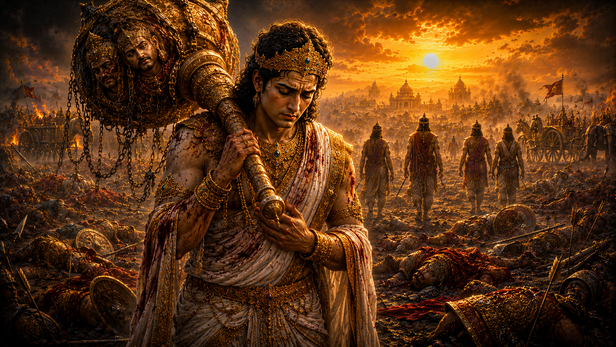
Yudhishthira Carrying the Burden of Victory
Winning the greatest war in history did not bring Yudhishthira happiness. Instead, every victory reminded him of the lives lost because of the conflict. Although he had always acted according to Dharma, he believed that the destruction of his family and kingdom was his responsibility. Seventeen years after the war, he still carried guilt that no crown or success could erase. His greatest battle was no longer against enemies it was against his own conscience.
Following Dharma Is Not the Same as Becoming Dharma
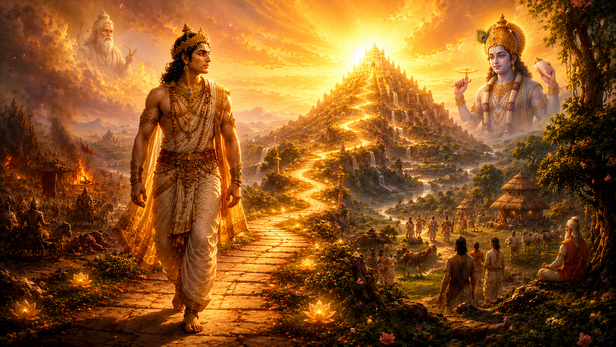
The Difference Between Rules and Transformation
Throughout his life, Yudhishthira followed every rule of righteousness. He accepted the invitation to the dice game because tradition demanded it. He refused to abandon truth, even in impossible situations. Yet following principles alone did not free him from suffering. The Mahabharata quietly suggests a deeper truth: living by Dharma is one thing, but becoming its living embodiment is an entirely different journey. That transformation had not yet happened.
A Silent Encounter Hidden in the Forest
The Moment That Changed Everything
Why Vidura Was More Than a Wise Minister
The Lesson Every Modern Life Needs
The Mahabharata's Greatest Victory Was Never the War
Unlock insightful tips and inspiration on personal growth, productivity, and well-being. Stay motivated and updated with the latest at My Life XP.
Frequently Asked Questions (FAQs)
Yudhishthira believed that the immense loss of life during the Kurukshetra war happened because of decisions he had made. Despite fighting for Dharma, he carried deep remorse and questioned whether the victory was worth the sacrifice.
2. Who was Vidura in the Mahabharata?
Vidura was the wise minister of the Kuru kingdom and one of the most respected characters in the Mahabharata. According to the epic, he was born as an incarnation of Dharma (Yama) due to the curse of Sage Mandavya.
3. Why is the meeting between Vidura and Yudhishthira considered so important?
Their final meeting symbolizes Yudhishthira's spiritual transformation. Without speaking a word, Vidura is believed to have transferred his spiritual energy to Yudhishthira, helping him move beyond guilt and fully embrace Dharma.
4. Did Vidura really transfer his life force to Yudhishthira?
According to the Mahabharata, Vidura's life energy merged into Yudhishthira during their final silent encounter in the forest. This is described as a profound spiritual event and is interpreted symbolically by many scholars.
5. Why didn't Vidura speak during his last meeting with Yudhishthira?
By the time of their final meeting, Vidura had renounced worldly life and was living as an ascetic. His silence reflects complete detachment, suggesting that some spiritual truths are understood through experience rather than words.