No Hug, Just Handshake: Modi’s Silent Message to Trump
Noopur Kumari | Jun 17, 2026, 10:00 IST
As tensions rise over maritime security, trade disagreements, and the deaths of three Indian sailors in a US military strike near Oman, PM Modi's actions at the G7 Summit sparked intense discussion. His emphasis on trust, diplomacy, and the protection of seafarers came just days before a crucial meeting with President Trump. The handshake may have lasted only seconds, but it has triggered questions about India's evolving approach to global diplomacy and its message to one of its most important partners.

Diplomacy is often communicated through words, but sometimes the strongest messages are delivered without saying a single sentence. At the G7 Summit 2026, Prime Minister Narendra Modi's brief handshake with US President Donald Trump grabbed global attention. The moment stood out because it broke a familiar pattern. For years, Modi's warm hugs with world leaders became a symbol of India's friendly diplomacy. This time, however, there was no hug only a handshake. Was it merely protocol, or was India quietly sending a powerful signal to Washington?
![Modi and Trump Meet at G7 Summit]()
Unlike previous meetings marked by warm embraces, Modi greeted Trump with a simple handshake at the G7 Summit. The change instantly caught the attention of diplomats, analysts, and media outlets worldwide. In international politics, body language often carries significant meaning. While neither side officially described the gesture as unusual, many observers viewed it as a subtle indication of India's concerns. The timing was particularly noteworthy, coming amid disagreements over trade issues and growing anger in India following the deaths of three Indian sailors in a US military operation near Oman.
The deaths of three Indian crew members aboard a merchant vessel transformed maritime security into a sensitive issue between India and the United States. The incident generated strong reactions across India, with many demanding accountability and greater protection for civilian sailors. Against this backdrop, Modi used the G7 platform to stress the importance of safeguarding seafarers and maintaining secure shipping routes. His remarks highlighted not only India's concern for its citizens but also the broader impact of disruptions in vital trade corridors such as the Strait of Hormuz.
Most people rarely think about the ships transporting goods across oceans, yet these vessels are the backbone of the global economy. The Strait of Hormuz remains one of the world's most important maritime passages, carrying massive volumes of energy supplies and commercial goods. Any disruption affects fuel prices, supply chains, and economic stability worldwide. Modi's message was clear: protecting seafarers is not just a national concern but an international responsibility. Without safe oceans, global trade and economic growth face serious risks.
During his address, Modi repeatedly emphasized a single word trust. According to him, trust has become more valuable than technology, markets, or natural resources. He argued that countries must trust one another to use technology responsibly, maintain reliable supply chains, and support fair economic opportunities. His comments reflected growing global concerns about geopolitical rivalries and economic fragmentation. By focusing on trust, Modi positioned India as a nation advocating cooperation rather than confrontation in an increasingly uncertain world.
India and the United States continue to share strong strategic ties, but partnerships between major nations often experience periods of tension. Differences over trade, security policies, and regional priorities occasionally create friction. The handshake moment highlighted that strong friendships do not prevent honest disagreements. Analysts believe India is increasingly confident in expressing its concerns while maintaining cooperation with global partners. Rather than signaling a breakdown in relations, the gesture may represent a more balanced and assertive phase in India's foreign policy.
History is filled with moments where a handshake, a smile, or even a seating arrangement carried diplomatic significance. Such gestures are carefully observed because they can reveal underlying tensions or changing priorities. Modi's decision to limit his greeting to a handshake may never be officially explained. Yet the symbolism resonated globally because it occurred during a period of heightened concern over maritime security and Indian casualties. Sometimes diplomacy speaks loudest through actions that appear ordinary on the surface.
The G7 Summit showcased India's expanding influence in international discussions. Modi's speech focused on peace, dialogue, international cooperation, and shared responsibility. By raising concerns about maritime security and emphasizing trust, he positioned India as a voice advocating stability during uncertain times. The message extended beyond the United States and reflected India's broader vision for global partnerships. As geopolitical challenges grow more complex, India's role in shaping conversations around security, trade, and diplomacy continues to become more significant.
Unlock insightful tips and inspiration on personal growth, productivity, and well-being. Stay motivated and updated with the latest at My Life XP.
1. Why did PM Modi only shake hands with Donald Trump at the G7 Summit?
The handshake attracted attention because PM Modi is known for warmly greeting many world leaders with hugs. At the G7 Summit, he chose a formal handshake with President Trump, leading to speculation that it may have reflected India's concerns over recent diplomatic and security issues.
2. What issue did PM Modi raise during the G7 Summit?
PM Modi highlighted maritime security and the safety of seafarers. He stressed that global shipping routes must remain secure and that sailors should be able to perform their duties without fear or danger.
3. Why are the deaths of Indian sailors being discussed?
Three Indian crew members reportedly lost their lives during a US military operation targeting vessels near Oman. The incident sparked concern in India and brought maritime safety into the spotlight during international discussions.
4. What did PM Modi say about trust in international relations?
PM Modi described trust as one of the world's most valuable strategic assets. He said global partnerships can only succeed when countries trust each other to use technology, trade, and resources responsibly.
5. How important is the Strait of Hormuz to global trade?
The Strait of Hormuz is one of the world's most critical shipping routes. A large portion of global oil and commercial trade passes through it, making its security vital for the global economy.
A Handshake That Spoke Volumes
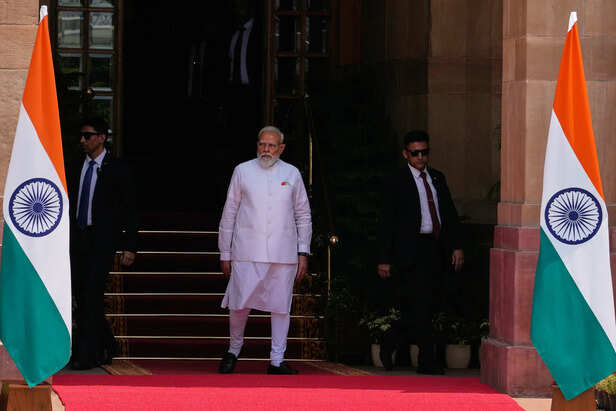
Modi and Trump Meet at G7 Summit
Unlike previous meetings marked by warm embraces, Modi greeted Trump with a simple handshake at the G7 Summit. The change instantly caught the attention of diplomats, analysts, and media outlets worldwide. In international politics, body language often carries significant meaning. While neither side officially described the gesture as unusual, many observers viewed it as a subtle indication of India's concerns. The timing was particularly noteworthy, coming amid disagreements over trade issues and growing anger in India following the deaths of three Indian sailors in a US military operation near Oman.
The Tragedy That Changed the Conversation
The interactions with world leaders continue at the G7 Summit in Evian.@G7 pic.twitter.com/ZOrAaffrcX
— Narendra Modi (@narendramodi) June 16, 2026
The deaths of three Indian crew members aboard a merchant vessel transformed maritime security into a sensitive issue between India and the United States. The incident generated strong reactions across India, with many demanding accountability and greater protection for civilian sailors. Against this backdrop, Modi used the G7 platform to stress the importance of safeguarding seafarers and maintaining secure shipping routes. His remarks highlighted not only India's concern for its citizens but also the broader impact of disruptions in vital trade corridors such as the Strait of Hormuz.
Why Maritime Security Matters to Everyone
Modi’s Bigger Message About Trust
A New Phase in India-US Relations?
The Symbolism Behind Diplomatic Gestures
India’s Growing Voice on the Global Stage
Unlock insightful tips and inspiration on personal growth, productivity, and well-being. Stay motivated and updated with the latest at My Life XP.
Frequently Asked Questions (FAQs)
The handshake attracted attention because PM Modi is known for warmly greeting many world leaders with hugs. At the G7 Summit, he chose a formal handshake with President Trump, leading to speculation that it may have reflected India's concerns over recent diplomatic and security issues.
2. What issue did PM Modi raise during the G7 Summit?
PM Modi highlighted maritime security and the safety of seafarers. He stressed that global shipping routes must remain secure and that sailors should be able to perform their duties without fear or danger.
3. Why are the deaths of Indian sailors being discussed?
Three Indian crew members reportedly lost their lives during a US military operation targeting vessels near Oman. The incident sparked concern in India and brought maritime safety into the spotlight during international discussions.
4. What did PM Modi say about trust in international relations?
PM Modi described trust as one of the world's most valuable strategic assets. He said global partnerships can only succeed when countries trust each other to use technology, trade, and resources responsibly.
5. How important is the Strait of Hormuz to global trade?
The Strait of Hormuz is one of the world's most critical shipping routes. A large portion of global oil and commercial trade passes through it, making its security vital for the global economy.