The First Mantra of the Rig Veda: Why the World’s Oldest Sacred Hymn Begins with Fire
Noopur Kumari | Fri, 27 Feb 2026
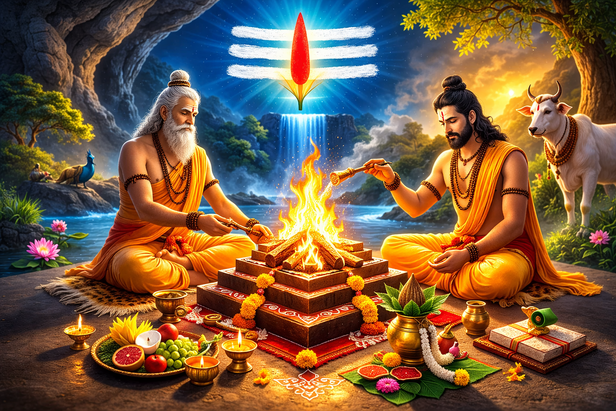
What is the very first mantra of the Rigveda? The answer is powerful and symbolic. The opening hymn, Rigveda 1.1.1, begins not with a king or a god of thunder, but with Agni the divine fire. Agnim ile purohitam is more than an ancient Sanskrit verse. It is a doorway into Vedic wisdom, a call to light, purity, and transformation. In just one line, it connects ritual, consciousness, and cosmic energy. This is not only history. It is a living spark that still burns in spiritual traditions today.

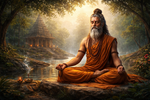
First Mantra of the Rig Veda
Image credit : ChatGPT (AI)
The Rigveda is the oldest of the four Vedas Rigveda, Yajurveda, Samaveda, and Atharvaveda. It contains hymns composed in Vedic Sanskrit thousands of years ago. Among its many branches, only the Sakalya Shakha survives today. But what is most fascinating is how it begins. The very first mantra Mandala 1, Sukta 1, Mantra 1 is dedicated to Agni, the sacred fire. Not by accident. Not randomly. Fire was life in ancient times. Fire cooked food, gave warmth, protected families, and carried offerings to the divine. So when the Rigveda opens with Agni, it is opening with the essence of existence itself. Let us understand why this first mantra still matters.
![First Mantra]()
अग्निमीळे पुरोहितं यज्ञस्य देवमृत्विजम् ।होतारं रत्नधातमम् ॥
Translation: I adore Agni, the priest of the sacrifice, the divine minister of the ritual, the hotaram, who bestows treasure. This hymn praises Agni as the priest and mediator of sacred rituals. It sets the tone for the entire Rigveda. Before calling upon other deities, the sages invoked fire the visible presence of divine energy. The opening mantra teaches reverence, humility, and awareness. It reminds seekers that spiritual wisdom begins with light.
In Vedic culture, Agni was not merely physical fire. Agni was the messenger between humans and gods. During yajnas, offerings were placed in fire. The smoke rising upward symbolised prayers reaching heaven. Agni carried intentions to the divine realm. This made fire sacred, not ordinary. Without Agni, ritual communication was incomplete. That is why the Rigveda begins with him. He is the bridge between earth and cosmos. This symbolism teaches connection between body and soul, human and universe, action and consequence.
![Fire purifies]()
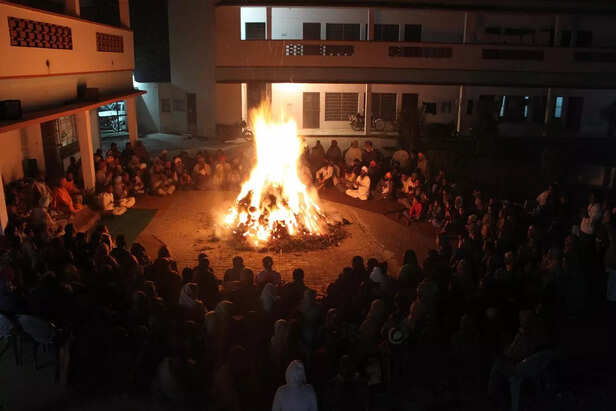
Fire purifies everything it touches, transforming wood into ash and darkness into light. Similarly, Vedic knowledge purifies the mind and soul, guiding humans toward clarity and spiritual growth. By placing Agni first, the Rigveda emphasizes the importance of inner awakening and the removal of ignorance. Just as fire refines gold, wisdom removes confusion and illuminates the path of life. Agni is more than heat or flame; it represents spiritual illumination, transformation, and consciousness. The first mantra teaches seekers to ignite their inner awareness, to look within, and to cultivate clarity before seeking answers in the external world.
In Indian philosophy, creation is formed from five elements earth, water, fire, air, and space. Agni represents the fire element. Fire signifies energy, digestion, and consciousness. Without fire, life cannot continue. In Ayurveda, Jatharagni is the digestive fire that transforms food into energy. In yoga, inner fire represents willpower and determination. By beginning with Agni, the Rigveda acknowledges life force itself. It recognizes that transformation is central to existence. Fire is change. Fire is motion. Fire is growth.
Ancient sages spoke of inner fire the fire of willpower, courage, and awareness. This inner Agni burns away illusion and fear. It pushes a person toward truth. When the Rigveda begins with Agni, it invites every reader to awaken this inner spark. The first mantra becomes personal. It asks: Are you nurturing your inner flame? Are you transforming darkness into light?
The first mantra of the Rigveda is not just an ancient sound. It is a spiritual principle. By starting with Agni, the sages placed transformation at the heart of wisdom. Fire connects, purifies, energizes, and illuminates. It represents both ritual and reality, outer ceremony and inner consciousness. Thousands of years later, the message remains powerful. Light your inner fire. Think clearly. Act with purity. Seek higher truth. The Rigveda begins with fire because every journey toward knowledge begins with light. And that flame still burns.
Unlock insightful tips and inspiration on personal growth, productivity, and well-being. Stay motivated and updated with the latest at My Life XP.
1. What is the first mantra of the Rig Veda?
The first mantra of the Rig Veda (Mandala 1, Sukta 1, Mantra 1) is dedicated to Agni, the divine fire. It begins with:
“अग्निमीळे पुरोहितं यज्ञस्य देवमृत्विजम् । होतारं रत्नधातमम् ॥”
Translation: “I adore Agni, the priest of the sacrifice, the divine minister of the ritual, the hotaram, who bestows treasure.”
2. Why does the Rig Veda begin with Agni?
Agni symbolizes the divine messenger, transformation, and purification. Placing him first emphasizes spiritual awakening, clarity of mind, and the importance of inner light before performing rituals or seeking knowledge.
3. What is the spiritual significance of Agni?
Agni represents purification, willpower, consciousness, and the inner fire that sustains life. It is considered a bridge between humans and the gods, carrying offerings during yajnas and symbolizing clarity and divine connection.
4. How does this mantra relate to daily life?
The first mantra encourages individuals to ignite their inner awareness, remove ignorance, act with clarity, and cultivate spiritual consciousness. It serves as a reminder to prioritize wisdom and purification in thought and action.
5. Is Agni connected to the five elements?
Yes. Agni, or fire, is one of the Panchamahabhutas (five fundamental elements). It signifies energy, transformation, and consciousness, forming an essential part of physical, mental, and spiritual existence.
The First Mantra: A Sacred Beginning
First Mantra
Image credit : ChatGPT (AI)
अग्निमीळे पुरोहितं यज्ञस्य देवमृत्विजम् ।होतारं रत्नधातमम् ॥
Translation: I adore Agni, the priest of the sacrifice, the divine minister of the ritual, the hotaram, who bestows treasure. This hymn praises Agni as the priest and mediator of sacred rituals. It sets the tone for the entire Rigveda. Before calling upon other deities, the sages invoked fire the visible presence of divine energy. The opening mantra teaches reverence, humility, and awareness. It reminds seekers that spiritual wisdom begins with light.
Agni: The Divine Messenger
In Vedic culture, Agni was not merely physical fire. Agni was the messenger between humans and gods. During yajnas, offerings were placed in fire. The smoke rising upward symbolised prayers reaching heaven. Agni carried intentions to the divine realm. This made fire sacred, not ordinary. Without Agni, ritual communication was incomplete. That is why the Rigveda begins with him. He is the bridge between earth and cosmos. This symbolism teaches connection between body and soul, human and universe, action and consequence.
Fire as the Symbol of Purification
Fire purifies
Image credit : Pixabay
Fire purifies everything it touches, transforming wood into ash and darkness into light. Similarly, Vedic knowledge purifies the mind and soul, guiding humans toward clarity and spiritual growth. By placing Agni first, the Rigveda emphasizes the importance of inner awakening and the removal of ignorance. Just as fire refines gold, wisdom removes confusion and illuminates the path of life. Agni is more than heat or flame; it represents spiritual illumination, transformation, and consciousness. The first mantra teaches seekers to ignite their inner awareness, to look within, and to cultivate clarity before seeking answers in the external world.
Agni Among the Five Elements
Beyond Ritual: The Inner Flame
A Mantra That Still Burns Bright
Unlock insightful tips and inspiration on personal growth, productivity, and well-being. Stay motivated and updated with the latest at My Life XP.
Frequently Asked Questions (FAQs)
The first mantra of the Rig Veda (Mandala 1, Sukta 1, Mantra 1) is dedicated to Agni, the divine fire. It begins with:
“अग्निमीळे पुरोहितं यज्ञस्य देवमृत्विजम् । होतारं रत्नधातमम् ॥”
Translation: “I adore Agni, the priest of the sacrifice, the divine minister of the ritual, the hotaram, who bestows treasure.”
2. Why does the Rig Veda begin with Agni?
Agni symbolizes the divine messenger, transformation, and purification. Placing him first emphasizes spiritual awakening, clarity of mind, and the importance of inner light before performing rituals or seeking knowledge.
3. What is the spiritual significance of Agni?
Agni represents purification, willpower, consciousness, and the inner fire that sustains life. It is considered a bridge between humans and the gods, carrying offerings during yajnas and symbolizing clarity and divine connection.
4. How does this mantra relate to daily life?
The first mantra encourages individuals to ignite their inner awareness, remove ignorance, act with clarity, and cultivate spiritual consciousness. It serves as a reminder to prioritize wisdom and purification in thought and action.
5. Is Agni connected to the five elements?
Yes. Agni, or fire, is one of the Panchamahabhutas (five fundamental elements). It signifies energy, transformation, and consciousness, forming an essential part of physical, mental, and spiritual existence.