The Untold Battle Between Shiva & Vishnu’s Narasimha Avatar
Deepak Rajeev | Fri, 08 May 2026
The story of Shiva’s Sharabha form confronting Vishnu’s fierce Narasimha avatar remains one of Hindu mythology’s most mysterious legends. Rooted in ancient Puranic traditions, the tale explores divine fury, cosmic balance, and the spiritual connection between Shiva and Vishnu. Different traditions interpret the encounter differently, but the story continues to fascinate devotees with its powerful symbolism and rare mythology.

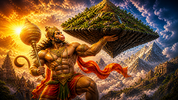
Narasimha & Sharabha (Image Credit: AI)
Hindu mythology contains some of the most fascinating and complex divine stories ever told. Among them is a mysterious and lesser known tale involving two of Hinduism’s greatest deities, Lord Shiva and Lord Vishnu, during the terrifying aftermath of the Narasimha avatar. This story appears in certain Shaivite texts and Puranic traditions, where Shiva takes a fierce form known as Sharabha to calm or confront Vishnu’s uncontrollable Narasimha form after the destruction of the demon king Hiranyakashipu.
The story remains one of the most debated and intriguing episodes in Hindu mythology because different traditions interpret it differently. Some Shaivite scriptures describe Shiva pacifying Narasimha, while many Vaishnava traditions reject the idea that Narasimha was defeated or controlled by Shiva. Instead, they present Vishnu as eternally supreme or interpret the encounter symbolically. Scholars often explain that these variations reflect the rich diversity of Hindu philosophical traditions rather than contradiction.
Despite the debates, the story continues to fascinate devotees because it represents cosmic balance, divine fury, and the deeper unity between Shiva and Vishnu.
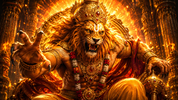
![Lord Narasimha (Image Credit: AI)]()
The story begins after Vishnu took the terrifying Narasimha avatar to destroy the demon king Hiranyakashipu. Narasimha appeared as a half man and half lion form because the demon had received complex boons that made him nearly impossible to kill by ordinary means. According to Hindu scriptures, Narasimha finally destroyed Hiranyakashipu at twilight, neither indoors nor outdoors, using His claws instead of weapons.
But according to several Shaivite traditions, Narasimha’s rage did not end after the demon’s death. His fury became so intense that the entire universe began trembling. The gods became frightened because nobody could calm Him. Even after Prahlada, the great devotee of Vishnu, approached Narasimha with devotion, some traditions claim the fierce energy still remained uncontrollable. The frightened devas then turned toward Shiva for help.
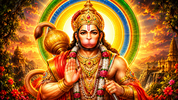
![Maha Dev (Image Credit: AI)]()
According to the Shiva Purana and Linga Purana, Shiva manifested in an extraordinary and terrifying form known as Sharabha or Sharabheshwara. Sharabha was described as a gigantic mystical being combining features of a lion, bird, and powerful beast with enormous wings, claws, and immense cosmic energy.
Some versions describe Sharabha as even more terrifying than Narasimha Himself. The purpose of this form was not simple destruction, but the restoration of cosmic balance. In many Shaivite interpretations, Shiva appeared because uncontrolled divine fury itself had become dangerous to creation. Ancient descriptions of Sharabha portray Him as blazing like cosmic fire with roaring sounds powerful enough to shake worlds. The form symbolized Shiva’s role as the force capable of containing even the fiercest energies in existence.
The confrontation between Narasimha and Sharabha is one of the most dramatic episodes described in certain Puranic traditions. According to some Shaivite texts, Sharabha confronted Narasimha directly and eventually pacified Him after an intense cosmic struggle. Certain versions even claim Shiva immobilized Narasimha before Vishnu returned to His peaceful form.
However, not all Hindu traditions accept this interpretation. Many Vaishnava traditions strongly reject the idea that Shiva defeated Narasimha. Some Vaishnava scriptures instead describe Vishnu transforming into an even more powerful form called Gandabherunda, a fierce two headed bird, which challenged Sharabha. Other traditions simply state that Narasimha calmed down naturally after Prahlada’s prayers. Because Hindu mythology evolved across many regions and spiritual schools over centuries, different texts preserved different theological perspectives.
Many modern Hindu scholars and spiritual teachers interpret the Sharabha and Narasimha story symbolically rather than as a rivalry between Shiva and Vishnu. In this interpretation, both deities represent different expressions of the same supreme cosmic reality. Narasimha symbolized unstoppable divine rage used to destroy evil, while Sharabha symbolized the force that restores calm after destruction has fulfilled its purpose. Together, the story represented balance between fury and peace, destruction and preservation, justice and control. Several traditions within Hinduism repeatedly emphasize that Shiva and Vishnu are ultimately not separate. Instead, they are viewed as different manifestations of the same supreme divine truth appearing in different forms for different cosmic purposes.
The story of Sharabha and Narasimha remains controversial because sectarian traditions historically promoted different theological views. Shaivite texts often emphasized Shiva’s supremacy, while Vaishnava texts emphasized Vishnu’s supremacy. Over time, these differences created multiple versions of the same cosmic event. This is common throughout Hindu mythology. Many Puranas were composed over long periods across different kingdoms, temples, and spiritual traditions. As a result, stories sometimes evolved differently depending on devotional focus. Experts explain that these differences should not necessarily be viewed as contradictions, but as part of Hinduism’s vast and layered storytelling tradition.
Although the Sharabha form is not widely known among all Hindus today, the image of Sharabheshwara still exists in several South Indian temple traditions. Sculptures and carvings of Sharabha can be found guarding temple entrances in some ancient Shaivite temples. In these depictions, Sharabha appears majestic, terrifying, and deeply symbolic. Devotees often interpret the form as representing protection against uncontrollable anger, ego, and destructive forces. The form also reflects the incredible creativity and complexity of Hindu iconography, where divine beings can take forms far beyond ordinary imagination.
Beyond debates over supremacy, the story carries an important spiritual message. Hindu philosophy often teaches that even righteous anger must eventually return to peace. Narasimha’s fury was necessary to destroy evil, but cosmic balance required calm to return afterward. Similarly, Sharabha represented restraint, control, and restoration after chaos. Together, the story reminds devotees that divine power is not only about destruction, but also about balance and harmony. For many devotees, the story ultimately reinforces the idea that Shiva and Vishnu work together in maintaining cosmic order rather than standing as enemies.
The mysterious story of the battle between Shiva’s Sharabha form and Vishnu’s Narasimha avatar remains one of Hindu mythology’s most fascinating and debated legends. Rooted in ancient Puranic traditions, the story reflects the rich diversity of Hindu thought, where multiple interpretations coexist across centuries of spiritual storytelling. Whether viewed literally, symbolically, or philosophically, the encounter between Sharabha and Narasimha continues to captivate devotees because it explores cosmic fury, divine balance, and the eternal relationship between two of Hinduism’s greatest deities. In the end, many spiritual traditions agree on one deeper truth. Shiva and Vishnu are not opposing forces, but different manifestations of the same infinite divine reality.
Explore the latest trends and tips in Health & Fitness, Spiritual, Travel, Life Hacks, Trending, Fashion & Beauty, and Relationships at Times Life!
The story remains one of the most debated and intriguing episodes in Hindu mythology because different traditions interpret it differently. Some Shaivite scriptures describe Shiva pacifying Narasimha, while many Vaishnava traditions reject the idea that Narasimha was defeated or controlled by Shiva. Instead, they present Vishnu as eternally supreme or interpret the encounter symbolically. Scholars often explain that these variations reflect the rich diversity of Hindu philosophical traditions rather than contradiction.
Despite the debates, the story continues to fascinate devotees because it represents cosmic balance, divine fury, and the deeper unity between Shiva and Vishnu.
Narasimha’s Fury Terrified Even the Gods
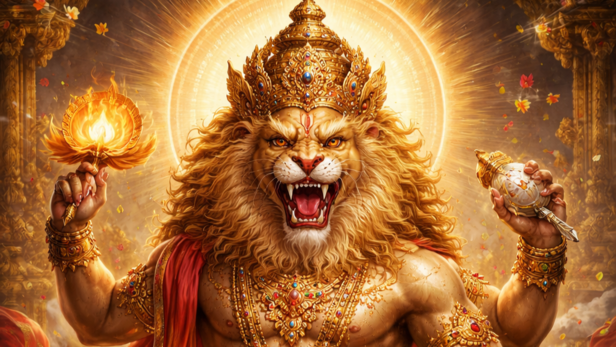
Lord Narasimha (Image Credit: AI)
The story begins after Vishnu took the terrifying Narasimha avatar to destroy the demon king Hiranyakashipu. Narasimha appeared as a half man and half lion form because the demon had received complex boons that made him nearly impossible to kill by ordinary means. According to Hindu scriptures, Narasimha finally destroyed Hiranyakashipu at twilight, neither indoors nor outdoors, using His claws instead of weapons.
But according to several Shaivite traditions, Narasimha’s rage did not end after the demon’s death. His fury became so intense that the entire universe began trembling. The gods became frightened because nobody could calm Him. Even after Prahlada, the great devotee of Vishnu, approached Narasimha with devotion, some traditions claim the fierce energy still remained uncontrollable. The frightened devas then turned toward Shiva for help.
Shiva Took the Terrifying Sharabha Form
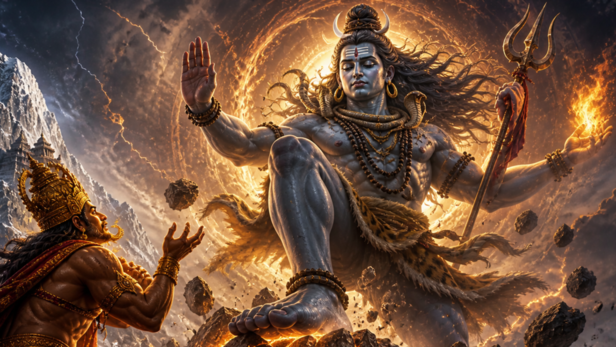
Maha Dev (Image Credit: AI)
According to the Shiva Purana and Linga Purana, Shiva manifested in an extraordinary and terrifying form known as Sharabha or Sharabheshwara. Sharabha was described as a gigantic mystical being combining features of a lion, bird, and powerful beast with enormous wings, claws, and immense cosmic energy.
Some versions describe Sharabha as even more terrifying than Narasimha Himself. The purpose of this form was not simple destruction, but the restoration of cosmic balance. In many Shaivite interpretations, Shiva appeared because uncontrolled divine fury itself had become dangerous to creation. Ancient descriptions of Sharabha portray Him as blazing like cosmic fire with roaring sounds powerful enough to shake worlds. The form symbolized Shiva’s role as the force capable of containing even the fiercest energies in existence.
The Clash Between Sharabha and Narasimha
The confrontation between Narasimha and Sharabha is one of the most dramatic episodes described in certain Puranic traditions. According to some Shaivite texts, Sharabha confronted Narasimha directly and eventually pacified Him after an intense cosmic struggle. Certain versions even claim Shiva immobilized Narasimha before Vishnu returned to His peaceful form.
However, not all Hindu traditions accept this interpretation. Many Vaishnava traditions strongly reject the idea that Shiva defeated Narasimha. Some Vaishnava scriptures instead describe Vishnu transforming into an even more powerful form called Gandabherunda, a fierce two headed bird, which challenged Sharabha. Other traditions simply state that Narasimha calmed down naturally after Prahlada’s prayers. Because Hindu mythology evolved across many regions and spiritual schools over centuries, different texts preserved different theological perspectives.
The Story Symbolized Cosmic Balance
Many modern Hindu scholars and spiritual teachers interpret the Sharabha and Narasimha story symbolically rather than as a rivalry between Shiva and Vishnu. In this interpretation, both deities represent different expressions of the same supreme cosmic reality. Narasimha symbolized unstoppable divine rage used to destroy evil, while Sharabha symbolized the force that restores calm after destruction has fulfilled its purpose. Together, the story represented balance between fury and peace, destruction and preservation, justice and control. Several traditions within Hinduism repeatedly emphasize that Shiva and Vishnu are ultimately not separate. Instead, they are viewed as different manifestations of the same supreme divine truth appearing in different forms for different cosmic purposes.
Why the Story Remains Controversial
The story of Sharabha and Narasimha remains controversial because sectarian traditions historically promoted different theological views. Shaivite texts often emphasized Shiva’s supremacy, while Vaishnava texts emphasized Vishnu’s supremacy. Over time, these differences created multiple versions of the same cosmic event. This is common throughout Hindu mythology. Many Puranas were composed over long periods across different kingdoms, temples, and spiritual traditions. As a result, stories sometimes evolved differently depending on devotional focus. Experts explain that these differences should not necessarily be viewed as contradictions, but as part of Hinduism’s vast and layered storytelling tradition.
Sharabha Still Appears in South Indian Temples
Although the Sharabha form is not widely known among all Hindus today, the image of Sharabheshwara still exists in several South Indian temple traditions. Sculptures and carvings of Sharabha can be found guarding temple entrances in some ancient Shaivite temples. In these depictions, Sharabha appears majestic, terrifying, and deeply symbolic. Devotees often interpret the form as representing protection against uncontrollable anger, ego, and destructive forces. The form also reflects the incredible creativity and complexity of Hindu iconography, where divine beings can take forms far beyond ordinary imagination.
The Deeper Message Behind the Story
Beyond debates over supremacy, the story carries an important spiritual message. Hindu philosophy often teaches that even righteous anger must eventually return to peace. Narasimha’s fury was necessary to destroy evil, but cosmic balance required calm to return afterward. Similarly, Sharabha represented restraint, control, and restoration after chaos. Together, the story reminds devotees that divine power is not only about destruction, but also about balance and harmony. For many devotees, the story ultimately reinforces the idea that Shiva and Vishnu work together in maintaining cosmic order rather than standing as enemies.
Conclusion
The mysterious story of the battle between Shiva’s Sharabha form and Vishnu’s Narasimha avatar remains one of Hindu mythology’s most fascinating and debated legends. Rooted in ancient Puranic traditions, the story reflects the rich diversity of Hindu thought, where multiple interpretations coexist across centuries of spiritual storytelling. Whether viewed literally, symbolically, or philosophically, the encounter between Sharabha and Narasimha continues to captivate devotees because it explores cosmic fury, divine balance, and the eternal relationship between two of Hinduism’s greatest deities. In the end, many spiritual traditions agree on one deeper truth. Shiva and Vishnu are not opposing forces, but different manifestations of the same infinite divine reality.
Explore the latest trends and tips in Health & Fitness, Spiritual, Travel, Life Hacks, Trending, Fashion & Beauty, and Relationships at Times Life!