Why Bhishma Chose Vishnu Sahasranama Before Death
Noopur Kumari | Jun 12, 2026, 11:00 IST
A dying warrior. A guilty king. A silent God. And a question about peace. What happened next was not a lecture, not a sermon, and not a royal command. Instead, Bhishma Pitamah began a sacred journey through a thousand names of Vishnu. The deeper truth is that Vishnu Sahasranama was never meant to be just a list of names. It was a path from the chaos of the world to the peace within the soul.

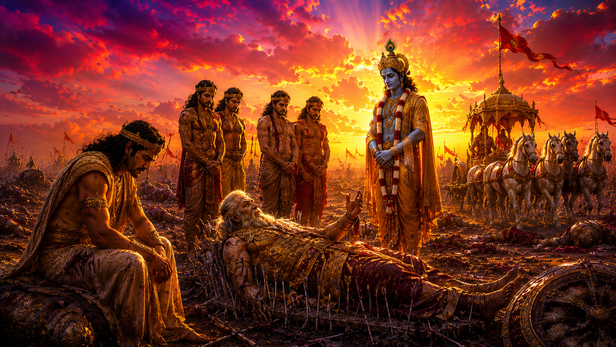
Most people know Vishnu Sahasranama as a sacred hymn containing a thousand names of Lord Vishnu. But very few stop to ask a deeper question. What was happening emotionally when these thousand names were first spoken? Imagine the battlefield of Kurukshetra after the war. Countless warriors have fallen. A kingdom has been won, but hearts remain broken. Standing there are Yudhishthira, burdened by guilt, and Lord Krishna, silently watching. Before them lies Bhishma Pitamah on a bed of arrows, waiting for his final moment. And in that unforgettable scene, one of the greatest spiritual treasures in history is born.
![The Silence After Kurukshetra]()
Kurukshetra was finally quiet. The sound of conch shells and weapons had disappeared, leaving behind only grief and reflection. The Pandavas had achieved victory, but it did not feel like triumph. Families had been destroyed, relationships shattered, and countless lives lost. In the middle of this emotional landscape lay Bhishma Pitamah on his bed of arrows. The battlefield was no longer a place of war. It had become a place of wisdom. The greatest lesson of the Mahabharata was about to emerge not from victory, but from suffering.
![The Burden Carried by a King]()
When Yudhishthira approached Bhishma, he was not seeking political advice. He was searching for inner peace. The cost of victory haunted him. Every memory of the war weighed heavily on his conscience. Kneeling before Bhishma, he asked a question that every human eventually asks: How can one find true peace? His question was born from pain, confusion, and responsibility. It was the question of a king, but also the question of every person who struggles with regret and seeks a way forward.
![The Silent Presence of Krishna]()
One of the most remarkable details of this scene is Krishna's silence. The Supreme Lord Himself stood nearby, yet He did not answer Yudhishthira's question. Instead, He allowed Bhishma to speak. This silence carried profound meaning. Krishna was honoring the devotion, sacrifice, and wisdom of Bhishma. It was as if the Lord wanted future generations to understand that true knowledge is not always delivered through miracles. Sometimes it flows through the life experiences of those who have lived with unwavering dedication to dharma.
Many expected Bhishma to deliver a grand discourse on statecraft, warfare, or ethics. Instead, he did something extraordinary. He entered a state of devotion. Rather than offering complicated explanations, he began reciting the thousand names of Lord Vishnu. His final gift was not information but transformation. Bhishma understood that lasting peace does not come merely from understanding life. It comes from connecting with the Divine. Through Vishnu Sahasranama, he offered a spiritual path capable of healing even the deepest wounds.
Many people see Vishnu Sahasranama as a collection of divine names. In reality, it is a spiritual journey. The opening name, Vishvam, describes the Lord as the entire universe. The names gradually guide the mind inward, revealing different dimensions of divine reality. By the end, the seeker is no longer focused on the external world but on inner surrender and divine protection. This progression is not accidental. It mirrors the spiritual journey every soul must take from attachment to awareness, from confusion to clarity, and from fear to faith.
Tradition associates this divine revelation with the sacred energy of Ekadashi. This day has long been dedicated to spiritual discipline, self-reflection, and devotion to Lord Vishnu. Bhishma's recitation on such a significant occasion highlights the importance of aligning the mind with higher consciousness. During Purushottam Maas, a month especially beloved to Lord Vishnu, the significance becomes even deeper. The story reminds devotees that spiritual growth is not accidental. It flourishes when intention, devotion, and sacred timing come together.
Bhishma could not take his strength, reputation, or achievements with him. Yet he left behind something far greater. He gave future generations a practical path toward peace. Vishnu Sahasranama became his final blessing to humanity. It continues to inspire millions because it addresses a universal need. Every person faces moments of uncertainty, loss, and emotional struggle. Bhishma's message remains timeless: when the world becomes overwhelming, remember the Divine. In that remembrance lies strength, clarity, and lasting peace.
Unlock insightful tips and inspiration on personal growth, productivity, and well-being. Stay motivated and updated with the latest at My Life XP.
1. What is Vishnu Sahasranama?
Vishnu Sahasranama is a sacred hymn containing 1,000 names of Lord Vishnu. It appears in the Mahabharata and is revered as one of the most powerful prayers for peace, devotion, and spiritual growth.
2. Who recited Vishnu Sahasranama for the first time?
According to the Mahabharata, Bhishma recited Vishnu Sahasranama while lying on a bed of arrows after the Kurukshetra war. He shared it as a spiritual guide for future generations.
3. Why did Yudhishthira ask Bhishma about peace?
After the devastating war, Yudhishthira was burdened with grief and responsibility. Seeking guidance on righteousness and inner peace, he turned to Bhishma, who was regarded as one of the wisest elders of his time.
4. Why was Lord Krishna silent during this conversation?
Krishna remained silent to honor Bhishma's wisdom and devotion. His silence allowed Bhishma to deliver a timeless spiritual teaching that would benefit countless generations.
A Battlefield That Had Fallen Silent

The Silence After Kurukshetra
Kurukshetra was finally quiet. The sound of conch shells and weapons had disappeared, leaving behind only grief and reflection. The Pandavas had achieved victory, but it did not feel like triumph. Families had been destroyed, relationships shattered, and countless lives lost. In the middle of this emotional landscape lay Bhishma Pitamah on his bed of arrows. The battlefield was no longer a place of war. It had become a place of wisdom. The greatest lesson of the Mahabharata was about to emerge not from victory, but from suffering.
Yudhishthira's Question Came From Guilt

The Burden Carried by a King
When Yudhishthira approached Bhishma, he was not seeking political advice. He was searching for inner peace. The cost of victory haunted him. Every memory of the war weighed heavily on his conscience. Kneeling before Bhishma, he asked a question that every human eventually asks: How can one find true peace? His question was born from pain, confusion, and responsibility. It was the question of a king, but also the question of every person who struggles with regret and seeks a way forward.
Krishna Chose Silence for a Reason
The Silent Presence of Krishna
One of the most remarkable details of this scene is Krishna's silence. The Supreme Lord Himself stood nearby, yet He did not answer Yudhishthira's question. Instead, He allowed Bhishma to speak. This silence carried profound meaning. Krishna was honoring the devotion, sacrifice, and wisdom of Bhishma. It was as if the Lord wanted future generations to understand that true knowledge is not always delivered through miracles. Sometimes it flows through the life experiences of those who have lived with unwavering dedication to dharma.
Bhishma Did Not Give a Lecture
The Journey Hidden Inside a Thousand Names
Why Ekadashi Makes This Story Special
The Real Gift Bhishma Left Behind
Unlock insightful tips and inspiration on personal growth, productivity, and well-being. Stay motivated and updated with the latest at My Life XP.
Frequently Asked Questions (FAQs)
Vishnu Sahasranama is a sacred hymn containing 1,000 names of Lord Vishnu. It appears in the Mahabharata and is revered as one of the most powerful prayers for peace, devotion, and spiritual growth.
2. Who recited Vishnu Sahasranama for the first time?
According to the Mahabharata, Bhishma recited Vishnu Sahasranama while lying on a bed of arrows after the Kurukshetra war. He shared it as a spiritual guide for future generations.
3. Why did Yudhishthira ask Bhishma about peace?
After the devastating war, Yudhishthira was burdened with grief and responsibility. Seeking guidance on righteousness and inner peace, he turned to Bhishma, who was regarded as one of the wisest elders of his time.
4. Why was Lord Krishna silent during this conversation?
Krishna remained silent to honor Bhishma's wisdom and devotion. His silence allowed Bhishma to deliver a timeless spiritual teaching that would benefit countless generations.