Why Bhishma Stayed Silent During Draupadi’s Humiliation
Deepak Rajeev | Fri, 15 May 2026
Why did Bhishma remain silent during Draupadi’s humiliation despite being one of the noblest figures in the Mahabharata? This emotional devotional article explores Bhishma’s painful conflict between royal duty and righteousness, the tragic collapse of dharma in Hastinapur, Krishna’s divine intervention to protect Draupadi, and the spiritual lessons hidden within one of Hindu epic history’s most heartbreaking moments.

The Horror of Bhishma’s Silence (Image Credit: AI)
The Mahabharata contains countless moments of heroism, sacrifice, devotion, and divine wisdom. Yet among all its emotionally devastating scenes, few moments continue to disturb devotees as deeply as Draupadi’s humiliation in the Kaurava court. It was a moment where dharma itself appeared to tremble. Great kings sat in silence, powerful warriors lowered their heads, and one of the noblest men in the epic, Bhishma Pitamah, remained painfully quiet. For generations, devotees and readers have asked the same heartbreaking question: why did Bhishma stay silent during Draupadi’s humiliation?
The question continues to provoke emotional and spiritual reflection because Bhishma was not an ordinary man. He was revered as the guardian of Hastinapur, the embodiment of sacrifice, wisdom, discipline, and duty. His silence during one of the darkest moments in the Mahabharata creates a moral contradiction that still shocks devotees today. To understand Bhishma’s silence, one must understand the painful conflict between personal morality, royal duty, vows, and the tragic complexity of dharma itself.
![The Silence That Echoed Across Kurukshetra (Image Credit: AI)]()
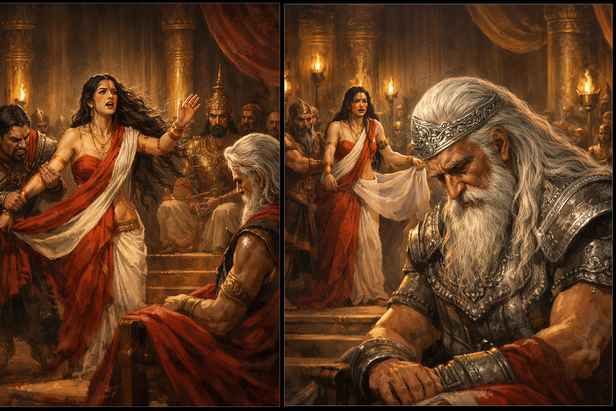
The atmosphere inside the Kaurava court during the dice game was heavy with arrogance, tension, and impending disaster. Yudhishthira, blinded by his commitment to the rules of the game, continued gambling away everything he possessed. Kingdom, wealth, brothers, and eventually Draupadi herself became stakes in the deadly contest engineered by Shakuni. When Dushasana dragged Draupadi into the royal assembly, the entire court witnessed a horrifying collapse of righteousness. Draupadi’s voice echoed across the hall as she questioned the legality and morality of what had happened. She asked a question so profound that even the greatest minds in the court struggled to answer it:
If Yudhishthira had already lost himself, did he still possess the right to stake her afterward? The court fell silent. Kings looked away. Warriors avoided her gaze. And Bhishma, the grand patriarch of the Kuru dynasty, remained motionless. For many devotees, this silence feels more painful than the cruelty of Duryodhana himself.
To understand Bhishma’s inner conflict, one must remember the terrifying weight of the vow that defined his life. Bhishma had sacrificed everything for Hastinapur. He gave up kingship, marriage, fatherhood, and personal happiness so his father Shantanu could fulfill his own desire. His terrible vow of celibacy and loyalty earned him the name “Bhishma,” meaning the one who took the dreadful oath. From that day onward, Bhishma considered himself eternally bound to the throne of Hastinapur, regardless of who occupied it. This devotion to duty became both his greatness and his tragedy.
During Draupadi’s humiliation, Bhishma found himself trapped between two forms of dharma. One demanded protection of righteousness and womanhood. The other demanded loyalty to the ruling authority of Hastinapur. The Mahabharata itself portrays Bhishma struggling internally during this moment. He openly admitted that dharma is subtle and difficult to understand when conflicting obligations collide. This was not the silence of ignorance. It was the silence of a man spiritually torn apart.
Imagine the scene inside the royal court. Torches flicker against golden pillars. Duryodhana sits with arrogance burning in his eyes. Karna’s sharp words wound Draupadi further. Dushasana prepares to dishonor her publicly while powerful kings sit frozen in disbelief. In the center of the hall stands Draupadi, surrounded by humiliation yet refusing to surrender her dignity. Then the eyes of the entire assembly slowly turn toward Bhishma. The old warrior who had defeated kings. The guardian who had protected Hastinapur for generations. The man whose wisdom commanded universal respect. But Bhishma lowers his head.
For devotees, this moment feels devastating because it shows how even the greatest souls can become trapped by worldly obligations and tragic moral complexity.
One of the most important truths often overlooked is that Bhishma himself later acknowledged the moral weight of what happened. The Mahabharata repeatedly portrays Bhishma as deeply aware of the growing adharma within the Kuru dynasty. He warned against Duryodhana’s arrogance many times before the war. He understood the destructive consequences unfolding before him. Yet his vow and loyalty to the throne prevented him from openly revolting against the ruling authority.
This inner conflict became one of the central tragedies of Bhishma’s life. Many devotees believe Bhishma’s suffering on the bed of arrows during Kurukshetra was not merely physical punishment from war, but also spiritual atonement for witnessing adharma without stopping it fully.
![Lord Krishna (Image Credit: AI)]()
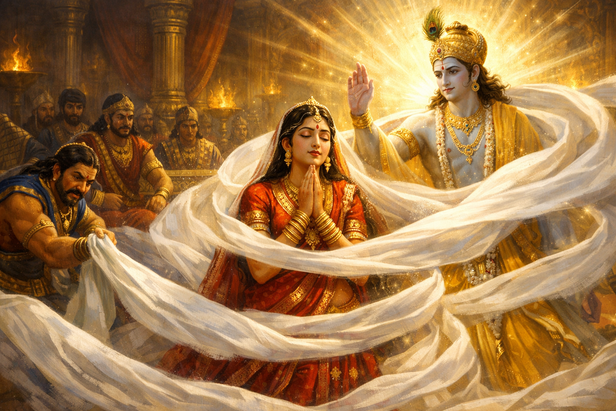
One of the most spiritually powerful aspects of this episode is that when every earthly protector failed, Draupadi ultimately surrendered herself completely to Lord Krishna. As Dushasana attempted to dishonor her, Draupadi abandoned all human expectation and cried out to Krishna with absolute devotion. That moment transformed the scene from human tragedy into divine intervention. Krishna protected Draupadi through the miracle of endless cloth, preserving her dignity before the entire assembly.
For devotees, this remains one of the greatest demonstrations of bhakti in Hindu tradition. When worldly power, royal authority, and mighty warriors failed, divine grace alone answered sincere surrender.
The reason this episode continues to provoke emotional reactions centuries later is because Bhishma was never viewed as evil. He was honorable, disciplined, wise, and spiritually elevated. Yet even such a noble soul failed to act decisively at one of history’s darkest moments. This creates a painful but powerful spiritual lesson. The Mahabharata repeatedly teaches that neutrality during adharma can itself become a form of participation in injustice. Bhishma’s silence reminds devotees that righteousness sometimes requires action, even when duty, fear, loyalty, or social structure create unbearable conflict.
The Mahabharata is not merely a story of heroes and villains. It is a profound exploration of human weakness, moral confusion, karma, vows, ego, and dharma. Bhishma’s silence represents the tragic danger of becoming too attached to worldly duty while ignoring higher righteousness. At the same time, Draupadi’s unwavering faith represents the ultimate triumph of surrender to the divine. This is why the episode remains spiritually unforgettable. It reveals both the weakness of even great men and the limitless power of devotion.
Bhishma stayed silent during Draupadi’s humiliation not because he lacked wisdom or compassion, but because he became trapped within the crushing weight of conflicting dharmas, vows, and loyalty to Hastinapur. His silence became one of the greatest moral tragedies in the Mahabharata. For devotees, this painful episode continues to serve as a reminder that dharma is not always simple, and even the noblest souls can falter when duty and righteousness collide.
Yet above all, the scene also revealed an eternal truth that continues to inspire millions: when every worldly protector fails, sincere devotion to the divine never goes unanswered.
Unlock insightful tips and inspiration on personal growth, productivity, and well-being. Stay motivated and updated with the latest at My Life XP.
The question continues to provoke emotional and spiritual reflection because Bhishma was not an ordinary man. He was revered as the guardian of Hastinapur, the embodiment of sacrifice, wisdom, discipline, and duty. His silence during one of the darkest moments in the Mahabharata creates a moral contradiction that still shocks devotees today. To understand Bhishma’s silence, one must understand the painful conflict between personal morality, royal duty, vows, and the tragic complexity of dharma itself.
The Day Dharma Trembled in Hastinapur
The Silence That Echoed Across Kurukshetra (Image Credit: AI)
The atmosphere inside the Kaurava court during the dice game was heavy with arrogance, tension, and impending disaster. Yudhishthira, blinded by his commitment to the rules of the game, continued gambling away everything he possessed. Kingdom, wealth, brothers, and eventually Draupadi herself became stakes in the deadly contest engineered by Shakuni. When Dushasana dragged Draupadi into the royal assembly, the entire court witnessed a horrifying collapse of righteousness. Draupadi’s voice echoed across the hall as she questioned the legality and morality of what had happened. She asked a question so profound that even the greatest minds in the court struggled to answer it:
If Yudhishthira had already lost himself, did he still possess the right to stake her afterward? The court fell silent. Kings looked away. Warriors avoided her gaze. And Bhishma, the grand patriarch of the Kuru dynasty, remained motionless. For many devotees, this silence feels more painful than the cruelty of Duryodhana himself.
Bhishma’s Lifelong Vow Became His Greatest Burden
To understand Bhishma’s inner conflict, one must remember the terrifying weight of the vow that defined his life. Bhishma had sacrificed everything for Hastinapur. He gave up kingship, marriage, fatherhood, and personal happiness so his father Shantanu could fulfill his own desire. His terrible vow of celibacy and loyalty earned him the name “Bhishma,” meaning the one who took the dreadful oath. From that day onward, Bhishma considered himself eternally bound to the throne of Hastinapur, regardless of who occupied it. This devotion to duty became both his greatness and his tragedy.
During Draupadi’s humiliation, Bhishma found himself trapped between two forms of dharma. One demanded protection of righteousness and womanhood. The other demanded loyalty to the ruling authority of Hastinapur. The Mahabharata itself portrays Bhishma struggling internally during this moment. He openly admitted that dharma is subtle and difficult to understand when conflicting obligations collide. This was not the silence of ignorance. It was the silence of a man spiritually torn apart.
The Horror of Bhishma’s Silence
Imagine the scene inside the royal court. Torches flicker against golden pillars. Duryodhana sits with arrogance burning in his eyes. Karna’s sharp words wound Draupadi further. Dushasana prepares to dishonor her publicly while powerful kings sit frozen in disbelief. In the center of the hall stands Draupadi, surrounded by humiliation yet refusing to surrender her dignity. Then the eyes of the entire assembly slowly turn toward Bhishma. The old warrior who had defeated kings. The guardian who had protected Hastinapur for generations. The man whose wisdom commanded universal respect. But Bhishma lowers his head.
For devotees, this moment feels devastating because it shows how even the greatest souls can become trapped by worldly obligations and tragic moral complexity.
Bhishma Himself Knew Silence Was Wrong
One of the most important truths often overlooked is that Bhishma himself later acknowledged the moral weight of what happened. The Mahabharata repeatedly portrays Bhishma as deeply aware of the growing adharma within the Kuru dynasty. He warned against Duryodhana’s arrogance many times before the war. He understood the destructive consequences unfolding before him. Yet his vow and loyalty to the throne prevented him from openly revolting against the ruling authority.
This inner conflict became one of the central tragedies of Bhishma’s life. Many devotees believe Bhishma’s suffering on the bed of arrows during Kurukshetra was not merely physical punishment from war, but also spiritual atonement for witnessing adharma without stopping it fully.
Draupadi’s Faith Became Greater Than the Entire Court
Lord Krishna (Image Credit: AI)
One of the most spiritually powerful aspects of this episode is that when every earthly protector failed, Draupadi ultimately surrendered herself completely to Lord Krishna. As Dushasana attempted to dishonor her, Draupadi abandoned all human expectation and cried out to Krishna with absolute devotion. That moment transformed the scene from human tragedy into divine intervention. Krishna protected Draupadi through the miracle of endless cloth, preserving her dignity before the entire assembly.
For devotees, this remains one of the greatest demonstrations of bhakti in Hindu tradition. When worldly power, royal authority, and mighty warriors failed, divine grace alone answered sincere surrender.
Why Bhishma’s Silence Still Disturbs Devotees Today
The reason this episode continues to provoke emotional reactions centuries later is because Bhishma was never viewed as evil. He was honorable, disciplined, wise, and spiritually elevated. Yet even such a noble soul failed to act decisively at one of history’s darkest moments. This creates a painful but powerful spiritual lesson. The Mahabharata repeatedly teaches that neutrality during adharma can itself become a form of participation in injustice. Bhishma’s silence reminds devotees that righteousness sometimes requires action, even when duty, fear, loyalty, or social structure create unbearable conflict.
The Spiritual Meaning Hidden Within the Tragedy
The Mahabharata is not merely a story of heroes and villains. It is a profound exploration of human weakness, moral confusion, karma, vows, ego, and dharma. Bhishma’s silence represents the tragic danger of becoming too attached to worldly duty while ignoring higher righteousness. At the same time, Draupadi’s unwavering faith represents the ultimate triumph of surrender to the divine. This is why the episode remains spiritually unforgettable. It reveals both the weakness of even great men and the limitless power of devotion.
Conclusion: The Silence That Echoed Across Kurukshetra
Bhishma stayed silent during Draupadi’s humiliation not because he lacked wisdom or compassion, but because he became trapped within the crushing weight of conflicting dharmas, vows, and loyalty to Hastinapur. His silence became one of the greatest moral tragedies in the Mahabharata. For devotees, this painful episode continues to serve as a reminder that dharma is not always simple, and even the noblest souls can falter when duty and righteousness collide.
Yet above all, the scene also revealed an eternal truth that continues to inspire millions: when every worldly protector fails, sincere devotion to the divine never goes unanswered.
Unlock insightful tips and inspiration on personal growth, productivity, and well-being. Stay motivated and updated with the latest at My Life XP.