Why Did Krishna Never Carry a Bow Despite Being a Kshatriya Prince?
Palak Khanna | Jun 27, 2026, 21:59 IST
As a prince born into the Yadava clan and belonging to the Kshatriya varna, Lord Krishna was expected to master and wield traditional weapons, especially the bow, which symbolized warriorhood in ancient India. Yet, unlike heroes such as Rama or Arjuna, Krishna is almost never depicted carrying a bow. Instead, he is remembered with his flute, Sudarshana Chakra, and divine wisdom. This article explores the historical, symbolic, and spiritual reasons behind Krishna's unusual martial identity and reveals how his role transcended conventional ideas of kingship and warfare.

In ancient Indian tradition, the bow was more than just a weapon. It represented duty, courage, and the responsibility of protecting society. Great Kshatriya heroes such as Rama, Arjuna, and Karna became legendary archers whose bows defined their identities. Krishna, however, stands apart. Born a prince of the Yadava dynasty, trained in warfare, and fully capable of defeating mighty enemies, Krishna is rarely shown with a bow in hand. His images are dominated by the enchanting flute, while his battlefield presence is associated with strategy, diplomacy, and the divine Sudarshana Chakra. Was Krishna indifferent to archery? Did he reject conventional warfare? Or was there a deeper spiritual message behind his choice? The answer lies in understanding Krishna's unique purpose in the epic tradition.
![A Prince Mastering Every Art of War]()
Contrary to popular belief, Krishna was not unfamiliar with bows or martial skills. Ancient texts suggest that Krishna received a comprehensive education under Sage Sandipani, where he mastered scriptures, politics, combat techniques, and various weapons. Being born into the Vrishni branch of the Yadava clan, martial training was an essential part of his upbringing. Krishna participated in numerous battles throughout his life. He defeated tyrants such as Kansa, Jarasandha's allies, Narakasura, and several powerful asuras. Such victories would have required immense military expertise. Some lesser-known traditions even mention Krishna possessing a celestial bow named Sharnga, proving that he was fully qualified as an archer. However, unlike other epic heroes, he deliberately chose not to make the bow the center of his identity.
One of the most profound distinctions between Krishna and other warriors lies in the role assigned to him. In the Mahabharata, Krishna repeatedly avoids becoming the primary combatant. During the Kurukshetra war, he famously offered one side his vast Narayani army and the other side his personal companionship, with the condition that he would not wield weapons. Arjuna chose Krishna himself. This decision transformed Krishna from a warrior into a guide. His role was not to win glory through battlefield achievements but to help others fulfill their dharma. The bow symbolizes direct engagement in conflict. Krishna's mission was broader. He sought to restore balance, counsel the righteous, expose injustice, and ensure that cosmic order prevailed. His greatness lies not in shooting arrows but in teaching humanity how to act wisely amidst moral confusion.
Although Krishna occasionally used weapons, his most iconic instrument of power was the Sudarshana Chakra. Unlike a conventional bow, the chakra is deeply symbolic. It represents time, cosmic order, divine justice, and the endless cycle of creation and destruction. Krishna employed the chakra only when absolutely necessary. It was used to eliminate threats that endangered dharma itself rather than to establish personal heroism. The bow often signifies human skill and martial excellence. The Sudarshana Chakra, by contrast, highlights Krishna's transcendent identity as the Supreme Being who governs the universe. For devotees, Krishna's divine authority surpasses the achievements associated with earthly kings and warriors.
![The Flute That Spoke to Every Soul]()
Perhaps the most fascinating aspect of Krishna's symbolism is the prominence of his flute. Weapons inspire fear and obedience. Krishna's flute inspires love, surrender, and spiritual awakening. Stories from Vrindavan describe cows stopping mid-graze, rivers slowing their currents, and devotees becoming spellbound upon hearing its melody. The flute serves as a metaphor for the soul emptied of ego and filled with divine grace. Through music, Krishna attracted hearts rather than conquering territories. This imagery conveys a subtle message. While warriors establish order through force, divine beings transform humanity through compassion, beauty, and inner awakening. Krishna's flute therefore became a stronger symbol of his mission than any bow could ever be.
![The Warrior Who Chose Wisdom Over Weapons]()
Throughout the Mahabharata, Krishna emerges as an extraordinary strategist. He advised Arjuna during moments of despair, guided the Pandavas through difficult decisions, and devised plans that neutralized seemingly invincible opponents such as Bhishma, Drona, and Duryodhana. Many of these interventions were controversial because they emphasized the larger goal of preserving righteousness over rigid adherence to battlefield conventions. Krishna understood that wars are not won solely through physical strength. Wisdom, timing, diplomacy, and psychological insight often prove more decisive. By refraining from carrying a bow, Krishna demonstrated that leadership does not always require standing at the front with a weapon. Sometimes, the individual shaping events from behind the scenes influences history far more profoundly.
Krishna never carried a bow as prominently as other Kshatriya heroes not because he lacked martial ability, but because his purpose extended beyond conventional warfare. He was a trained warrior, possessed divine weapons, and could have dominated any battlefield. Yet he consciously embraced the roles of teacher, strategist, protector, and spiritual guide. His flute symbolized love, his Sudarshana Chakra represented cosmic justice, and his words in the Bhagavad Gita continue to guide millions centuries later. In many ways, Krishna's choice reminds us that true strength does not always lie in the weapons one carries. Sometimes, the most powerful force is wisdom that inspires others to fulfill their highest duty.
Unlock insightful tips and inspiration on personal growth, productivity, and well-being. Stay motivated and updated with the latest at My Life XP.
Krishna Was Trained as a Warrior Like Any Other Kshatriya
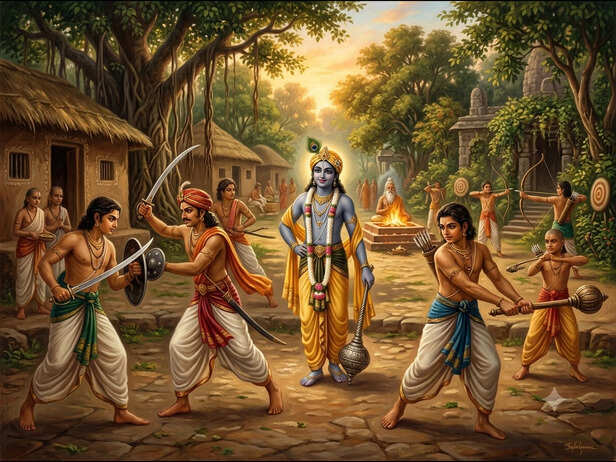
A Prince Mastering Every Art of War
Contrary to popular belief, Krishna was not unfamiliar with bows or martial skills. Ancient texts suggest that Krishna received a comprehensive education under Sage Sandipani, where he mastered scriptures, politics, combat techniques, and various weapons. Being born into the Vrishni branch of the Yadava clan, martial training was an essential part of his upbringing. Krishna participated in numerous battles throughout his life. He defeated tyrants such as Kansa, Jarasandha's allies, Narakasura, and several powerful asuras. Such victories would have required immense military expertise. Some lesser-known traditions even mention Krishna possessing a celestial bow named Sharnga, proving that he was fully qualified as an archer. However, unlike other epic heroes, he deliberately chose not to make the bow the center of his identity.
The Bow Belonged to Heroes Meant to Fight, Krishna Came to Guide
The Sudarshana Chakra Better Reflected His Divine Nature
Krishna's Flute Became More Powerful Than Any Weapon
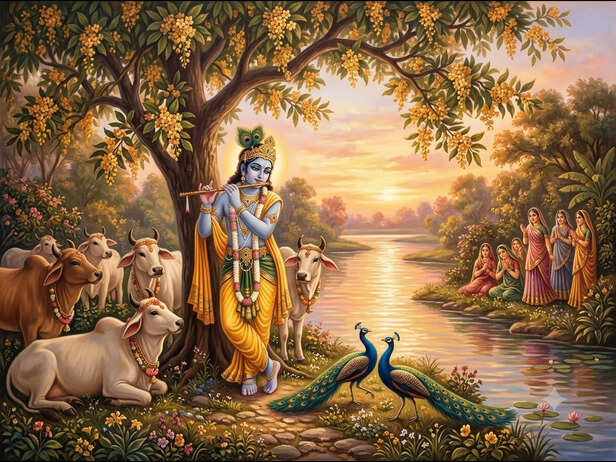
The Flute That Spoke to Every Soul
Perhaps the most fascinating aspect of Krishna's symbolism is the prominence of his flute. Weapons inspire fear and obedience. Krishna's flute inspires love, surrender, and spiritual awakening. Stories from Vrindavan describe cows stopping mid-graze, rivers slowing their currents, and devotees becoming spellbound upon hearing its melody. The flute serves as a metaphor for the soul emptied of ego and filled with divine grace. Through music, Krishna attracted hearts rather than conquering territories. This imagery conveys a subtle message. While warriors establish order through force, divine beings transform humanity through compassion, beauty, and inner awakening. Krishna's flute therefore became a stronger symbol of his mission than any bow could ever be.
Krishna Chose Strategy Over Personal Glory
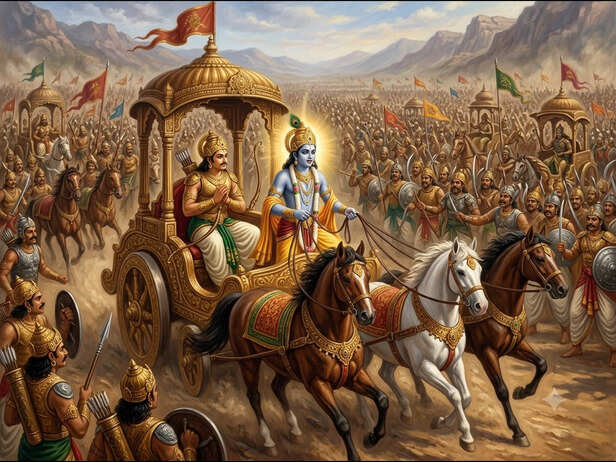
The Warrior Who Chose Wisdom Over Weapons
Throughout the Mahabharata, Krishna emerges as an extraordinary strategist. He advised Arjuna during moments of despair, guided the Pandavas through difficult decisions, and devised plans that neutralized seemingly invincible opponents such as Bhishma, Drona, and Duryodhana. Many of these interventions were controversial because they emphasized the larger goal of preserving righteousness over rigid adherence to battlefield conventions. Krishna understood that wars are not won solely through physical strength. Wisdom, timing, diplomacy, and psychological insight often prove more decisive. By refraining from carrying a bow, Krishna demonstrated that leadership does not always require standing at the front with a weapon. Sometimes, the individual shaping events from behind the scenes influences history far more profoundly.
Krishna's Greatest Weapon Was Wisdom
Unlock insightful tips and inspiration on personal growth, productivity, and well-being. Stay motivated and updated with the latest at My Life XP.