Why Does Krishna Smile Even During War?
Noopur Kumari | Mon, 02 Mar 2026
When arrows flew across the battlefield of Mahabharata, when brothers stood ready to destroy brothers, one face remained strangely peaceful. It was the face of Krishna. Why would someone smile in the middle of war? Was it confidence? Was it destiny? Or was it a deeper spiritual truth we still don’t understand? This is not just a mythological question. It is a life question. When your world feels like a battlefield, can you still smile? Let us uncover the emotional and spiritual meaning behind Krishna’s mysterious smile a lesson powerful enough for today’s world.

Krishna Smile
Image credit : ChatGPT(ai)
The great war of Mahabharata was fought in Kurukshetra. Kings, warriors, and families gathered for a battle that would change history. In the center stood Arjuna, confused and heartbroken. And beside him stood Krishna calm, radiant, and smiling. That smile was not ordinary. It was not careless. It was divine awareness. Krishna’s smile teaches us how to stay peaceful when life becomes difficult. It teaches strength without anger and wisdom without fear. Let us explore five powerful spiritual reasons behind that eternal smile.
![Krishna’s Peaceful Face in the Battlefield]()
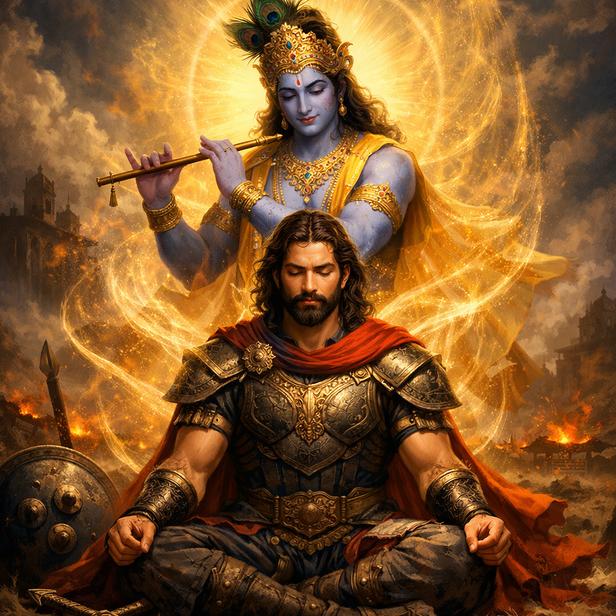
Krishna smiled because he saw beyond death. In the Bhagavad Gita, he teaches that the soul is eternal and cannot be destroyed. Weapons cannot cut it, fire cannot burn it, and time cannot end it. While warriors feared loss, Krishna understood that the body is temporary but the soul continues its journey. His smile came from this deep spiritual awareness. He was not blind to suffering. He simply saw a larger truth. When we understand that life is more than the physical form, fear slowly fades. What looks like an ending may actually be a sacred new beginning
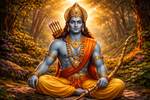
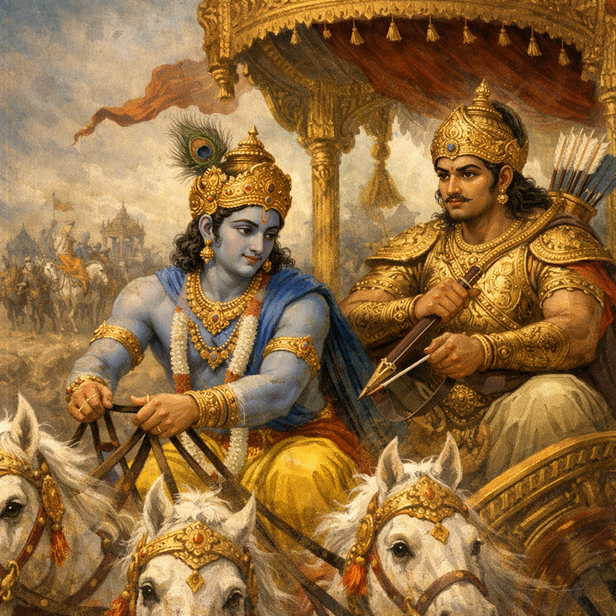
Though he was the Supreme Lord, Krishna chose to stand not as a king but as a charioteer on the battlefield of the Mahabharata. He wore no crown, claimed no throne, and carried no weapon. He simply served. That choice reveals the depth of his humility. Ego demands recognition and control, but Krishna sought neither. Because he had nothing to prove, he had nothing to fear. His smile came from inner completeness. By guiding Arjuna for dharma rather than pride, he showed that true strength lies in selfless service and freedom from ego.
![Calm Before the Storm]()
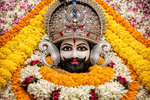
War did not disturb Krishna because he understood the deeper law of dharma. When injustice increases beyond limit, correction becomes necessary. The war was not born in a single day. It was the result of years of greed, pride, and broken promises. Krishna saw the chain of events clearly. He knew that balance had to be restored for the good of the world. His calm smile came from complete trust in divine timing. Sometimes life appears unfair and painful, yet every event has purpose. What feels like chaos today may be preparation for a wiser and stronger tomorrow.
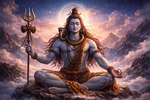
The battlefield of Mahabharata turned into a sacred classroom when Krishna spoke the wisdom of the Bhagavad Gita. His gentle smile was not casual. It was strength wrapped in compassion. Arjuna stood confused and broken, yet Krishna’s calm presence gave him courage to rise again. If Krishna had shown fear, doubt would have swallowed Arjuna’s spirit. True leaders do not spread panic. They spread steadiness. Krishna’s face silently said, “Trust yourself. Do your duty.” When we remain calm in difficulty, we become light for others. Courage is not shouted. It is quietly lived and deeply felt.
![The Moment of the Gita]()
Krishna did not smile for victory. He smiled from a place beyond victory and defeat. In the sacred wisdom of the Bhagavad Gita, he teaches that success and failure are temporary experiences of the world. Praise and blame also rise and fall like passing clouds. Krishna stood steady in inner balance, which is true yoga. He performed his duty without attachment to the result. That freedom gave him peace even on the battlefield of Mahabharata. When we release fear of loss and desire for gain, we begin to discover the same calm strength within ourselves.
Krishna’s smile in the war of Mahabharata was not cruelty. It was compassion born from wisdom. On the battlefield of Kurukshetra, he stood calm because he knew the soul is eternal and truth always prevails. His teachings in the Bhagavad Gita remind us that ego creates suffering, faith brings strength, and balance gives peace. Today our battles are stress, failure, and fear. Yet the lesson is the same. When life feels overwhelming, remember Krishna’s serene smile. In that remembrance, you may discover courage, clarity, and the quiet power to smile through your own struggles.
Unlock insightful tips and inspiration on personal growth, productivity, and well-being. Stay motivated and updated with the latest at My Life XP.
1. Why was Krishna smiling during the war in the Mahabharata?
In the Mahabharata, Krishna smiled because he understood the eternal nature of the soul and the larger divine plan. He was not attached to fear, victory, or defeat. His calm expression showed spiritual awareness and complete trust in dharma. His smile symbolized inner peace even in chaos.
2. Was Krishna happy about the war?
No. Krishna did not celebrate violence. He supported the war because it was necessary to restore righteousness. In the Bhagavad Gita, he teaches that action must be taken when injustice grows. His smile reflected wisdom, not joy in destruction.
3. What does Krishna’s smile teach us today?
Krishna’s smile teaches emotional balance. It reminds us that problems are temporary and the soul is eternal. His message encourages us to act with courage, let go of ego, and trust divine timing. Even in modern struggles like stress or heartbreak, his calm example offers strength.
4. Where did Krishna give the Bhagavad Gita?
Krishna delivered the Bhagavad Gita on the battlefield of Kurukshetra before the war began. He spoke to Arjuna, who was confused and afraid. The Gita became a timeless guide for spiritual growth and right action.
5. Is Krishna’s smile a symbol in Hindu philosophy?
Yes. In Hindu philosophy, Krishna’s smile represents enlightenment, detachment, and divine compassion. It symbolizes living in the world without being disturbed by it. His serene expression is a reminder that true peace comes from within, not from external circumstances.
He Knew the Soul Never Dies
Krishna’s Peaceful Face in the Battlefield
Image credit : chatgpt(ai)
Krishna smiled because he saw beyond death. In the Bhagavad Gita, he teaches that the soul is eternal and cannot be destroyed. Weapons cannot cut it, fire cannot burn it, and time cannot end it. While warriors feared loss, Krishna understood that the body is temporary but the soul continues its journey. His smile came from this deep spiritual awareness. He was not blind to suffering. He simply saw a larger truth. When we understand that life is more than the physical form, fear slowly fades. What looks like an ending may actually be a sacred new beginning
He Was Free From Ego
He Trusted Divine Timing
Calm Before the Storm
Image credit : Chatgpt(ai)
War did not disturb Krishna because he understood the deeper law of dharma. When injustice increases beyond limit, correction becomes necessary. The war was not born in a single day. It was the result of years of greed, pride, and broken promises. Krishna saw the chain of events clearly. He knew that balance had to be restored for the good of the world. His calm smile came from complete trust in divine timing. Sometimes life appears unfair and painful, yet every event has purpose. What feels like chaos today may be preparation for a wiser and stronger tomorrow.
He Was Teaching the World Courage
He Was Beyond Duality
The Moment of the Gita
Image credit : Chatgpt(ai)
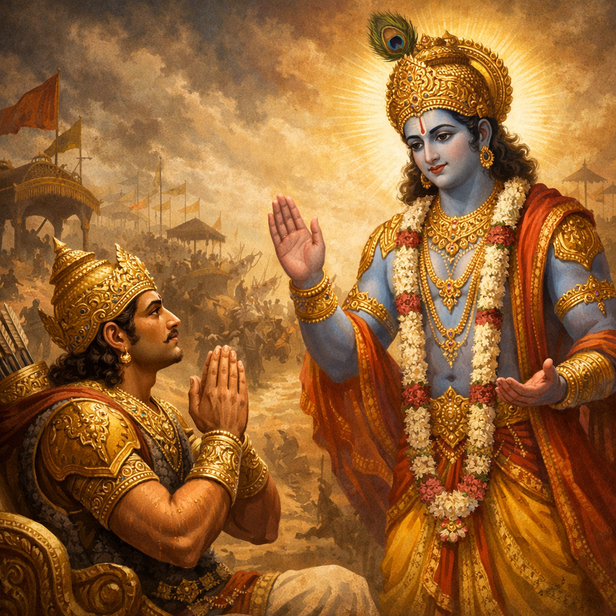
Krishna did not smile for victory. He smiled from a place beyond victory and defeat. In the sacred wisdom of the Bhagavad Gita, he teaches that success and failure are temporary experiences of the world. Praise and blame also rise and fall like passing clouds. Krishna stood steady in inner balance, which is true yoga. He performed his duty without attachment to the result. That freedom gave him peace even on the battlefield of Mahabharata. When we release fear of loss and desire for gain, we begin to discover the same calm strength within ourselves.
The Smile That Still Speaks
Unlock insightful tips and inspiration on personal growth, productivity, and well-being. Stay motivated and updated with the latest at My Life XP.
Frequently Asked Questions (FAQs)
In the Mahabharata, Krishna smiled because he understood the eternal nature of the soul and the larger divine plan. He was not attached to fear, victory, or defeat. His calm expression showed spiritual awareness and complete trust in dharma. His smile symbolized inner peace even in chaos.
2. Was Krishna happy about the war?
No. Krishna did not celebrate violence. He supported the war because it was necessary to restore righteousness. In the Bhagavad Gita, he teaches that action must be taken when injustice grows. His smile reflected wisdom, not joy in destruction.
3. What does Krishna’s smile teach us today?
Krishna’s smile teaches emotional balance. It reminds us that problems are temporary and the soul is eternal. His message encourages us to act with courage, let go of ego, and trust divine timing. Even in modern struggles like stress or heartbreak, his calm example offers strength.
4. Where did Krishna give the Bhagavad Gita?
Krishna delivered the Bhagavad Gita on the battlefield of Kurukshetra before the war began. He spoke to Arjuna, who was confused and afraid. The Gita became a timeless guide for spiritual growth and right action.
5. Is Krishna’s smile a symbol in Hindu philosophy?
Yes. In Hindu philosophy, Krishna’s smile represents enlightenment, detachment, and divine compassion. It symbolizes living in the world without being disturbed by it. His serene expression is a reminder that true peace comes from within, not from external circumstances.