Why Is the Skull Broken During Hindu Cremation?
Noopur Kumari | Jul 06, 2026, 18:01 IST
Almost everyone has seen or heard about this ritual. Very few know why it is performed. Some believe it helps the soul attain liberation. Others say it is simply an ancient funeral custom. And then there is another question that surprises many people why are the last rites of young children performed differently from those of adults? The answers reveal a deeper philosophy of life, death, karma, and the human journey in Hindu tradition.

Have you ever wondered why, during a traditional Hindu cremation, the chief mourner gently strikes the skull with a bamboo stick? To many, it may seem like a mysterious or even disturbing ritual. Yet for centuries, this act has carried profound spiritual symbolism.
Known as Kapal Kriya, this final rite is believed to mark the completion of the body's journey and the soul's transition. But is it really meant to "free the soul," or is there a deeper meaning hidden in Hindu scriptures and traditions? The answer is more fascinating than most people realize.
![Traditional Hindu Cremation Ritual]()
Among all Hindu funeral rituals, Kapal Kriya is perhaps the least understood. After the body has mostly been consumed by the funeral pyre, the chief mourner performs a symbolic act involving the skull. For many families, it is an emotional moment, yet its purpose is often explained only through tradition. Rather than being an act of force, it represents the final farewell and the completion of earthly duties toward the departed.
In many Hindu communities, Kapal Kriya is performed after most of the body has been cremated. Traditional beliefs hold that this ritual symbolizes the completion of the body's journey and the final separation from worldly existence. Different regions explain its significance differently. While many families believe it spiritually aids the soul's onward journey, scriptural interpretations vary, and the practice is largely rooted in long-standing customs rather than a single universally accepted doctrine.
The funeral rites of a sannyasi are unique because they have already renounced worldly attachments during their lifetime. In some traditions, a coconut is ceremonially broken instead of performing the usual Kapal Kriya. The symbolism reflects the monk's spiritual path and complete detachment from material life. These customs differ across monastic orders, but all emphasize that a renunciant's journey after death is viewed differently from that of a householder.
In several Hindu traditions, children below a certain age may not undergo the same cremation rituals as adults. Instead, customs such as burial or immersion in a sacred river have historically been followed in some communities. These practices arise from the belief that young children are free from accumulated worldly karma. However, customs differ significantly by region, family lineage, and religious tradition, and there is no single practice followed across all Hindu communities.
Hindu funeral ceremonies are built around the idea that the body is temporary while the soul continues its journey. Every ritual from lighting the pyre to offering prayers is intended to express gratitude, fulfill family responsibilities, and seek peace for the departed. Whether viewed spiritually or culturally, these ceremonies remind the living to accept life's impermanence and honor those who came before them.
India's diversity means that funeral customs are not identical everywhere. Rituals can differ based on region, caste, family tradition, and spiritual lineage. Some communities strictly follow Kapal Kriya, while others have modified practices over time. Understanding these differences helps avoid misconceptions and highlights that Hindu traditions have always evolved while preserving their deeper spiritual values.
The greatest lesson of Hindu last rites is not about death it is about life. They encourage people to let go of attachment, respect their ancestors, and recognize that every human journey eventually comes to an end. Whether one follows these rituals out of faith or family tradition, their enduring message is to live with humility, compassion, and awareness, because our actions are the legacy we leave behind.
Unlock insightful tips and inspiration on personal growth, productivity, and well-being. Stay motivated and updated with the latest at My Life XP.
1. What is Kapal Kriya in Hinduism?
Kapal Kriya is a traditional Hindu funeral ritual performed toward the end of the cremation process. In many communities, the chief mourner symbolically strikes the skull after the body has largely been cremated. It is regarded as the final step in completing the last rites.
2. Why is Kapal Kriya performed?
According to traditional Hindu beliefs, Kapal Kriya symbolizes the completion of the body's earthly journey and the fulfillment of the family's final duty to the deceased. Some traditions also believe it helps the soul move forward on its spiritual path, although interpretations vary.
3. Is Kapal Kriya mentioned in Hindu scriptures?
Different Hindu scriptures and regional traditions describe funeral rites in different ways. While the practice has deep roots in Hindu customs, its exact interpretation is not uniform across all schools of thought.
4. Why do Hindu monks receive different last rites?
Hindu monks (sannyasis) are believed to have renounced worldly life while living. Because of this, their funeral rituals often differ from those of householders. The customs vary between monastic traditions and regions.
5. Why are the last rites of young children different in some Hindu traditions?
Many Hindu traditions believe that young children are free from worldly attachments and accumulated karma. As a result, some communities follow different funeral practices for children, such as burial instead of cremation. However, these customs vary widely across regions and families.
Known as Kapal Kriya, this final rite is believed to mark the completion of the body's journey and the soul's transition. But is it really meant to "free the soul," or is there a deeper meaning hidden in Hindu scriptures and traditions? The answer is more fascinating than most people realize.
The Final Ritual That Raises the Most Questions
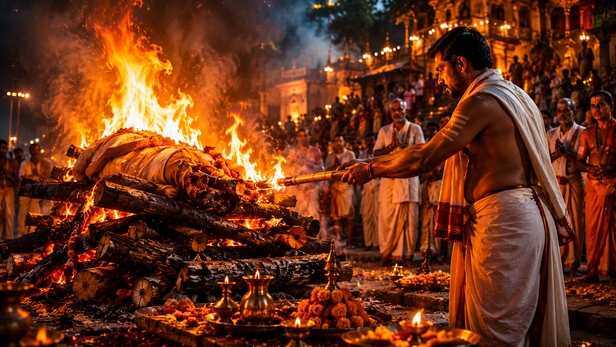
Traditional Hindu Cremation Ritual
Among all Hindu funeral rituals, Kapal Kriya is perhaps the least understood. After the body has mostly been consumed by the funeral pyre, the chief mourner performs a symbolic act involving the skull. For many families, it is an emotional moment, yet its purpose is often explained only through tradition. Rather than being an act of force, it represents the final farewell and the completion of earthly duties toward the departed.
What Is Kapal Kriya and Why Is It Performed?
In many Hindu communities, Kapal Kriya is performed after most of the body has been cremated. Traditional beliefs hold that this ritual symbolizes the completion of the body's journey and the final separation from worldly existence. Different regions explain its significance differently. While many families believe it spiritually aids the soul's onward journey, scriptural interpretations vary, and the practice is largely rooted in long-standing customs rather than a single universally accepted doctrine.
Why Monks Receive a Different Final Rite
Why Young Children Are Treated Differently
The Belief That Few People Truly Understand
Tradition, Faith, and Regional Differences
What These Rituals Teach the Living
Unlock insightful tips and inspiration on personal growth, productivity, and well-being. Stay motivated and updated with the latest at My Life XP.
Frequently Asked Questions (FAQs)
Kapal Kriya is a traditional Hindu funeral ritual performed toward the end of the cremation process. In many communities, the chief mourner symbolically strikes the skull after the body has largely been cremated. It is regarded as the final step in completing the last rites.
2. Why is Kapal Kriya performed?
According to traditional Hindu beliefs, Kapal Kriya symbolizes the completion of the body's earthly journey and the fulfillment of the family's final duty to the deceased. Some traditions also believe it helps the soul move forward on its spiritual path, although interpretations vary.
3. Is Kapal Kriya mentioned in Hindu scriptures?
Different Hindu scriptures and regional traditions describe funeral rites in different ways. While the practice has deep roots in Hindu customs, its exact interpretation is not uniform across all schools of thought.
4. Why do Hindu monks receive different last rites?
Hindu monks (sannyasis) are believed to have renounced worldly life while living. Because of this, their funeral rituals often differ from those of householders. The customs vary between monastic traditions and regions.
5. Why are the last rites of young children different in some Hindu traditions?
Many Hindu traditions believe that young children are free from worldly attachments and accumulated karma. As a result, some communities follow different funeral practices for children, such as burial instead of cremation. However, these customs vary widely across regions and families.