Why Lord Jagannath Became Too Heavy to Lift
Noopur Kumari | Jul 05, 2026, 12:00 IST
A widely shared devotional account from the 1972 Jagannath Rath Yatra tells of a moment when Lord Jagannath's idol reportedly became impossible to lift despite the efforts of many people. As confusion spread and the crowd grew restless, all human authority seemed powerless. It was only after the Gajapati Maharaja offered a heartfelt prayer, asking for forgiveness and divine grace, that the idol is said to have become light enough to be carried. For devotees, the story reminds us that true devotion, not authority, reaches the heart of the Divine.

Frequently Asked Questions (FAQs)Can devotion succeed where authority fails? According to a cherished story from the 1972 Jagannath Rath Yatra, thousands witnessed an extraordinary moment that continues to inspire devotees even today. Schedules were prepared, officials gave strict instructions, and every arrangement seemed perfect. Yet the most important part of the procession refused to move. What happened next transformed a logistical challenge into one of the most talked-about spiritual stories connected with Lord Jagannath. Whether seen as a miracle or a lesson in humility, its message has endured for generations.
![Jagannath Temple During the 1972 Rath Yatra Preparations]()
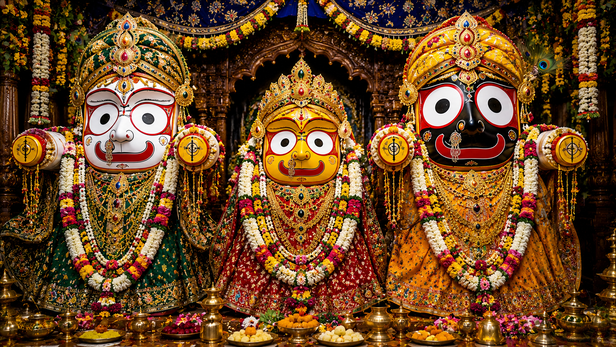
In 1972, the management of the Jagannath Temple had undergone significant administrative changes. According to the popular account, officials were entrusted with ensuring that every part of the Rath Yatra followed a strict schedule. Detailed instructions were issued so the procession could begin on time. From a practical perspective, the plan appeared flawless. But devotees believe that divine traditions often follow a rhythm beyond human planning, setting the stage for an unforgettable moment.
![Devotees Gathering Around Lord Jagannath's Chariot]()
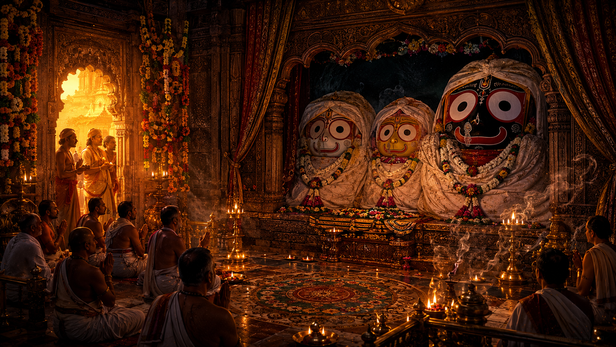
The idols of Lord Balabhadra and Goddess Subhadra were placed on their chariots without difficulty. Then came Lord Jagannath's turn. According to the traditional story, the sevayats suddenly found that the idol had become impossibly heavy. More people joined the effort, but nothing changed. Every attempt failed, leaving thousands of devotees watching in anxious silence as the scheduled procession came to a standstill.
As delays increased, concern spread through the crowd. Officials tried to manage the growing pressure, but the situation became increasingly difficult. The carefully planned schedule no longer mattered because the central ritual itself had stopped. According to the devotional narrative, the moment served as a reminder that while administration can organize an event, faith remains at the heart of a sacred tradition.
Witnessing the unfolding situation, the Gajapati Maharaja is said to have folded his hands before Lord Jagannath with deep humility. Instead of issuing commands, he reportedly offered a heartfelt prayer, asking the Lord to accept the festival and bless the devotees with His divine presence. The prayer reflected complete surrender rather than authority, expressing the timeless bond between a devotee and the Divine.
The devotional account says that immediately after the prayer, Lord Jagannath's idol, which had resisted every effort, suddenly became light enough to lift. The sevayats were able to carry Him onto the chariot with ease, and the Rath Yatra continued. For believers, this was not merely a coincidence but a powerful reminder that sincere devotion reaches where force and authority cannot.
Whether one accepts the account as a miracle or a symbolic lesson, its message remains deeply meaningful. Sacred traditions are sustained not only by planning and management but also by reverence, humility, and faith. The story reminds devotees that spiritual experiences cannot be controlled through authority alone. A humble heart often accomplishes what power cannot.
Decades later, this story continues to be shared because it speaks to something universal. Every person eventually faces situations where effort alone seems insufficient. In those moments, humility, patience, and sincere faith often become our greatest strengths. For devotees of Lord Jagannath, the 1972 Rath Yatra story is more than a miracle it is a reminder that the Divine responds not to status or power, but to genuine devotion offered from the heart
Unlock insightful tips and inspiration on personal growth, productivity, and well-being. Stay motivated and updated with the latest at My Life XP.
1. What is the 1972 Jagannath Rath Yatra miracle?
According to a popular devotional account, Lord Jagannath's idol reportedly became too heavy for the sevayats to lift during the 1972 Rath Yatra. After the Gajapati Maharaja offered a heartfelt prayer, the idol is said to have become light enough to be carried onto the chariot. This story is shared as a matter of faith and tradition.
2. Is the 1972 Rath Yatra miracle a verified historical event?
The story is widely circulated among devotees and in oral tradition, but it is not established as a verified historical event through official records or documented historical evidence. It is best understood as a cherished devotional narrative.
3. Who is the Gajapati Maharaja in the Jagannath tradition?
The Gajapati Maharaja is the traditional king of Puri and the foremost servitor (Adya Sevak) of Lord Jagannath. He plays an important ceremonial role during the Rath Yatra, including the sacred Chhera Pahanra ritual, where he sweeps the chariots with a golden broom as a symbol of humility before the Lord.
4. Why is humility considered important in the story?
The central message of the story is that sincere devotion and humility are believed to be more powerful than authority or force. Devotees see it as a reminder that Lord Jagannath responds to genuine faith offered with a pure heart.
5. What lesson does this story teach devotees today?
The story encourages people to approach challenges with patience, faith, and humility. It reminds devotees that while careful planning is important, spiritual traditions are ultimately rooted in surrender, respect, and devotion to the Divine.
When Tradition Met Administration
Jagannath Temple During the 1972 Rath Yatra Preparations
In 1972, the management of the Jagannath Temple had undergone significant administrative changes. According to the popular account, officials were entrusted with ensuring that every part of the Rath Yatra followed a strict schedule. Detailed instructions were issued so the procession could begin on time. From a practical perspective, the plan appeared flawless. But devotees believe that divine traditions often follow a rhythm beyond human planning, setting the stage for an unforgettable moment.
Everything Went According to Plan Until It Didn't
Devotees Gathering Around Lord Jagannath's Chariot
The idols of Lord Balabhadra and Goddess Subhadra were placed on their chariots without difficulty. Then came Lord Jagannath's turn. According to the traditional story, the sevayats suddenly found that the idol had become impossibly heavy. More people joined the effort, but nothing changed. Every attempt failed, leaving thousands of devotees watching in anxious silence as the scheduled procession came to a standstill.
Authority Could Not Solve the Crisis
The Prayer That Changed Everything
The Moment Devotees Call a Miracle
The Lesson Hidden Within the Story
Why This Story Still Inspires Millions
Unlock insightful tips and inspiration on personal growth, productivity, and well-being. Stay motivated and updated with the latest at My Life XP.
Frequently Asked Questions (FAQs)
According to a popular devotional account, Lord Jagannath's idol reportedly became too heavy for the sevayats to lift during the 1972 Rath Yatra. After the Gajapati Maharaja offered a heartfelt prayer, the idol is said to have become light enough to be carried onto the chariot. This story is shared as a matter of faith and tradition.
2. Is the 1972 Rath Yatra miracle a verified historical event?
The story is widely circulated among devotees and in oral tradition, but it is not established as a verified historical event through official records or documented historical evidence. It is best understood as a cherished devotional narrative.
3. Who is the Gajapati Maharaja in the Jagannath tradition?
The Gajapati Maharaja is the traditional king of Puri and the foremost servitor (Adya Sevak) of Lord Jagannath. He plays an important ceremonial role during the Rath Yatra, including the sacred Chhera Pahanra ritual, where he sweeps the chariots with a golden broom as a symbol of humility before the Lord.
4. Why is humility considered important in the story?
The central message of the story is that sincere devotion and humility are believed to be more powerful than authority or force. Devotees see it as a reminder that Lord Jagannath responds to genuine faith offered with a pure heart.
5. What lesson does this story teach devotees today?
The story encourages people to approach challenges with patience, faith, and humility. It reminds devotees that while careful planning is important, spiritual traditions are ultimately rooted in surrender, respect, and devotion to the Divine.