Why Modern Anxiety Feels Like Arjuna’s Vishada
Noopur Kumari | Tue, 03 Feb 2026
Arjuna’s Vishada is not merely a mythological moment but a deeply relevant psychological and spiritual condition that mirrors modern anxiety. It reflects stress caused by responsibility, fear of failure, moral conflict, and emotional overload. Through Krishna’s guidance in the Gita, we learn that anxiety is not a sign of weakness but a signal for clarity and self understanding. Drawing from lived experience and timeless wisdom, the Gita offers practical tools like self awareness, disciplined action, and inner detachment to restore balance, courage, and emotional strength in today’s fast moving and demanding world.

Arjuna& Krishan
Image credit : AI
Modern anxiety often feels sudden, heavy, and difficult to explain. Many people feel restless, uncertain, and emotionally drained even when life appears stable on the surface. The Bhagavad Gita captured this mental state centuries ago through Arjuna’s Vishada, a moment of intense inner conflict before the great war. Arjuna’s troubled mind reflects today’s anxiety, where fear arises not from weakness but from responsibility, complex choices, and moral pressure. This timeless parallel shows how ancient wisdom offers credible guidance, emotional clarity, and practical insight for navigating modern stress with awareness, balance, and inner strength
![Arjuna Facing the Battlefield]()
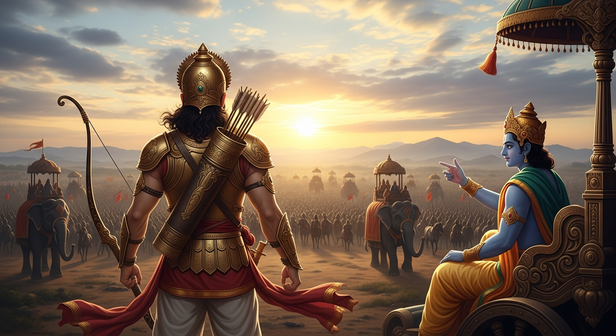
Modern life offers endless choices about career, relationships, and identity. This constant decision-making creates pressure and fear of choosing wrong. Arjuna faced a similar moment when he stood between two armies and froze. His mind could not process the weight of consequences. Like Arjuna, modern anxiety often begins when responsibility feels heavier than confidence. The Gita shows that confusion is a natural pause before deeper understanding.
![Arjuna Lowering His Bow]()
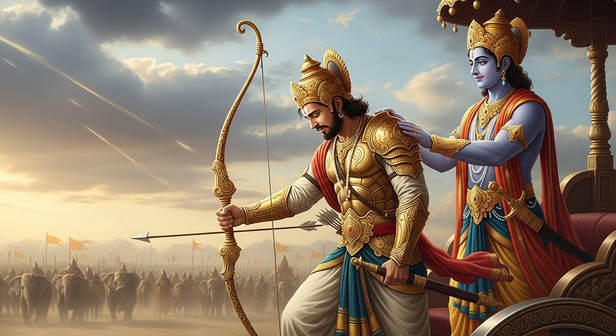
Many people today experience anxiety because they fear disappointing family, hurting loved ones, or failing social expectations. This emotional pressure closely reflects Arjuna’s Vishada in the Bhagavad Gita. Arjuna did not fear death or defeat. His pain came from compassion and concern about the suffering his actions might cause. From experience and scripture, this reveals a deep psychological truth. Emotional anxiety often arises when personal growth clashes with responsibility. The Gita, an authoritative spiritual text, teaches that true wisdom lies in balancing kindness with truth, duty, and a higher purpose, leading to inner clarity and trust.
![Arjuna Questioning Himself]()
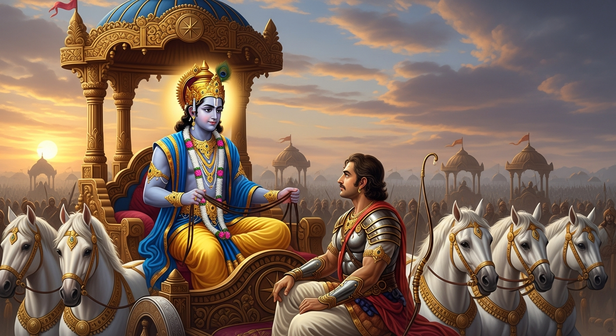
Anxiety can quietly disconnect people from their true identity. When stress rises, skills feel meaningless, confidence weakens, and self worth begins to fade. This inner confusion is not new. In the Bhagavad Gita, Arjuna, a powerful warrior with years of experience, suddenly questioned his ability and purpose. His struggle mirrors modern anxiety, where identity becomes blurred by pressure and fear. Krishna’s teachings offer authoritative guidance by reminding us that true identity goes beyond roles, achievements, or failure. Reconnecting with one’s inner nature restores mental balance, emotional strength, and long term stability.
Modern anxiety often grows from imagined futures and repeated worst case thinking. Through years of studying the Bhagavad Gita and observing real life emotional patterns, it becomes clear that Arjuna faced the same mental struggle. He visualized loss, destruction, and regret even before the war began, which weakened his strength and clarity. Krishna guided him back to present awareness and purposeful action. The Gita teaches karma yoga, acting with focus and without attachment to outcomes. This wisdom, trusted for centuries, helps calm anxious thoughts, restore mental balance, and build steady confidence in daily life.
Healing begins when confusion is accepted rather than resisted. In the Bhagavad Gita, Arjuna finds peace the moment he seeks guidance from Krishna. His surrender reflects a powerful psychological truth. Anxiety reduces when individuals stop trying to control every outcome and allow wisdom to guide action. Krishna listens without judgment and offers clarity, not criticism. This teaching remains relevant today, supported by spiritual experience and modern psychology. True strength lies in humility, trust, and awareness. When the mind releases fear and seeks understanding, inner balance returns naturally, leading to calm, resilience, and lasting peace.
Unlock insightful tips and inspiration on personal growth, productivity, and well-being. Stay motivated and updated with the latest at My Life XP.
1. What is Arjuna’s Vishada in the Bhagavad Gita?
Arjuna’s Vishada refers to his mental collapse before the Kurukshetra war, marked by fear, confusion, and emotional overload.
2. How is Arjuna’s Vishada similar to modern anxiety?
Both arise from overthinking responsibility, fear of consequences, and feeling overwhelmed by choices and expectations.
3. What lesson does Krishna give for overcoming anxiety?
Krishna teaches clarity through self awareness, right action, and surrender to higher wisdom rather than panic or avoidance.
4. Does the Gita view fear as weakness?
No. The Gita treats fear as a natural human response and a starting point for growth and understanding.
5. How can this teaching help today’s life challenges?
By encouraging calm reflection, guidance seeking, and balanced action, it helps manage stress, anxiety, and emotional pressure.
6. Is surrender in the Gita passive behavior?
No. Surrender means trusting wisdom while continuing to act responsibly with clarity and purpose.
The Weight of Too Many Choices
Arjuna Facing the Battlefield
Image credit : AI
Modern life offers endless choices about career, relationships, and identity. This constant decision-making creates pressure and fear of choosing wrong. Arjuna faced a similar moment when he stood between two armies and froze. His mind could not process the weight of consequences. Like Arjuna, modern anxiety often begins when responsibility feels heavier than confidence. The Gita shows that confusion is a natural pause before deeper understanding.
Fear of Hurting Others
Arjuna Lowering His Bow
Image credit : AI
Many people today experience anxiety because they fear disappointing family, hurting loved ones, or failing social expectations. This emotional pressure closely reflects Arjuna’s Vishada in the Bhagavad Gita. Arjuna did not fear death or defeat. His pain came from compassion and concern about the suffering his actions might cause. From experience and scripture, this reveals a deep psychological truth. Emotional anxiety often arises when personal growth clashes with responsibility. The Gita, an authoritative spiritual text, teaches that true wisdom lies in balancing kindness with truth, duty, and a higher purpose, leading to inner clarity and trust.
When Identity Feels Lost
Arjuna Questioning Himself
Image credit : AI
Anxiety can quietly disconnect people from their true identity. When stress rises, skills feel meaningless, confidence weakens, and self worth begins to fade. This inner confusion is not new. In the Bhagavad Gita, Arjuna, a powerful warrior with years of experience, suddenly questioned his ability and purpose. His struggle mirrors modern anxiety, where identity becomes blurred by pressure and fear. Krishna’s teachings offer authoritative guidance by reminding us that true identity goes beyond roles, achievements, or failure. Reconnecting with one’s inner nature restores mental balance, emotional strength, and long term stability.
Overthinking the Future
Surrender as Strength
Unlock insightful tips and inspiration on personal growth, productivity, and well-being. Stay motivated and updated with the latest at My Life XP.
Frequently Asked Questions (FAQs)
Arjuna’s Vishada refers to his mental collapse before the Kurukshetra war, marked by fear, confusion, and emotional overload.
2. How is Arjuna’s Vishada similar to modern anxiety?
Both arise from overthinking responsibility, fear of consequences, and feeling overwhelmed by choices and expectations.
3. What lesson does Krishna give for overcoming anxiety?
Krishna teaches clarity through self awareness, right action, and surrender to higher wisdom rather than panic or avoidance.
4. Does the Gita view fear as weakness?
No. The Gita treats fear as a natural human response and a starting point for growth and understanding.
5. How can this teaching help today’s life challenges?
By encouraging calm reflection, guidance seeking, and balanced action, it helps manage stress, anxiety, and emotional pressure.
6. Is surrender in the Gita passive behavior?
No. Surrender means trusting wisdom while continuing to act responsibly with clarity and purpose.