Why Rama Sent Sita Away Despite Loving Her
Deepak Rajeev | Sun, 03 May 2026
Why did Rama send Sita away despite loving her? This article explores the deeper meaning behind the decision, focusing on dharma, kingship, and public responsibility. It reveals how this powerful Ramayana episode reflects complex moral choices, where duty and personal emotion often stand in difficult conflict.

Lord Rama & Sita Devi (Image Credit: AI)
There are moments in the Ramayana that invite not just devotion, but deep reflection. Among them, one question continues to stay with readers across generations. Why did Rama, known for his unwavering commitment to dharma, send Sita away despite his love for her. This episode is not presented as a simple event, but as a profound moment that reveals the complexity of duty, leadership, and human emotion within the framework of ancient thought.
![Lord Rama, Sita Devi, Lakshmana (Image Credit: AI)]()
In the world of the Ramayana, dharma is not limited to personal morality. It extends to responsibility toward society, order, and collective well-being. Rama is often described as Maryada Purushottama, the one who upholds dharma in its highest form. This ideal does not always align with personal comfort or emotional fulfilment.
After returning to Ayodhya and assuming kingship, Rama’s responsibilities expanded beyond his role as a husband. As a ruler, he was expected to embody the highest standards of conduct, not only in action but also in perception. When doubts about Sita’s purity began to circulate among sections of the public, despite her Agni Pariksha, Rama was placed in a position where he had to consider the expectations of his people alongside his personal feelings.
![Lord Rama (Image Credit: AI)]()
Ancient texts like the Valmiki Ramayana portray kingship as a role deeply connected to public trust and moral authority. A king was seen not only as a leader but as a guardian of societal order. Even a small doubt among the people could affect that trust. The episode involving the washerman’s remark is often interpreted as symbolic of this larger concern. Rama’s decision, in this context, is understood by many scholars as an attempt to uphold the integrity of his role as a king. Rather than being viewed as a personal rejection of Sita, it is often seen as a difficult choice shaped by the expectations of leadership and the norms of that time.
Sita’s Strength and Dignity in the Narrative
While the focus often remains on Rama’s decision, the strength of Sita is equally central to this part of the story. Sent to the forest, she finds refuge in the ashram of Valmiki, where she raises Lava and Kusha with dignity and resilience. In many traditional interpretations, Sita is not portrayed as a passive figure, but as someone who embodies inner strength and self-respect. Her final return to the earth, rather than undergoing another test, is seen as a powerful affirmation of her purity and identity. This moment is often understood as her reclaiming agency within the narrative.
One of the enduring qualities of the Ramayana is that it does not always offer straightforward answers. Instead, it presents situations that invite reflection. Rama’s decision is interpreted differently across traditions, commentaries, and regions, with some emphasising his commitment to dharma and others focusing on the emotional cost of that commitment. This diversity of interpretation is part of the richness of the text. It suggests that the story is not meant to impose a single viewpoint, but to encourage thoughtful engagement with complex moral questions.
The reason this episode continues to attract attention is because it reflects dilemmas that feel familiar even in modern life. The balance between personal relationships and social responsibility, between emotional truth and duty, is something many people encounter in different forms. By presenting this moment as a space for reflection rather than conclusion, the Ramayana allows readers to engage with its lessons in a way that feels personal and meaningful.
The story of Rama and Sita is not just about separation, but about the weight of responsibility and the complexity of dharma. When approached with sensitivity and context, this episode becomes less about judgment and more about understanding the values and challenges it represents. Perhaps that is why it continues to be discussed. Not because it has one answer, but because it invites each generation to explore its meaning with care, respect, and thoughtfulness.
Unlock insightful tips and inspiration on personal growth, productivity, and well-being. Stay motivated and updated with the latest at My Life XP.
Understanding Dharma Beyond Personal Emotion

Lord Rama, Sita Devi, Lakshmana (Image Credit: AI)
In the world of the Ramayana, dharma is not limited to personal morality. It extends to responsibility toward society, order, and collective well-being. Rama is often described as Maryada Purushottama, the one who upholds dharma in its highest form. This ideal does not always align with personal comfort or emotional fulfilment.
After returning to Ayodhya and assuming kingship, Rama’s responsibilities expanded beyond his role as a husband. As a ruler, he was expected to embody the highest standards of conduct, not only in action but also in perception. When doubts about Sita’s purity began to circulate among sections of the public, despite her Agni Pariksha, Rama was placed in a position where he had to consider the expectations of his people alongside his personal feelings.
The Role of Kingship and Public Trust
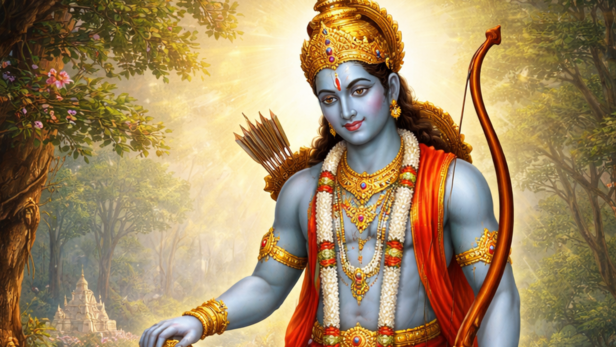
Lord Rama (Image Credit: AI)
Ancient texts like the Valmiki Ramayana portray kingship as a role deeply connected to public trust and moral authority. A king was seen not only as a leader but as a guardian of societal order. Even a small doubt among the people could affect that trust. The episode involving the washerman’s remark is often interpreted as symbolic of this larger concern. Rama’s decision, in this context, is understood by many scholars as an attempt to uphold the integrity of his role as a king. Rather than being viewed as a personal rejection of Sita, it is often seen as a difficult choice shaped by the expectations of leadership and the norms of that time.
Sita’s Strength and Dignity in the Narrative
While the focus often remains on Rama’s decision, the strength of Sita is equally central to this part of the story. Sent to the forest, she finds refuge in the ashram of Valmiki, where she raises Lava and Kusha with dignity and resilience. In many traditional interpretations, Sita is not portrayed as a passive figure, but as someone who embodies inner strength and self-respect. Her final return to the earth, rather than undergoing another test, is seen as a powerful affirmation of her purity and identity. This moment is often understood as her reclaiming agency within the narrative.
A Story Meant for Reflection, Not Simple Judgment
One of the enduring qualities of the Ramayana is that it does not always offer straightforward answers. Instead, it presents situations that invite reflection. Rama’s decision is interpreted differently across traditions, commentaries, and regions, with some emphasising his commitment to dharma and others focusing on the emotional cost of that commitment. This diversity of interpretation is part of the richness of the text. It suggests that the story is not meant to impose a single viewpoint, but to encourage thoughtful engagement with complex moral questions.
Why This Question Still Resonates Today
The reason this episode continues to attract attention is because it reflects dilemmas that feel familiar even in modern life. The balance between personal relationships and social responsibility, between emotional truth and duty, is something many people encounter in different forms. By presenting this moment as a space for reflection rather than conclusion, the Ramayana allows readers to engage with its lessons in a way that feels personal and meaningful.
Conclusion: A Deeper Way of Understanding
The story of Rama and Sita is not just about separation, but about the weight of responsibility and the complexity of dharma. When approached with sensitivity and context, this episode becomes less about judgment and more about understanding the values and challenges it represents. Perhaps that is why it continues to be discussed. Not because it has one answer, but because it invites each generation to explore its meaning with care, respect, and thoughtfulness.
Unlock insightful tips and inspiration on personal growth, productivity, and well-being. Stay motivated and updated with the latest at My Life XP.